How are you coping since losing your horse?
In a large RSPCA survey, 66.9%[1] of bereaved owners were surprised by how intense their grief was. This private check-in helps you see where you are.
- Six statements, about two minutes
- Private: nothing is sent or saved
- Ideas that match how you're feeling
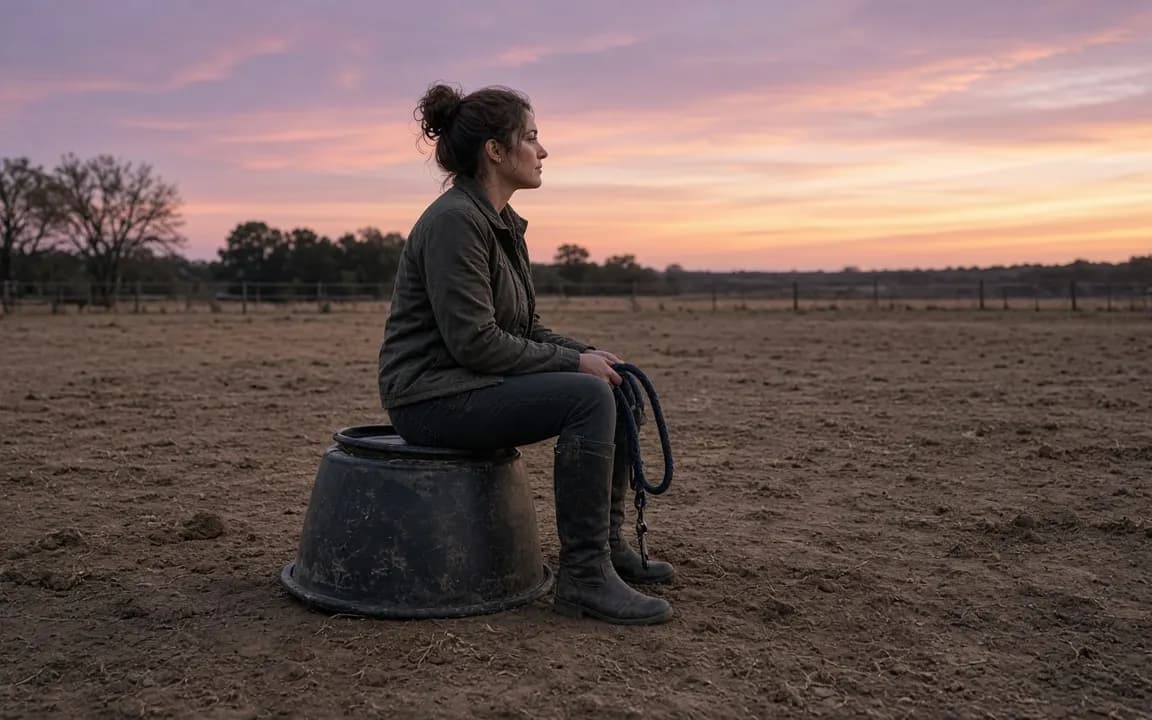
A gentle check-in
Six statements, about two minutes. This isn't a test or a diagnosis, just a moment to notice how you're doing. Your answers stay on this screen and are never saved or sent.
Choose the answer that feels closest for each statement. There are no right answers.
If you're struggling to cope or thinking about harming yourself, please reach out now.
Source: RSPCA — Pet Loss Survey Results. This check-in is not a clinical assessment
When you're ready: Talk to someone about a memorial or aftercare →
You're not overreacting
Why losing a horse can hit so hard
A horse shapes your days in a way few animals do. There are feeds before work, evening checks, weekends at shows or on the trail, and years of shared history. When a horse dies, it's not just the animal that's gone but the routine, the barn friendships and sometimes a part of who you were.
Research on pet loss backs this up. In the RSPCA's pet-loss survey of more than 4,000 owners, most bereaved owners said they had lost their daily routine or sense of purpose, and many struggled to concentrate or sleep. A UK study found that 21.0%[2] of people who had lost both a pet and a person named the pet's death as the most distressing.
72.6% / 69.8% / 65.9%[3]
The quiet at feed time is often the moment it lands, long after the truck has gone.
Using the check-in
How the check-in works
You'll see six short statements, such as whether you find yourself expecting your horse at the usual times, whether you can get through most of your day, and whether you have someone to talk to. For each, choose how much it sounds like you, from "not really" to "very much". Once all six are answered, you get one of three plain-language summaries, raw and early, riding the waves or finding your feet, with a few suggestions that fit.
It runs in your browser. Your answers aren't sent to us or stored anywhere. You can do it today and again in a month to see whether things are shifting.
The thinking behind it
What the check-in looks at, and what it doesn't
The statements are drawn from common experiences in pet bereavement research: disbelief, expecting the animal at the usual times, getting through the day, having someone to talk to, guilt, and whether happy memories can come without overwhelming you. They aren't a clinical test and can't diagnose anything. They're a mirror, meant to help you name what you're feeling.
Most grief softens with time, but not all. A 2026 PLOS ONE study found 7.5%[4] of people grieving a pet met the criteria for prolonged grief disorder, similar to the rate after losing a close friend. If your answers stay heavy for months, that's a reason to talk to someone, not a failing.

An example
Worked example: three weeks after losing a 30-year-old gelding
Imagine an owner whose 30-year-old gelding was put to sleep in the paddock three weeks ago. She still goes to the barn out of habit, cries at feed time, and feels she should be over it because he was old. She answers "very much" to disbelief and to expecting him at the usual times, "somewhat" to guilt, getting through the day and having someone to talk to, and "not really" to thinking of happy memories without being overwhelmed. That lands in raw and early.
The suggestions are gentle and practical: keep today small, with food, water and rest, let one person know how she's really doing, and, because guilt came up, talk it through, including with the vet. Her own additions might be a small routine at the barn if it comforts her, time with people who knew him, and permission to grieve an old horse fully. Age doesn't make the loss smaller; thirty years of company is a long time. Our article on grief after losing a horse has more ideas for this stage.
What helped you most in the first weeks?
Tap an answer to vote and see how others answered. Anonymous.
Finding support
Where horse owners find support
Support can be hard to find. The RSPCA survey found 34.5%[5] of bereaved owners had been told it was just a pet, and only 13.4%[6] felt fully understood. Horse people often find that understanding at the barn: the other boarders, the farrier, the vet who knew the horse for years. Scaled up to the US, our estimate is that roughly 850,000 bereaved pet households a year may not find the support they need[7], so reaching out early is worth it.
- Pet loss support lines and online groups, some run by vet schools, such as Cornell's Pet Loss Support Hotline.
- A counselor with pet bereavement experience, if grief is overwhelming daily life.
- Rituals that mark the loss, such as scattering ashes or planting a tree; the farewell planner can help.
- Keepsakes such as a tail braid or shoe, covered in our mane and tail memorials guide.
Next steps
What the check-in can't do, and where to go next
It can't replace a conversation with someone who cares about you, or a professional if you need one. It can't tell you when you'll feel better, or whether to get another horse. Those answers come in their own time. If it helps to know you're not alone, the live poll results show what other owners said helped them.
If aftercare decisions are still hanging over you, it can help to settle them. Our services page explains the options, the ashes sharing planner helps divide ashes among people who loved your horse, and you can ask us for local options so there's one less thing to do.
Free tool
Farewell & memorial service planner
Build a simple goodbye: who, where, readings, rituals and a checklist.

Reader polls
What would you choose?
Vote anonymously and see how other readers answered. The results are live counts from people who visit this site, so they show real opinions, not a scientific sample.
What would you most want to keep from your horse?
Tap an answer to vote and see how others answered. Anonymous.
What helped you most in the first weeks?
Tap an answer to vote and see how others answered. Anonymous.
What was the hardest part of losing your pet?
Tap an answer to vote and see how others answered. Anonymous.

Free tools to help you plan

Pet loss grief check-in
A private, two-minute check-in on how you're coping, with ideas that match where you are.
Farewell & memorial service planner
Build a simple goodbye: who, where, readings, rituals and a checklist.

Ashes sharing planner
Split ashes fairly between family members, keepsake urns and jewelry.
Questions people ask
Is it normal to grieve a horse as much as a person?
Yes. Many people do, and research supports it. In one UK study, 21.0%[2] of people who had lost both a pet and a person said the pet's death was the most distressing. A horse is often part of your daily life for decades, so the loss touches routine, identity and friendships.
How long does grief after losing a horse last?
There's no set timeline. For many people the sharpest pain eases over weeks to months, with hard days around anniversaries or at the barn. A 2009 study found nearly one in three pet owners grieved for six months or more. If grief isn't easing at all, consider talking to a counselor.
I chose euthanasia. Why do I feel so guilty?
Guilt is one of the most common feelings after euthanasia, even when it was the kind and right choice. Horses can't tell us when they've had enough, so we decide for them. Talking it through with your vet, who saw your horse's condition, often helps put the decision in perspective.
Should my other horse see the body?
Many owners and vets let a companion horse spend a few minutes with the body. Some horses sniff and move away; others seem to settle better afterwards. Keep them safe and supervised, and don't worry if yours shows little interest. Watch the companion closely for a few days afterwards.
Is it too soon to think about another horse?
There's no right time. Some owners need a companion for a horse left alone and act quickly; others wait years or decide not to. A new horse doesn't replace the one you lost. If you're unsure, the check-in can help you notice whether grief is still raw or starting to settle.


Sources and our estimates
- [1] 66.9% of respondents were surprised by how intense their grief was after losing a pet. RSPCA — Pet Loss Survey Results, 2026.
- [2] Among UK adults who had lost both a pet and a person, 21.0% named the pet's death as their most distressing bereavement. Hyland et al., 'No pets allowed: Evidence that prolonged grief disorder can occur following the death of a pet', PLOS ONE (2026), 2026.
- [3] After losing a pet, 72.6% lost their daily routine or sense of purpose, 69.8% had trouble concentrating and 65.9% had sleep problems. RSPCA — Pet Loss Survey Results, 2026.
- [4] 7.5% of UK adults whose bereavement was the death of a pet met criteria for prolonged grief disorder (PGD). Hyland et al., 'No pets allowed: Evidence that prolonged grief disorder can occur following the death of a pet', PLOS ONE (2026), 2026.
- [5] 34.5% of bereaved pet owners were told 'it's just a pet'. RSPCA — Pet Loss Survey Results, 2026.
- [6] Only 13.4% of bereaved pet owners felt fully understood by others. RSPCA — Pet Loss Survey Results, 2026.
- [7] Roughly 850,000 bereaved U.S. pet households a year may not find the grief support they need. Our estimate: 1.5M pet cremations x 56.7% couldn't find support. How we calculate.
Need help with the practical side?
Tell us what you need and where you are. We'll reply by email with clear options and prices so you can decide in your own time.