What would you do? Quick polls for horse owners
About 2 million[1] US households own horses, and very few talk openly about what happens at the end. These anonymous polls let you compare notes.
- Anonymous, one vote per question
- Written for horse owners, not dog owners
- See live results as soon as you vote
Why we ask
Why we run polls for horse owners
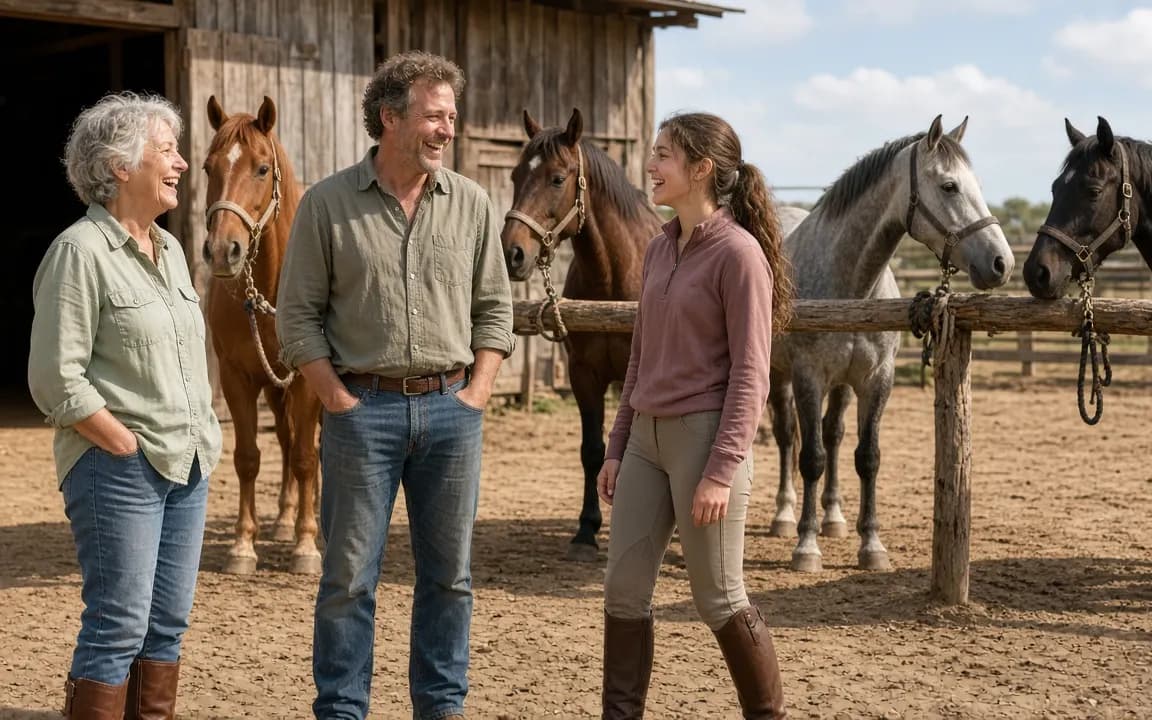
Most research on pet aftercare is about dogs and cats. Horse owners face different choices, like whether a truck can reach the back field or whether rendering is still available locally, and there's very little published on what owners actually prefer. These polls are a small, informal way to fill that gap.
They're also a gentle way to think about something hard. Answering a question about where you'd want the goodbye to happen is often the first time an owner considers it. If that stirs up questions, our services overview explains every option, and you can ask us directly.
Browse every poll
How horse owners handle an on-farm goodbye, choose between cremation, burial, rendering and composting, and what they keep afterwards.
If you had to decide today, what would you choose for your horse?
Tap an answer to vote and see how others answered. Anonymous.
Where would you want your horse's last moments to be?
Tap an answer to vote and see how others answered. Anonymous.
What would you most want to keep from your horse?
Tap an answer to vote and see how others answered. Anonymous.
What could you realistically spend on your horse's aftercare?
Tap an answer to vote and see how others answered. Anonymous.
Is your horse a senior, and have you made an aftercare plan?
Tap an answer to vote and see how others answered. Anonymous.
What worries you most about horse aftercare?
Tap an answer to vote and see how others answered. Anonymous.
Where does your horse live?
Tap an answer to vote and see how others answered. Anonymous.
If your horse's ashes came home, what would you do with them?
Tap an answer to vote and see how others answered. Anonymous.
The questions
What the horse polls cover, and why each matters
- Which aftercare you'd choose. Cremation, burial, rendering or composting, or letting the price decide. Cost per pound varies hugely between them.
- Where the goodbye would happen. The paddock, the barn, an equine hospital, or wherever a truck can reach. That choice shapes everything afterwards.
- What you'd keep. Tail braids, shoes, halters, ashes or simply photos and ribbons.
- Your realistic budget. From under $300 to more than $1,500.
- Planning for a senior horse. Whether a plan exists on paper, in your head, or not yet.
- Your biggest worry. Access, cost, distance, time pressure or not knowing the rules.
- Where your horse lives. At home, at a boarding barn, on livery or at a retirement farm.
- What you'd do with the ashes. Scatter, keep, bury under a tree, share or wear.
Where would you want your horse's last moments to be?
Tap an answer to vote and see how others answered. Anonymous.
The thinking behind them
What these questions reveal about horse aftercare
Some of these questions exist because the published numbers are so stark. Equine extension figures put cremation of a 1,000 lb horse at $600-$1,000[2], against $75-$200[3] for a rendering pickup. For many families that gap decides the matter, which is why we ask about budget alongside preference rather than assuming everyone wants ashes back.
Others exist because timing is so tight. State rules, as Cornell's horse disposal fact sheet notes, commonly allow 24-72 hours[4] to deal with a dead animal, which leaves little room for research on the day. A poll about planning might prompt a conversation with your vet that saves a lot of stress later. The pre-planning guide is a good next read.
Reading results fairly
How to read the results without over-reading them
Our polls count one vote per person per question, don't ask who you are, and update live. They reflect the people who happen to visit this site, which leans toward owners already thinking about cremation. They aren't a scientific survey and we never present them as one.
For numbers you can rely on, compare them with published research. The USDA NAHMS equine mortality study measured a yearly death rate of 3.1%[5] for horses aged 20 and over, for example, which is why the planning poll asks about senior horses specifically. Applying USDA's all-ages rate to the national herd, our estimate is that about 92,400 horses per year[6] die or are euthanized in the US, so these questions touch a lot of families every year. The poll results page puts live answers next to studies like that.
Barns and herds
Why we ask where your horse lives and how many you keep
A surprising amount of horse aftercare depends on who owns the land. A horse kept at home can often be buried there if rules allow. A horse at a boarding barn or retirement farm depends on what that owner permits, where a truck can go, and who is allowed to sign paperwork. That's why the boarding poll sits alongside the aftercare choice poll.
Herd size matters too. According to APPA, 55%[7] of US horse-owning households have two or more horses, so many owners will face this decision more than once, sometimes within a few years as a pair of companions ages together. A plan that works for one horse can be reused for the next, and a companion horse may need its own care when a field-mate dies.
If your horse is boarded, it's worth asking the barn manager now what they allow. Our article on working with your vet on end-of-life care includes questions for the barn as well as the vet.
Where does your horse live?
Tap an answer to vote and see how others answered. Anonymous.
Beyond horses
Polls shared with other pet owners
Some questions are universal: how much people expected aftercare to cost, what helped them grieve, and whether they compared providers. Those general polls appear across our network so horse owners can see how their answers sit next to dog, cat and other pet owners.
Horse answers often differ. A horse owner is more likely to consider burial on their own land, and far less likely to fit an entire pet's ashes into one small urn. If the gap surprises you, the ashes weight estimator shows why.
What would you expect to pay for private cremation of a medium-size dog?
Tap an answer to vote and see how others answered. Anonymous.
Next steps
Turning a poll answer into a plan
If a poll made you realize you haven't got a plan, start small. Write down your vet's number, the name of one provider who can take a horse, and where on your property a truck could reach. The farewell planner turns that into a printable checklist, and our planning page covers the rest.

Reader polls
What would you choose?
Vote anonymously and see how other readers answered. The results are live counts from people who visit this site, so they show real opinions, not a scientific sample.
If you had to decide today, what would you choose for your horse?
Tap an answer to vote and see how others answered. Anonymous.
Where would you want your horse's last moments to be?
Tap an answer to vote and see how others answered. Anonymous.
What would you most want to keep from your horse?
Tap an answer to vote and see how others answered. Anonymous.


Questions people ask
Are the horse polls anonymous?
Yes. We don't ask for your name or email to vote, and your answer isn't linked to anything you send through the contact form. We use a simple check to allow one vote per person per question so the results aren't skewed by repeat clicks.
Can I change my answer after voting?
Each poll counts one vote per person, so your first answer stands. If your view has genuinely changed, for example after your horse has passed, that's worth sharing with us through the contact form. We read those notes when writing new polls and guides.
Why are there no results shown before I vote?
Seeing other answers first can nudge people toward the popular choice. We show live results once you've voted, so your answer reflects your own situation. You can also browse all live results on the poll results page.
Will you add polls about ponies, donkeys or mules?
The current questions apply to all equids, and the choices are the same whatever the size. If you'd like a question specific to donkeys, minis or draft horses, suggest it through the contact form and we'll consider it.
Do the polls cover what happens if a horse dies suddenly?
Several do. The goodbye-place poll includes an option for owners who haven't been able to think about it, and the worry poll asks about time pressure. Sudden deaths, from colic or injury, are exactly when a little planning pays off, which is why we ask.

Sources and our estimates
- [1] About 2 million US households own horses. American Pet Products Association (APPA) 2025 National Pet Owners Survey release, 2025.
- [2] Cremating a 1,000-pound horse was reported to cost about $600-$1,000, depending on location and the price of propane. Extension Horses (eXtension national Cooperative Extension) - Horse Disposal Options, 2019, 2019.
- [3] Rendering companies typically charge a pickup fee of $75-$200 to remove a horse carcass, depending on location. Extension Horses (eXtension national Cooperative Extension) - Horse Disposal Options, 2019, 2019.
- [4] State rules commonly require dead animals to be buried within 24 to 72 hours of death, especially when euthanized. Cornell Waste Management Institute & Penn State - Horse Mortality: Carcass Disposal Alternatives (2012), 2012.
- [5] Equids aged 20 years or older had a 3.1% annual mortality rate in the 2015 NAHMS study, the highest of any age group. USDA APHIS NAHMS - Equine Mortality in the United States, 2015 (published Feb 2017), 2015.
- [6] About 92,400 U.S. horses would be expected to die or be euthanized each year (6.6 million horses x 1.4% annual mortality). Our estimate: 6,600,000 x 1.4%. How we calculate.
- [7] 55% of US horse-owning households have two or more horses. American Pet Products Association (APPA) 2025 National Pet Owners Survey release, 2025.
Have a question the polls don't answer?
Tell us what you need and where you are. We'll reply by email with clear options and prices so you can decide in your own time.