Planning for your horse's last day? Start with one question
Older horses are the most likely to die in any given year: 3.1%[1] of US equids aged 20 or more die annually. This quiz helps you decide which part of the plan to settle first.
- Made for 1,000 lb logistics, not lapdogs
- Nothing is sent to a provider or your vet
- Ends with a question you can copy
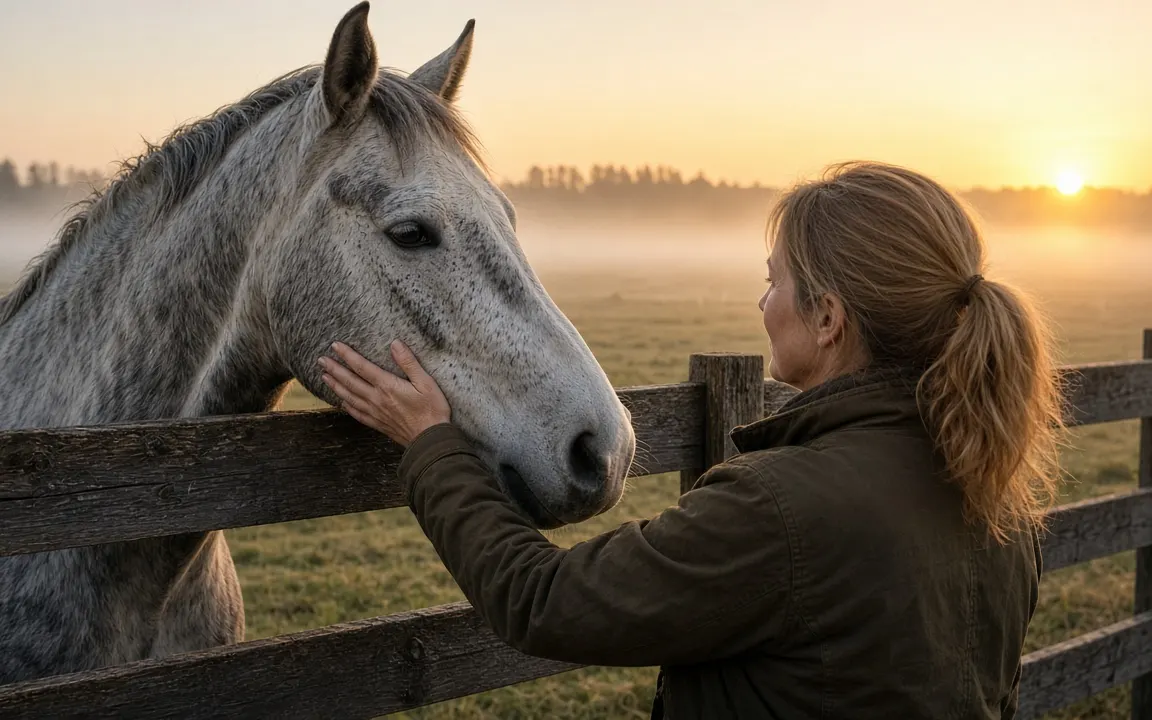
Equine Cremation Services · planning preferences
Horse cremation: choose your next question
Use Equine Cremation Services to choose your next horse cremation question, wherever you are worldwide. Select one guide topic, one detail to clarify and your current planning stage. The result repeats your choices and links to that guide. It does not estimate a price or confirm an arrangement.
Your choices stay in this page’s memory. They are shared only if you choose to send an email draft. Clear them below or reload to start again.
Prefer to ask our team directly?Question 1 of 3
Which decision would you like to explore first?
Equine Cremation Services organizes this worldwide horse cremation selector around four guide topics. Choose the question closest to what you want to understand first. The next two choices identify one detail and your planning stage. You can change the topic later; selecting it does not submit an inquiry or authorize any arrangement.
About the quiz
What the three horse quiz questions are for
Horse aftercare has more moving parts than almost any other pet. There's the provider, the vehicle, the ground it has to drive over, the vet's timing, the barn manager's rules and the keepsakes you'll want from a horse you may have known for twenty years. The quiz above picks one of those to start with.
- Topic. Choosing a provider with equipment for horses, the paperwork you should get back, mane and tail memorials, or farm access and trailer logistics.
- Detail. Body weight, whether collection is from a stable, field or clinic, gate width and turning space, ground and overhead obstacles, who the owner and vet contacts are, and what you want kept: mane, tail, shoes, ashes.
- Stage. Reading up, holding preferences with gaps, or checking a written quote.
It takes about a minute and stays in your browser. Nothing goes to a provider, a vet or us unless you open the email draft and send it yourself. To record every detail at once, use the horse planning worksheet.
After the quiz
What to do with your result at the barn
Your result names one detail and suggests an action. For horse owners, it's often something physical that only you can check. If the detail is gate width, go and measure it. If it's ground conditions, think about what the paddock is like after a week of rain. A tape measure and a photo on your phone are more useful to a provider than any description.
Copy the result and send it to anyone else involved: a co-owner, the barn manager, the person who'd be there if you couldn't be. Boarding yards often have their own rules about where euthanasia can happen and how vehicles get in, and it's much better to learn them now.
The big choice
Cremation, rendering or burial: the question behind every other
Many horse owners start with the provider topic, only to realize the first question is really whether cremation is right at all. Cremating a 1,000 lb horse was reported by equine extension specialists to cost about $600-$1,000[2], depending on location and fuel prices. Rendering pickup typically costs $75-$200[3], but returns no ashes, and only about 50%[4] of US states have rendering plants.
Home burial is possible in some places but needs heavy equipment and a hole about 9 ft deep[5], well away from wells and streams. State rules on depth and setbacks differ widely; University of Minnesota Extension's horse carcass disposal page shows what one state requires. Our comparison of horse rendering vs cremation explains each honestly, the services page sets out who each option suits, and the tool below lines up the costs.

Free tool
Horse aftercare cost comparison
Compare equine cremation, burial, rendering and composting side by side.
If you had to decide today, what would you choose for your horse?
Tap an answer to vote and see how others answered. Anonymous.
Before the horse leaves
Mane, tail and shoes: keepsakes you can only take once
If the quiz points you to keepsakes, act on it early. A braided section of mane or a full tail can be cut before collection, and it's worth tying it with a band at both ends so it doesn't unravel. Shoes need a farrier or a confident owner with the right tools. Our mane and tail memorial guide explains how to cut and store hair so it can be made into jewelry or a keepsake later.
If you choose private cremation, expect a lot of ash: our estimate for a 1,100 lb horse is about 38.5 lb[6]. That's far more than a standard urn holds, so many families scatter most of it and keep a small portion.
Logistics
Why access comes up so often in horse results
A horse can't be carried to a van. Collection usually needs a truck with a winch or a trailer, and it has to get close. A farm 40 miles away with a wide gravel drive can be simpler than one 5 miles away with a narrow gate and a soft field. That's why three of the six quiz details are about the physical site. The farm access and trailer guide covers what drivers ask.
If you'd like the day itself planned out, planning your horse's euthanasia day walks through it from morning to collection.
When you're ready
Your next step after the horse quiz
Retake the quiz for another topic, or move to the worksheet. When you'd like real options, tell us where your horse is kept and we'll email what's available nearby, including cremation, rendering and burial alternatives where they exist.
A horse gives you years. Giving them a planned, peaceful last day is one way to say thank you.

Reader polls
What would you choose?
Vote anonymously and see how other readers answered. The results are live counts from people who visit this site, so they show real opinions, not a scientific sample.
Is your horse a senior, and have you made an aftercare plan?
Tap an answer to vote and see how others answered. Anonymous.
Where does your horse live?
Tap an answer to vote and see how others answered. Anonymous.
Where would you prefer your pet's final moments to happen?
Tap an answer to vote and see how others answered. Anonymous.

Free tools to help you plan
Horse aftercare cost comparison
Compare equine cremation, burial, rendering and composting side by side.

Farewell & memorial service planner
Build a simple goodbye: who, where, readings, rituals and a checklist.

Aftercare options compared
Compare private, communal and water cremation with burial on cost, timing and what comes home.
Questions people ask
Is the horse aftercare quiz only for cremation?
No. The topics lean toward cremation, but the practical details it highlights, like access, weight and who authorizes collection, apply just as much to rendering or burial. Many owners use it to realize they need to compare all three before choosing.
My horse is boarded. Does that change anything?
Often, yes. Ask the yard now where euthanasia can take place, which entrance a collection truck should use and whether there are times vehicles aren't allowed. Put the barn manager's name and number in your plan alongside your vet's.
How far ahead should I plan a horse's aftercare?
As soon as your horse is a senior, usually from the mid-teens. Annual mortality for US horses aged 20 and over is about 3.1%, more than double the overall rate. Planning ahead gives you time to find a provider with the right equipment, which can take several calls.
Will the quiz send my details to a provider?
No. Your choices stay in this browser tab. The result can open an email draft, but it doesn't send unless you press send in your own email app. If you want options, use the form on this page and we'll reply by email.
What should I measure for horse collection?
The narrowest gate the vehicle must pass through, the turning space near the horse, and any low branches, wires or roof edges overhead. Note whether the ground is firm or soft. A few photos taken now can save a failed collection attempt later.
Keep reading


Sources and our estimates
- [1] Equids aged 20 years or older had a 3.1% annual mortality rate in the 2015 NAHMS study, the highest of any age group. USDA APHIS NAHMS - Equine Mortality in the United States, 2015 (published Feb 2017), 2015.
- [2] Cremating a 1,000-pound horse was reported to cost about $600-$1,000, depending on location and the price of propane. Extension Horses (eXtension national Cooperative Extension) - Horse Disposal Options, 2019, 2019.
- [3] Rendering companies typically charge a pickup fee of $75-$200 to remove a horse carcass, depending on location. Extension Horses (eXtension national Cooperative Extension) - Horse Disposal Options, 2019, 2019.
- [4] Only about 50% of U.S. states have rendering plants, most of them concentrated in the Midwest. Extension Horses (eXtension national Cooperative Extension) - Horse Disposal Options, 2019, 2019.
- [5] Extension guidance recommends a horse burial trench about 7 feet wide and 9 feet deep, covered by 3-4 feet of soil, and no fewer than 100 yards from wells and streams. Extension Horses (eXtension national Cooperative Extension) - Horse Disposal Options, 2019, 2019.
- [6] A 1,100 lb horse would be expected to return roughly 38.5 lb of cremated remains (plausible range 33-55 lb). Our estimate: 1,100 lb x 3.5% (range 3%-5%). How we calculate.
Talk to us about your horse instead
Tell us what you need and where you are. We'll reply by email with clear options and prices so you can decide in your own time.