Every way to care for your horse after death, side by side
Rendering pickup typically costs $75-$200[1], while private cremation runs to several hundred dollars more. Here's what each service involves, so you can choose with your eyes open.
- Five horse aftercare routes, priced honestly
- Farm collection and access explained
- Help comparing local quotes line by line

Service 1
Private equine cremation, with the ashes returned
This is the service most owners mean when they search for horse cremation. Your horse is collected, cremated alone in a large-animal chamber, and the ashes come back to you. Equine extension specialists have put the cremation itself at about $600-$1,000[2] for a 1,000 lb horse, with fuel prices one reason quotes move around.
It suits owners who want something to scatter, bury under a tree or keep. It also suits anyone who can't bury at home: boarders, renters and people who may sell the property one day. Because so few chambers take a whole horse, you may have fewer choices than you'd expect. Our guide to choosing an equine-capable provider shows how to check.
Service 2
On-farm collection and transport
Almost every horse aftercare option starts with getting a very heavy body onto a vehicle. Crematories, renderers and fallen-stock collectors use trucks or trailers fitted with a winch, and some use a tilt-bed. The driver needs to get within a short cable run of your horse on ground firm enough to take the weight.
Collection is usually priced by distance, and weekend or night calls may cost more. Some crematories only collect on certain days in certain areas. If you're rural, ask whether a scheduled route passes near you; it can bring the price down. Our transport and logistics guide explains what drivers look for.
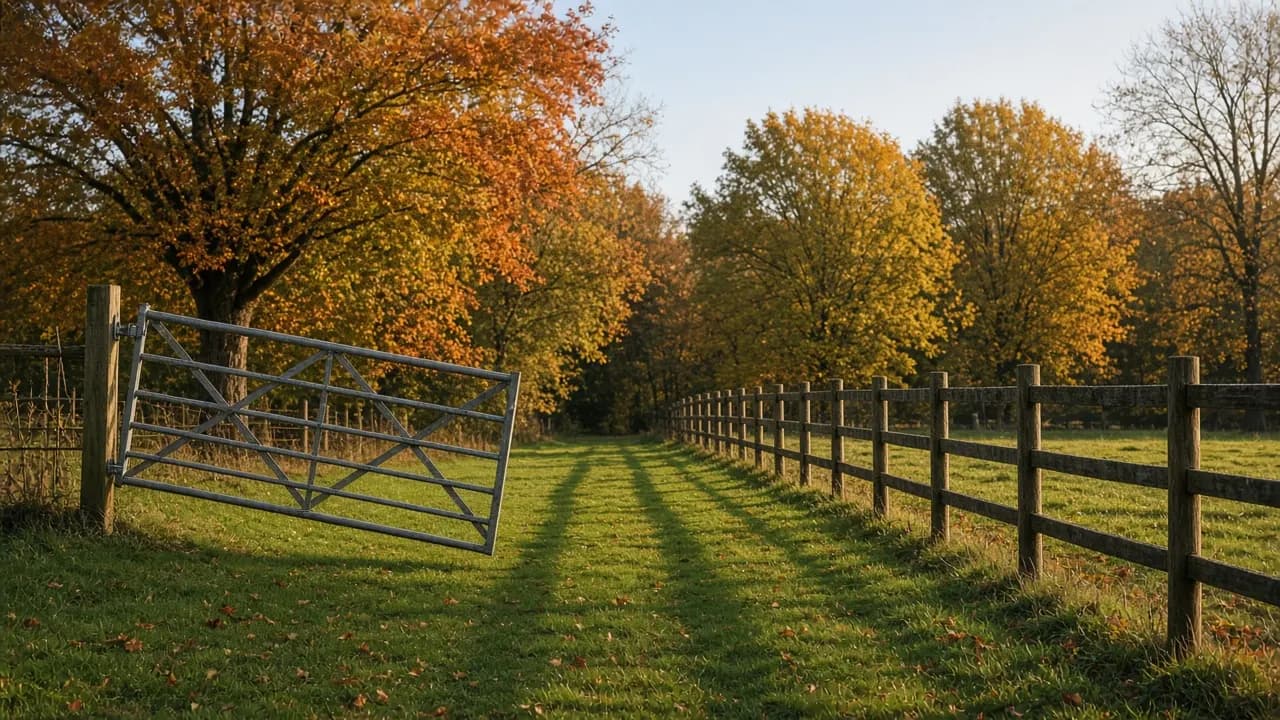
- Measure the narrowest gate on the route and note any low branches or tight turns.
- Say whether your horse is in a stall, a paddock or a field, and how far from a hard surface.
- Mention soft ground, snow or a steep slope up front, not when the truck arrives.
- Ask if your vet can schedule euthanasia near the barn or a gate if it's planned.
Service 3
Burial on your own land
Many owners want their horse to stay home. If your land and local rules allow it, burial is often the gentlest option on the budget: renting a backhoe has been reported at $250-$500[3]. Our guide to burying a horse on your property covers depth, setbacks and permits. Some owners know a neighbor or contractor with an excavator, which can be quicker than waiting for a rental.
The hole is bigger than people picture. National extension guidance suggests a trench about 9 ft deep[4] and roughly 7 feet wide, with 3 to 4 feet of soil on top, kept well away from wells and streams. State rules vary: Pennsylvania's mortality disposal rules, for example, set a minimum 100 ft setback[5] from wells, waters and property lines. Check with your county or state agriculture office before digging.
Service 4
Rendering and fallen-stock collection
Renderers collect the body and process it at high heat into materials like meal and fats. It's the lowest-cost route for many owners, usually a pickup fee rather than a per-pound charge. University of Minnesota Extension reports about $150+[7] per horse pickup there.
The catch is availability. Only about 50%[8] of US states have rendering plants, mostly in the Midwest, and some plants no longer take horses or charge more for euthanized ones because of drug residues. In England, fallen-stock collectors and knackers do a similar job, as set out in the GOV.UK fallen stock guidance. Nothing is returned, so save any keepsakes first. Our horse rendering vs cremation comparison sets out the trade-offs honestly.
Service 5
On-farm composting
Composting surrounds the body with a thick layer of carbon material, such as wood chips or sawdust, so that heat breaks it down safely. Cornell and Penn State estimated costs of $170-$380[9] for a 1,200 lb horse, including about 10 cubic yards of material. An intact horse takes roughly 9-10 months[10] to compost fully.
It's legal in many states but not all; California, for instance, restricts composting of unprocessed mammal carcasses. It suits larger farms with a loader, space away from water and neighbors, and the patience to manage a pile for most of a year.
At a glance
How the options compare on cost, time and what you keep
| Option | Typical cost | Timing | Suits |
|---|---|---|---|
| Private cremation | $600 to $1,000 | Ashes back in days to weeks | Owners who want ashes, boarders, renters |
| Home burial | $250 to $500 backhoe | Same day if machinery is available | Owners with suitable land they'll keep |
| Rendering | $75 to $200 pickup | Usually within a day or two | Tight budgets, where a plant takes horses |
| Composting | $170 to $380 | About 9 to 10 months | Larger farms with a loader and space |
| Landfill | $80 to $150 | Where accepted | Areas without rendering |
Choosing composting instead of cremation saves roughly $525[11] at midpoint prices on our estimate, and rendering saves more. Neither is wrong; they answer different questions. The aftercare options comparison ranks them by what matters to you.

Free tool
Aftercare options compared
Compare private, communal and water cremation with burial on cost, timing and what comes home.
Alongside any option
Keepsakes and memorials you can add
Whatever route you choose, a few keepsakes are free if you plan them: a tail braid, a mane lock, a shoe or the halter. Hair jewelry makers, engravers and urn sellers work from those. With cremation, a horse's ashes fill many keepsake urns, so family and riders can each take a share. The ashes sharing planner works out how far they go, and our mane and tail memorials guide shows how to cut and store hair.
What could you realistically spend on your horse's aftercare?
Tap an answer to vote and see how others answered. Anonymous.

Reader polls
What would you choose?
Vote anonymously and see how other readers answered. The results are live counts from people who visit this site, so they show real opinions, not a scientific sample.
What could you realistically spend on your horse's aftercare?
Tap an answer to vote and see how others answered. Anonymous.
If you had to decide today, what would you choose for your horse?
Tap an answer to vote and see how others answered. Anonymous.
What would you expect to pay for private cremation of a medium-size dog?
Tap an answer to vote and see how others answered. Anonymous.

Free tools to help you plan
Aftercare options compared
Compare private, communal and water cremation with burial on cost, timing and what comes home.

Horse aftercare cost comparison
Compare equine cremation, burial, rendering and composting side by side.

Ashes sharing planner
Split ashes fairly between family members, keepsake urns and jewelry.
Questions people ask
What's the cheapest way to deal with a dead horse?
Rendering pickup is usually the lowest fee, reported at around $75-$200[1] depending on location, followed by landfill where it's accepted and on-farm composting. Burial can be cheap if you have your own machinery. Availability matters as much as price, because many areas have no renderer that still takes horses.
Do I need a vet to arrange horse cremation?
No, you can contact a crematory directly. Your vet is still important: they carry out euthanasia, can advise on where it should happen for easy collection, and often know which local providers are reliable. Some vets will call the crematory for you while you stay with your horse.
Can I bury my horse on my property?
In many US states and in England, yes, with conditions. Rules usually cover depth, soil cover, distance from wells and water, and how soon burial must happen. Pennsylvania, for example, expects disposal within 48 hours[12]. Check your state or county rules before you dig.
Will a renderer take a horse that was euthanized?
Some will and some won't, and those that do may charge more because of drug residues in the carcass. Rules have reduced the number of plants willing to take horses at all. Call before you need them and ask directly about euthanized horses.
Is composting a horse safe?
Done properly, yes. A well-built pile should heat to at least 130 F, which helps break the body down and reduce pathogens. It needs a lot of carbon material, a site away from water and neighbors, and someone to manage it for most of a year. Your state extension office can advise.
Keep reading
Horse aftercare cost comparison
See each option priced for your horse's weight.

Farm access and trailer logistics
Gates, ground and what collection trucks need.

Comparing horse cremation quotes
The line items to look for in a written price.

Ask us to find local options
Tell us about your horse and we'll email choices.
Sources and our estimates
- [1] Rendering companies typically charge a pickup fee of $75-$200 to remove a horse carcass, depending on location. Extension Horses (eXtension national Cooperative Extension) - Horse Disposal Options, 2019, 2019.
- [2] Cremating a 1,000-pound horse was reported to cost about $600-$1,000, depending on location and the price of propane. Extension Horses (eXtension national Cooperative Extension) - Horse Disposal Options, 2019, 2019.
- [3] Renting a backhoe to bury a horse costs roughly $250-$500, and horse disposal in a landfill (where accepted) costs about $80-$150. Extension Horses (eXtension national Cooperative Extension) - Horse Disposal Options, 2019, 2019.
- [4] Extension guidance recommends a horse burial trench about 7 feet wide and 9 feet deep, covered by 3-4 feet of soil, and no fewer than 100 yards from wells and streams. Extension Horses (eXtension national Cooperative Extension) - Horse Disposal Options, 2019, 2019.
- [5] Pennsylvania on-farm burial requires at least 2 feet of soil cover, 2 feet of clearance above bedrock and the seasonal high water table, and at least 100 feet from wells, sinkholes, waters and property lines (200 feet recommended). Penn State Extension - Livestock and Poultry Mortality Disposal in Pennsylvania (J. Craig Williams, updated Oct 2025), 2025.
- [6] Since 2003 the FDA has required euthanasia drug labels to warn that euthanized animals must be disposed of by deep burial, incineration or another approved method to keep scavenging wildlife from eating the carcass. Cornell Waste Management Institute & Penn State - Horse Mortality: Carcass Disposal Alternatives (2012), 2003.
- [7] University of Minnesota Extension reports rendering services cost $150 or more per pickup for a horse. University of Minnesota Extension - Horse carcass disposal (Martinson & Wilson, reviewed 2022), 2022.
- [8] Only about 50% of U.S. states have rendering plants, most of them concentrated in the Midwest. Extension Horses (eXtension national Cooperative Extension) - Horse Disposal Options, 2019, 2019.
- [9] Composting a 1,200-pound horse requires about 10 cubic yards of carbon material (wood chips, sawdust), and total material, equipment, fuel and labor costs were estimated at $170-$380 per horse. Cornell Waste Management Institute & Penn State - Horse Mortality: Carcass Disposal Alternatives (2012), 2012.
- [10] An intact horse carcass takes approximately 9-10 months to compost, and piles should reach at least 130 F. Extension Horses (eXtension national Cooperative Extension) - Horse Disposal Options, 2019, 2019.
- [11] Choosing on-farm composting instead of cremation saves a horse owner roughly $525 at midpoint prices (2012-2019 extension figures, not inflation-adjusted). Our estimate: $800 cremation midpoint - $275 composting midpoint. How we calculate.
- [12] Pennsylvania requires a dead domestic animal to be properly disposed of within 48 hours of death. Penn State Extension - Livestock and Poultry Mortality Disposal in Pennsylvania (J. Craig Williams, updated Oct 2025), 2025.
Compare horse aftercare services near you
Tell us what you need and where you are. We'll reply by email with clear options and prices so you can decide in your own time.