Equine Aftercare
Contact our team

How horse owners are answering, live

Published research says horses aged 20 and over die at a rate of 3.1%[1] a year. Our live polls show how owners are preparing, in their own words.

  • Live counts, never pre-filled
  • One anonymous vote per person
  • Read next to published research

Get options for your own horse

Poll answers are interesting, but your farm is specific. Tell us where you are and we'll email local choices.

Free, no obligation and no phone calls. We reply by email. Privacy

Or email info@horse-cremation.online

How horse owners are answering, live

Before you look

How these results are counted

Every figure below is a live count of votes from visitors to this site. Each person gets one vote per question, nobody is asked for a name, and nothing is estimated, weighted or filled in by us. When a poll is new, the numbers will be small and can swing a lot with a handful of votes.

That makes the results a conversation, not a statistic. They tell you how people who read a horse aftercare guide are thinking. They don't tell you what all horse owners do. If you haven't voted yet, the polls page has every question.

Live results

If you had to decide today, what would you choose for your horse?

Private cremation, with the ashes coming home0%
Burial on our own land0%
Rendering or a fallen-stock collector0%
Composting on the farm0%
Honestly, the price would decide it0%

Loading...
Where would you want your horse's last moments to be?

Out in their own paddock or field0%
In or just outside the barn0%
At an equine hospital0%
Wherever the truck can reach afterwards0%
I haven't let myself think about it0%

Loading...

What would you most want to keep from your horse?

A length of tail or mane, braided0%
A shoe from their last trim or reset0%
Their halter or stall nameplate0%
Some of their ashes0%
Photos and ribbons are enough0%

Loading...

What could you realistically spend on your horse's aftercare?

Under $3000%
$300 to $8000%
$800 to $1,5000%
More than $1,500 if I had to0%
I have no idea what it costs0%

Loading...

Is your horse a senior, and have you made an aftercare plan?

Yes, and it's written down at the barn0%
Yes, I've talked it through with my vet0%
Yes, but the plan is only in my head0%
Yes, and I've been putting it off0%
No, my horse is still young0%

Loading...

What worries you most about horse aftercare?

Getting a truck or machine to where my horse is0%
The cost0%
How far away the nearest crematory is0%
How fast everything has to happen0%
Not knowing the local rules0%

Loading...

Where does your horse live?

On our own property0%
At a boarding barn0%
In a rented field or on livery0%
At a retirement farm0%

Loading...

If your horse's ashes came home, what would you do with them?

Scatter them over their favorite field0%
Keep them in an urn at home or in the tack room0%
Bury them under a tree0%
Share them with family or riders who loved them0%
Keep a little in jewelry0%

Loading...

The bigger picture

How to compare our polls with published horse research

Where research exists, we put it beside the polls so you can see whether readers look like the wider population. Three reference points matter most for horses: how many die each year, what each aftercare option costs, and how old the horses are.

92,400 horses per year[2]

About 92,400 U.S. horses would be expected to die or be euthanized each year (6.6 million horses x 1.4% annual mortality).

$600-$1,000[3]

Cremating a 1,000-pound horse was reported to cost about $600-$1,000, depending on location and the price of propane.

3.1%[1]

Equids aged 20 years or older had a 3.1% annual mortality rate in the 2015 NAHMS study, the highest of any age group.

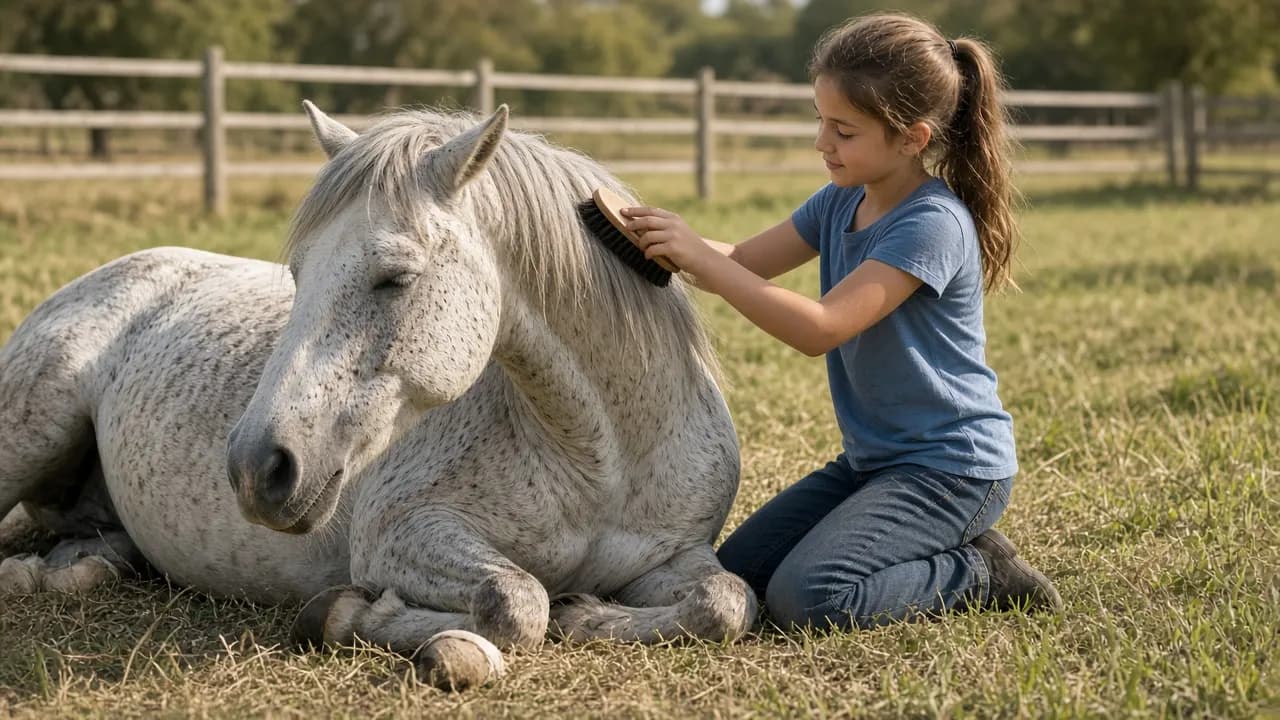
On our estimate, around 92,400 horses per year[2] die or are euthanized in the US, based on the mortality rate in USDA's NAHMS equine study. Many of them are seniors. If a large share of poll voters say they have no plan yet for an older horse, that's worth noticing, because that group carries the most risk.

An elderly grey horse with a sway back dozing in a sunny paddock beside a young girl brushing its mane
Senior horses carry the highest yearly risk, which is why we ask about planning.

Reading the budget poll

Reading the budget and choice polls against real prices

The budget poll is most useful next to the actual cost bands. Equine extension figures put a rendering pickup at $75-$200[4], on-farm composting at $170-$380[5] and backhoe burial at $250-$500[6]. Cremation sits above all of them, and transport comes on top.

If many voters pick a budget below the cremation range but say they'd choose cremation, it may suggest the full cost is easy to underestimate. The cremation cost calculator shows the realistic range for your horse's weight.

Free tool

Cremation cost calculator

Estimate a realistic price range for your pet's size, location and the type of cremation.

Reading the keepsake polls

What the keepsake and ashes answers can tell you

Horse keepsakes are unusual in one way: the most treasured ones, like a tail braid or a last shoe, cost nothing and must be saved before collection. If those options are popular in the results, it's a reminder to plan them early, whatever aftercare you choose. Our mane and tail memorials guide shows how.

For the ashes poll, remember the scale. A 1,100 lb horse can return around 38.5 lb[7] on our estimate, so scattering most of it and keeping a little is a practical choice as much as a sentimental one. The ashes sharing planner shows how far the ashes go.

If your horse's ashes came home, what would you do with them?

Tap an answer to vote and see how others answered. Anonymous.

A useful contrast

Why horse answers may differ from dog and cat research

The largest US survey of aftercare wishes asked dog and cat owners, not horse owners. Asked about their preferred future care, they split as 40.4% cremation; 34.9% home burial; 1.9% aquamation[8]. Those owners can carry their pet to the car and have a crematory in most towns, so the comparison has limits.

Horse owners face a different set of trade-offs. Burial at home needs machinery and suitable ground, cremation often means a long haul, and rendering is a real option that small-pet owners rarely consider. If the horse choice poll leans further toward burial or rendering than the dog and cat research, that's a likely reason, not a sign that horse owners care less.

The access and boarding polls help explain the rest. A boarder may want burial but have no land to bury on; a farm owner may want cremation but face a two-hour drive to the nearest chamber. Our farm access and trailer logistics guide covers the practical side of both.

Using the results

What to take away, and what not to

  • Do use the results to spot questions you hadn't thought about, such as access for a truck or who signs for a boarded horse.
  • Do notice where your answer differs from the crowd, and ask why. There may be a good local reason.
  • Don't treat the most popular answer as the right one for your horse, land or budget.
  • Don't quote the numbers as research. They're live and informal.

If the results leave you with a practical question, our questions to ask a horse cremation provider turns it into something you can ask on the phone. Or send us your details and we'll look at your area.

Behind the numbers

Behind every vote, a horse someone loved

Poll answers look tidy on a chart. The situations behind them rarely are. In the RSPCA's large pet-loss survey, 75.4%[9] of bereaved owners felt grief before their pet died, which fits what many horse owners describe while caring for an aging horse. If that's you, the grief after losing a horse article is written for exactly that stretch.

Reader polls

What would you choose?

Vote anonymously and see how other readers answered. The results are live counts from people who visit this site, so they show real opinions, not a scientific sample.

If your horse's ashes came home, what would you do with them?

Tap an answer to vote and see how others answered. Anonymous.

Is your horse a senior, and have you made an aftercare plan?

Tap an answer to vote and see how others answered. Anonymous.

What helped you most in the first weeks?

Tap an answer to vote and see how others answered. Anonymous.

Questions people ask

Are these poll results a scientific survey?

No. They're live counts from visitors who choose to vote, with one vote per person per question. The people who find a horse aftercare guide aren't a random sample of all owners, so treat the results as a snapshot of readers, not a measure of the whole horse world.

Why do some polls show very few votes?

New questions start at zero and fill up over time. With only a few votes, a single answer can swing the percentages a lot. We never add or estimate votes to make a poll look fuller, so small numbers simply mean the poll is young.

Where can I find reliable statistics on horse deaths and aftercare?

USDA's NAHMS equine studies measure mortality by age, and university extension services publish cost and disposal guidance. We cite those sources throughout the site and list them on our research page, alongside our own labelled estimates.

Can I see how horse owners compare with dog or cat owners?

Yes, for the general polls that run across our network, such as questions about expected costs and grief. Horse-specific polls only run here, because the choices, like rendering or burial on your own land, don't apply to most small pets.

Do you ever publish poll results as findings?

No. We may mention in general terms that a poll is getting lots of votes, but we don't turn live results into claims like most horse owners choose cremation. When we state a fact on this site, it comes from a published source and is footnoted.

Sources and our estimates

  1. [1] Equids aged 20 years or older had a 3.1% annual mortality rate in the 2015 NAHMS study, the highest of any age group. USDA APHIS NAHMS - Equine Mortality in the United States, 2015 (published Feb 2017), 2015.
  2. [2] About 92,400 U.S. horses would be expected to die or be euthanized each year (6.6 million horses x 1.4% annual mortality). Our estimate: 6,600,000 x 1.4%. How we calculate.
  3. [3] Cremating a 1,000-pound horse was reported to cost about $600-$1,000, depending on location and the price of propane. Extension Horses (eXtension national Cooperative Extension) - Horse Disposal Options, 2019, 2019.
  4. [4] Rendering companies typically charge a pickup fee of $75-$200 to remove a horse carcass, depending on location. Extension Horses (eXtension national Cooperative Extension) - Horse Disposal Options, 2019, 2019.
  5. [5] Composting a 1,200-pound horse requires about 10 cubic yards of carbon material (wood chips, sawdust), and total material, equipment, fuel and labor costs were estimated at $170-$380 per horse. Cornell Waste Management Institute & Penn State - Horse Mortality: Carcass Disposal Alternatives (2012), 2012.
  6. [6] Renting a backhoe to bury a horse costs roughly $250-$500, and horse disposal in a landfill (where accepted) costs about $80-$150. Extension Horses (eXtension national Cooperative Extension) - Horse Disposal Options, 2019, 2019.
  7. [7] A 1,100 lb horse would be expected to return roughly 38.5 lb of cremated remains (plausible range 33-55 lb). Our estimate: 1,100 lb x 3.5% (range 3%-5%). How we calculate.
  8. [8] Asked their preferred future after-death care, 40.4% of US owners chose traditional flame cremation and 34.9% home burial; 10.7% chose cemetery burial and 1.9% alkaline hydrolysis (aquamation). Cooney, Kogan, Brooks, Ellis - Pet Owners' Expectations for Pet End-of-Life Support and After-Death Body Care, Topics in Companion Animal Medicine (2020), 2020.
  9. [9] 75.4% of RSPCA pet-loss survey respondents experienced anticipatory grief before their pet died. RSPCA — Pet Loss Survey Results, 2026.

Get options for your own horse

Tell us what you need and where you are. We'll reply by email with clear options and prices so you can decide in your own time.

Get my options

Free, no obligation and no phone calls. We reply by email. Privacy

Or email info@horse-cremation.online