Horse cremation, from the field gate to the urn
Cremating a 1,000 lb horse has been reported at about $600-$1,000[1], before transport. We help you find an equine-capable provider near you and understand every line of the quote.
- Providers that can actually handle a full-size horse
- Straight answers on transport, access and total cost
- Burial, rendering and composting explained too

If your horse has just died or is about to
The first few hours: what matters on the farm
When a horse dies, the practical clock runs faster than it does for a dog or cat. A body of 1,000 lb or more can't be carried indoors or kept cool, and many states expect a decision quickly. Cornell's horse disposal fact sheet notes that rules commonly give owners 24-72 hours[2] to bury or otherwise dispose of a dead animal. That isn't a reason to panic. It's a reason to make two or three phone calls early rather than late.
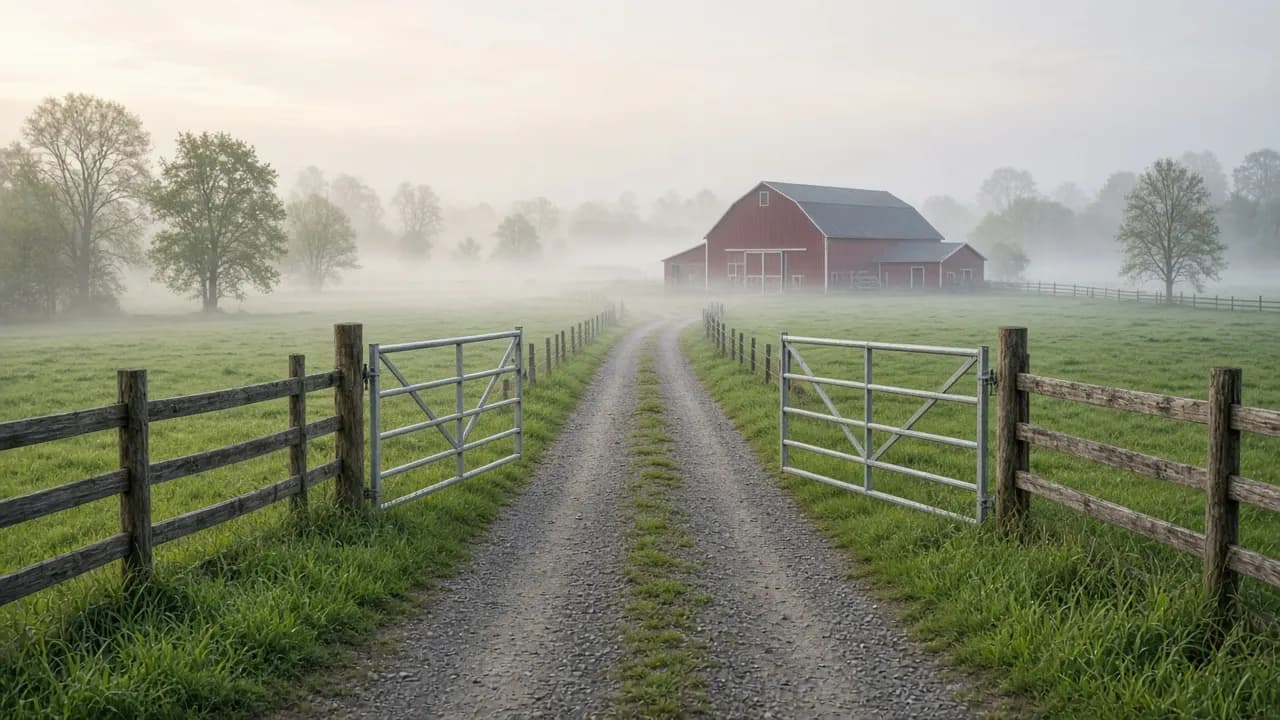
If the euthanasia is planned, choose the spot with the collection vehicle in mind. A flat, firm area near a gate or the barn aisle, reachable by a truck with a winch, is kinder to everyone than a far corner of a wet pasture. Your vet will know the ground rules; our farm access and trailer logistics guide covers gate widths and ground conditions in detail.
Cover your horse with a tarp or sheet, keep other horses nearby for a short while if they seem to want to see, then keep them away from the area. Many owners find that a companion horse settles faster after a few minutes with the body.
The main decision
Cremation, burial, rendering or compost: the four real choices
Horse owners have more options than most pet owners, and they differ hugely in cost and in what you keep. Private cremation returns your horse's ashes. Burial on your own land keeps them where they lived, if local rules and your ground allow it. Rendering or a fallen-stock collector removes the body for processing, usually for the lowest fee. Composting on the farm is legal in many places and cheap, but slow. The equine extension summary of horse disposal options is a sound, neutral read on all four.
| Option | Typical cost | What you keep |
|---|---|---|
| Private cremation | $600 to $1,000, plus transport | Your horse's ashes |
| Burial with a rented backhoe | $250 to $500 | A grave on your land |
| Rendering pickup | $75 to $200 | Nothing returned |
| On-farm composting | $170 to $380 | Finished compost, after many months |
| Landfill, where accepted | $80 to $150 | Nothing returned |
Put another way, cremation works out at roughly $0.80/lb[3] of body weight on our estimate, several times the per-pound cost of rendering or composting. Our horse aftercare cost comparison runs those numbers for your horse's weight, and the services page explains who each option suits. If you're torn between the lowest-cost route and keeping ashes, read horse rendering vs cremation.

Free tool
Horse aftercare cost comparison
Compare equine cremation, burial, rendering and composting side by side.
If you had to decide today, what would you choose for your horse?
Tap an answer to vote and see how others answered. Anonymous.
Why it isn't like cremating a dog
Why few crematories can take a full-size horse
Most pet crematories are built for animals under a few hundred pounds. An agricultural-scale unit might hold up to a 1,500 lb load[4], so a 1,100 lb horse fills about 73% of chamber capacity[5] on our estimate. That's why equine crematories cremate one horse at a time, and why there are far fewer of them. Some families drive or pay for transport across a state line to reach one.
4.4 hours[6]
Because of the size and the cooling time, return of the ashes usually takes longer than for a small pet. Ask when you'll get them back, and whether the provider returns all of the ashes or a set portion; practices differ, and it's a fair question. Our walk-through of what happens during horse cremation explains each stage.
Getting there
How your horse gets from the farm to the crematory
- Booking. You or your vet call an equine-capable provider, confirm they cover your area and agree a pickup window.
- Access check. They'll ask about gate width, the surface, slopes and how close a truck can get. Frozen or waterlogged ground changes the plan.
- Loading. A covered truck or trailer with a winch loads your horse gently. It's a practical process; many owners prefer to say goodbye before it starts.
- Cremation. Your horse is cremated individually for a private service, then the remains cool and are processed.
- Return. The ashes come back in a container or urn, often with a certificate. Ask for that in writing.
Transport is often the second-biggest line on the bill, and it's usually priced by distance. If the nearest crematory is two hours away, ask whether they run collection routes through your area on set days. The transport and logistics guide lists what to have ready.
Remembering
Tail braids, shoes and urns: what horse owners keep
A horse leaves a lot of ash. At 3-5% of body weight[7], a 1,100 lb horse returns around 38.5 lb[8] on our estimate, which is far more than a standard urn holds. Many owners scatter most of it over a favorite field and keep a small urn or keepsake for the house.
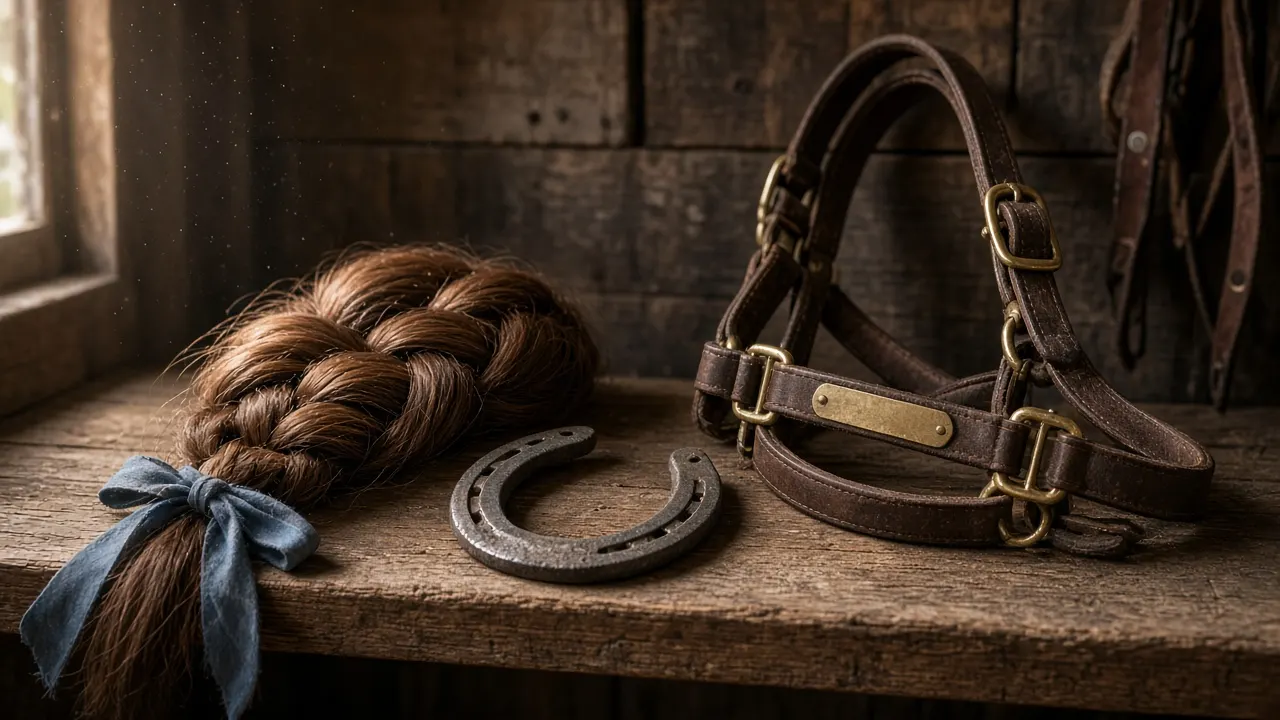
Tail and mane hair can be made into bracelets, framed braids or tassels. A last shoe can be mounted or engraved. For ideas, see mane and tail memorial planning, and try the urn size calculator before you buy an urn.
What would you most want to keep from your horse?
Tap an answer to vote and see how others answered. Anonymous.
Before you agree to anything
Questions to ask an equine cremation provider
- What's the largest horse you can cremate, and will mine be cremated alone?
- What does transport cost from my address, and is there an after-hours or weekend fee?
- What does your truck need: gate width, firm ground, distance from the horse?
- Will I get all of the ashes back, and in what container?
- Can I save tail hair or a shoe, and can I send a blanket or letter with my horse?
- What paperwork will I receive, and who can sign if my horse is boarded?
Our fuller list of questions to ask a horse cremation provider explains what good answers sound like. Or tell us about your horse and we'll find out for you.
The part nobody plans for
Grief after a horse is its own kind of loss
A horse is often part of your daily life for twenty years or more: the early feeds, the rides, the vet bills and the quiet moments in the barn. When that stops, the routine goes with it. In the RSPCA's pet-loss survey of more than 4,000 owners, 66.9%[9] of bereaved owners were surprised by how intense their grief was.
The barn community can help, because they understood your horse too. Our page on grief after losing a horse has practical ways through the first weeks, and the pet loss grief check-in is a private way to see how you're coping.

Reader polls
What would you choose?
Vote anonymously and see how other readers answered. The results are live counts from people who visit this site, so they show real opinions, not a scientific sample.
If you had to decide today, what would you choose for your horse?
Tap an answer to vote and see how others answered. Anonymous.
What worries you most about horse aftercare?
Tap an answer to vote and see how others answered. Anonymous.
If you had to decide today, which aftercare would you choose for your pet?
Tap an answer to vote and see how others answered. Anonymous.

Free tools to help you plan
Horse aftercare cost comparison
Compare equine cremation, burial, rendering and composting side by side.

Cremation cost calculator
Estimate a realistic price range for your pet's size, location and the type of cremation.

Urn size calculator
Find the urn volume you need from your pet's weight, plus keepsake and sharing options.
Questions people ask
How much does it cost to cremate a horse?
US extension specialists have reported about $600-$1,000[1] to cremate a 1,000 lb horse, depending on location and fuel prices. Transport from your farm is often charged on top and depends on distance, so a remote property can add noticeably to the total. Always ask for a written quote that includes collection.
Can any pet crematory cremate a horse?
No. Most pet crematories are sized for dogs and cats. A full-size horse needs a large-animal chamber and a vehicle with a winch to load it. Ask each provider for the heaviest horse they can take and whether yours will be cremated on its own.
How many pounds of ashes does a horse produce?
Cremated remains are usually around 3 to 5 percent of body weight, so a 1,100 lb horse can return roughly 33 to 55 lb. Some providers return a portion rather than everything, so ask what you'll receive. That volume is why many owners scatter most of the ashes and keep a small urn.
Is it cheaper to bury or cremate a horse?
Burial is usually cheaper if you have suitable land and machinery access. Renting a backhoe has been reported at $250-$500[10], against several hundred dollars more for cremation. Burial depends on local rules about depth, water tables and distance from wells, and it's only an option if you'll keep the property.
What happens if my horse dies in winter when the ground is frozen?
Frozen ground can rule out burial and makes access harder for trucks on soft or icy lanes. Cremation, rendering and fallen-stock collection still work if a vehicle can reach your horse. Ask your provider how they handle winter pickups, and keep a cleared route to the barn if your horse is elderly.
Can I be there when my horse is collected?
Yes, but many owners choose to say goodbye before loading starts. Moving a horse's body needs a winch and takes a few minutes, and it can be upsetting to watch. A friend or your barn manager can stay with the driver while you step away.
Keep reading

Every horse aftercare option
Cremation, farm collection, burial, rendering and keepsakes explained.

Find equine providers near you
Local rules, distances and pickup help by state and region.

Choosing an equine-capable provider
How to check a provider can really handle a horse.
What other horse owners chose
Live results from our reader polls.
Sources and our estimates
- [1] Cremating a 1,000-pound horse was reported to cost about $600-$1,000, depending on location and the price of propane. Extension Horses (eXtension national Cooperative Extension) - Horse Disposal Options, 2019, 2019.
- [2] State rules commonly require dead animals to be buried within 24 to 72 hours of death, especially when euthanized. Cornell Waste Management Institute & Penn State - Horse Mortality: Carcass Disposal Alternatives (2012), 2012.
- [3] Midpoint horse cremation cost works out to about $0.80 per pound of body weight, versus about $0.14 per pound for rendering pickup and $0.23 per pound for on-farm composting. Our estimate: cremation $800 / 1,000 lb; rendering $137.50 / 1,000 lb; composting $275 / 1,200 lb. How we calculate.
- [4] An animal incinerator sized for agricultural and animal-control use holds up to 1,500 lb per load with a maximum burn rate of 250 lb per hour (manufacturer specification). B&L Cremation Systems (manufacturer) - BLI-1500 Animal Incinerator specifications.
- [5] A 1,100 lb horse uses about 73% of a 1,500 lb animal incinerator load, so large-animal units generally cremate one horse at a time. Our estimate: 1,100 / 1,500 x 100. How we calculate.
- [6] At an average rate of 250 lb per hour, the burn phase for a 1,100 lb horse would take at least about 4.4 hours, not counting preheating and cool-down. Our estimate: 1,100 lb / 250 lb per hour. How we calculate.
- [7] Embrace notes cremated remains typically weigh about 3-5% of the pet's original body weight. Embrace Pet Insurance - Bury or Cremate Your Dog? Costs, Pros & Cons, 2025.
- [8] A 1,100 lb horse would be expected to return roughly 38.5 lb of cremated remains (plausible range 33-55 lb). Our estimate: 1,100 lb x 3.5% (range 3%-5%). How we calculate.
- [9] 66.9% of respondents were surprised by how intense their grief was after losing a pet. RSPCA — Pet Loss Survey Results, 2026.
- [10] Renting a backhoe to bury a horse costs roughly $250-$500, and horse disposal in a landfill (where accepted) costs about $80-$150. Extension Horses (eXtension national Cooperative Extension) - Horse Disposal Options, 2019, 2019.
Get horse cremation options near you
Tell us what you need and where you are. We'll reply by email with clear options and prices so you can decide in your own time.