Planning your horse's euthanasia day, gently and in detail
A planned goodbye lets you choose a calm day, a familiar spot the collection truck can reach, and the people your horse knows. Knowing what the procedure looks like, including the moment a horse goes down, takes much of the fear out of it.
By the Equine Cremation Services editorial team · Updated September 24, 2026 · 4 min read · Sources
- Choosing the day, time and place
- What you'll see, step by step
- The first hour after the goodbye
The short answer
How do you plan a horse's euthanasia?
Agree a date and time with your vet, book aftercare collection for an hour or two later, choose a quiet spot on firm ground near a gate, and decide who will be there. Then plan the last day itself: favorite food, grooming, a graze in the sun. Most of the difficult logistics can be settled a week ahead, leaving the day for your horse.
Many horses reach old age, commonly living 25-30 years[1], and many of their deaths are planned rather than sudden. That gives you something emergencies don't: the chance to make the day peaceful. It's also normal to grieve before it happens; in the RSPCA's large pet-loss survey, 75.4%[2] of owners felt grief before their pet died.
When and where
How do you choose the date, time and place?
- A weekday morning or early afternoon avoids emergency surcharges and leaves daylight for collection.
- Before a crisis, not after. Many owners pick a day when their horse is still comfortable, rather than waiting for a fall or a bad colic.
- Mild weather if you have a choice. Heat speeds everything up; deep mud or ice makes the truck's job harder.
- A quiet, familiar spot on level ground near hard standing, away from the road and the other horses' paddock.
Think about your own day as well. Ask for the day off work if you can, and the day after. In the RSPCA survey, 28.4%[3] of bereaved owners couldn't take time off after their pet died. Our farm access guide explains how to choose a spot that works for the truck too.
Where would you want your horse's last moments to be?
Tap an answer to vote and see how others answered. Anonymous.
The people
Who should be there when your horse is euthanized?
Your vet, and at least one calm person who can hold your horse if you'd rather not. Many owners want to be at their horse's head; others say goodbye just before and step away. Both are loving choices. A barn friend or family member can also meet the collection truck, so you don't have to.
Children are a harder call. Older children who want to be there can often cope well if they're prepared honestly beforehand. Younger children usually do better saying goodbye earlier in the day. A companion horse can be nearby; many owners let the companion see the body briefly afterwards.
Making it theirs
What can you do to make the last day special?
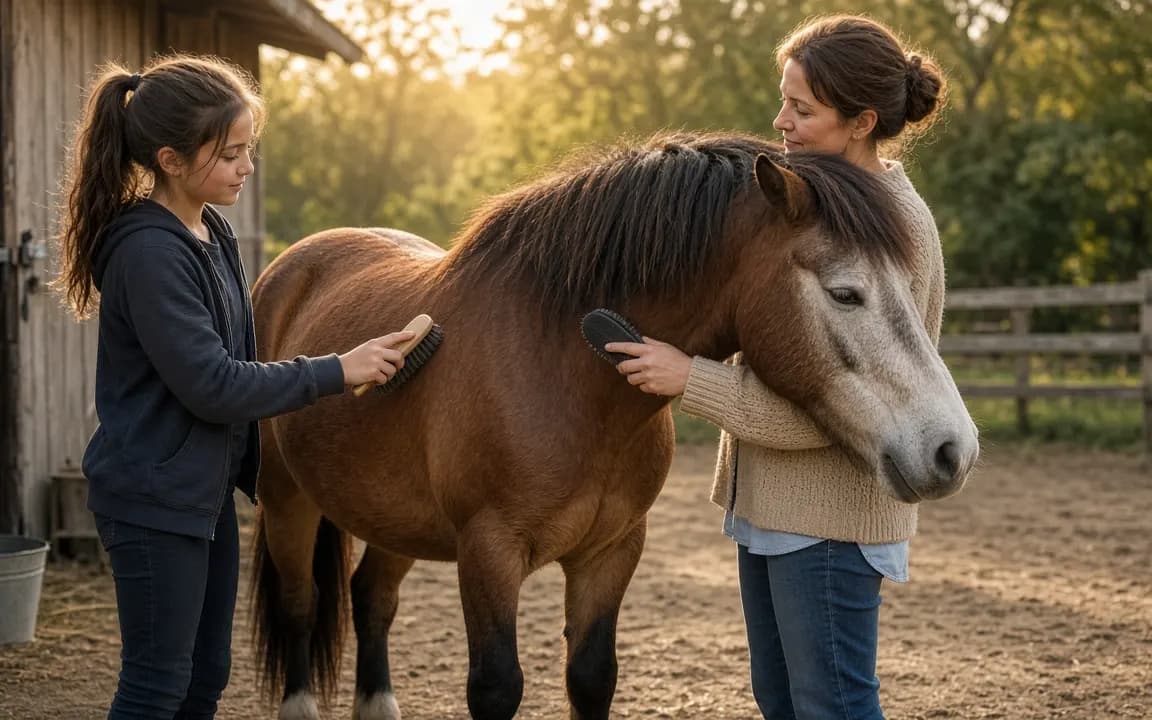
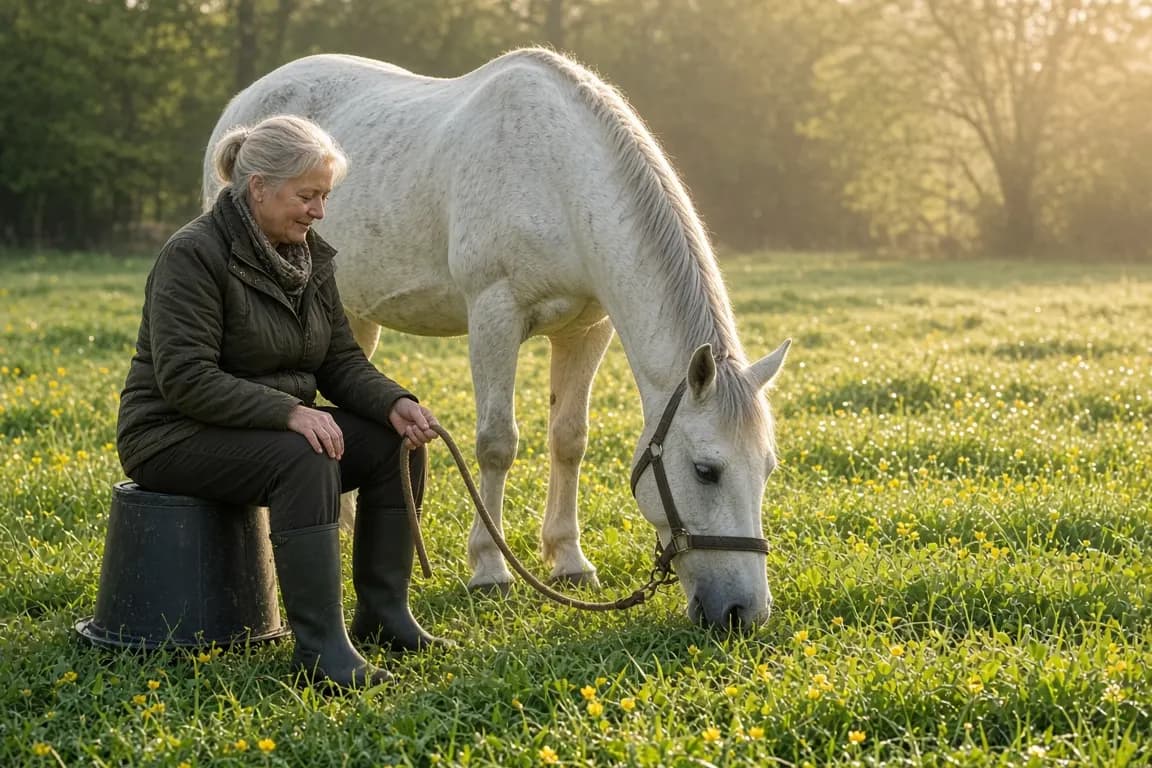
Keep it familiar and unhurried. A long groom, a graze on the lushest grass, a bucket of carrots or apples, time with favorite people and horses. Some owners take photos in the morning light; others ask a friend to take them so they can simply be present. Cut a lock of tail while your horse is standing quietly.
The farewell planner helps you set out small rituals, from a reading to a letter that goes with your horse. Our mane and tail guide covers cutting hair properly.

Free tool
Farewell & memorial service planner
Build a simple goodbye: who, where, readings, rituals and a checklist.
What you'll see
What happens during horse euthanasia?
- Sedation. Your vet usually gives a sedative first. Your horse's head drops and they become sleepy and relaxed.
- Catheter or injection. Many vets place a catheter in the neck vein so the final injection goes in smoothly.
- The final injection. An overdose of anesthetic. Within a minute or so, your horse loses consciousness.
- Going down. A horse falls to the ground as they lose consciousness. It can look sudden. Your vet will ask you to stand clear, usually at the shoulder away from the legs.
- Afterwards. Your vet listens for the heart and confirms death. There may be reflex movements, muscle twitches or a few deep breaths after death; these are not signs of pain or awareness. The eyes usually stay open.
Knowing about the fall and the reflexes in advance helps a lot. Your vet can talk you through their approach, which the AAEP's equine euthanasia guidelines help shape; our article on working with your vet covers the questions to ask, including how the method affects aftercare.
The first hour
What happens in the hour after your horse dies?
Take the time you need. Sit with your horse, cover them with a rug, cut any hair you haven't already. When you're ready, the collector arrives and loads your horse; many owners prefer to walk away for this part. State rules commonly expect disposal within 24-72 hours[4], so booking collection in advance keeps the timing gentle. If you've chosen cremation, expect the ashes to take a while: by our estimate a 1,100 lb horse needs at least 4.4 hours[5] of burn time alone, before a long cool-down.
Because the euthanasia drug remains in the body, keep dogs away until collection. Since 2003[6], US drug labels have warned about scavengers. If you've chosen cremation, the collector will give you a tag number; our certificate guide explains why to note it. If you're still weighing options, our services page compares them.
A planned goodbye can't take away the loss. It can make sure the last thing your horse knew was grass, sunshine and you.
For the weeks after, read grief after losing a horse. If aftercare still needs arranging, send us your horse's details and we'll reply by email.
For older horses
How do you know it might be time to plan the day?
There's no formula, but age and condition change the odds. USDA's NAHMS equine mortality study found horses aged 20 and over had a 3.1%[7] annual death rate, the highest of any group, and an earlier study recorded 10.2%[8] of older equids dying or being euthanized in one year. Common prompts include pain that medication no longer controls, repeated colic, difficulty rising, and dramatic weight loss.
Some owners plan ahead of winter for a very old horse, rather than risk a fall on ice or frozen ground that makes burial impossible. The pet age calculator shows your horse's life stage, and our pre-planning article helps you prepare everything else.

Reader polls
What would you choose?
Vote anonymously and see how other readers answered. The results are live counts from people who visit this site, so they show real opinions, not a scientific sample.
Where would you want your horse's last moments to be?
Tap an answer to vote and see how others answered. Anonymous.
Is your horse a senior, and have you made an aftercare plan?
Tap an answer to vote and see how others answered. Anonymous.
Where would you prefer your pet's final moments to happen?
Tap an answer to vote and see how others answered. Anonymous.

Questions people ask
Is horse euthanasia painful?
It shouldn't be. Horses are usually sedated first, and the final injection is an anesthetic overdose that causes unconsciousness within seconds to a minute. Movements, twitching or deep breaths after death are reflexes, not signs of pain or awareness. Ask your vet to explain what you might see beforehand.
Should I be with my horse when they're euthanized?
Only if you want to. Many owners find comfort in being at their horse's head; others say goodbye beforehand and step away, which is just as loving. A calm, familiar handler can hold your horse. Tell your vet what you'd prefer so they can plan around it.
Where should a horse be euthanized?
Somewhere quiet and familiar, on level ground, with enough space for the horse to go down safely and for a truck or tractor to reach afterwards. A grass area beside a hard-standing lane or near a wide gate is ideal. Avoid stalls, slopes and places near roads.
What should I feed my horse on their last day?
Whatever they love and can safely eat: fresh grass, carrots, apples, a favorite feed. Many owners let their horse graze freely. If your horse has a medical condition that restricts diet, ask your vet what's safe; sedation works well even after a meal in most cases.
Should my other horses see the body?
Many owners let a close companion approach and sniff the body for a few minutes, and some believe it helps the companion accept the loss. Keep the moment calm, then lead them away before collection. Watch the companion's appetite and behavior over the next few days.
How far in advance should I book the collection?
As soon as you've set the date with your vet. Equine crematories and renderers often need notice, especially in rural areas, and a booked slot means you won't be waiting for hours afterwards. Ask them to arrive an hour or two after the appointment, allowing time to say goodbye.


Sources and our estimates
- [1] Domesticated horses commonly live 25-30 years, and horses are considered geriatric after about 15 years. PetMD (vet-written: Dr. Kaela Schraer, DVM), 2024.
- [2] 75.4% of RSPCA pet-loss survey respondents experienced anticipatory grief before their pet died. RSPCA — Pet Loss Survey Results, 2026.
- [3] 28.4% of RSPCA survey respondents could not take time off work after their pet died. RSPCA — Pet Loss Survey Results, 2026.
- [4] State rules commonly require dead animals to be buried within 24 to 72 hours of death, especially when euthanized. Cornell Waste Management Institute & Penn State - Horse Mortality: Carcass Disposal Alternatives (2012), 2012.
- [5] At an average rate of 250 lb per hour, the burn phase for a 1,100 lb horse would take at least about 4.4 hours, not counting preheating and cool-down. Our estimate: 1,100 lb / 250 lb per hour. How we calculate.
- [6] Since 2003 the FDA has required euthanasia drug labels to warn that euthanized animals must be disposed of by deep burial, incineration or another approved method to keep scavenging wildlife from eating the carcass. Cornell Waste Management Institute & Penn State - Horse Mortality: Carcass Disposal Alternatives (2012), 2003.
- [7] Equids aged 20 years or older had a 3.1% annual mortality rate in the 2015 NAHMS study, the highest of any age group. USDA APHIS NAHMS - Equine Mortality in the United States, 2015 (published Feb 2017), 2015.
- [8] In the NAHMS Equine 2005 study, 10.2% of resident equids aged 20 years or older died or were euthanized during the previous 12 months, versus 1.2% of equids aged 5 to under 20. USDA APHIS NAHMS - Trends in Equine Mortality, 1998-2005 (published Mar 2007), 2005.
Arrange aftercare before the day
Tell us what you need and where you are. We'll reply by email with clear options and prices so you can decide in your own time.