How old is your horse in human years?
Horses commonly live 25-30 years[1], and many are thought of as geriatric from about 15. See where your horse is in that span, and when planning usually starts.
- Human-equivalent age for horses and ponies
- Life stage: adult, senior or geriatric
- A gentle nudge on when to plan
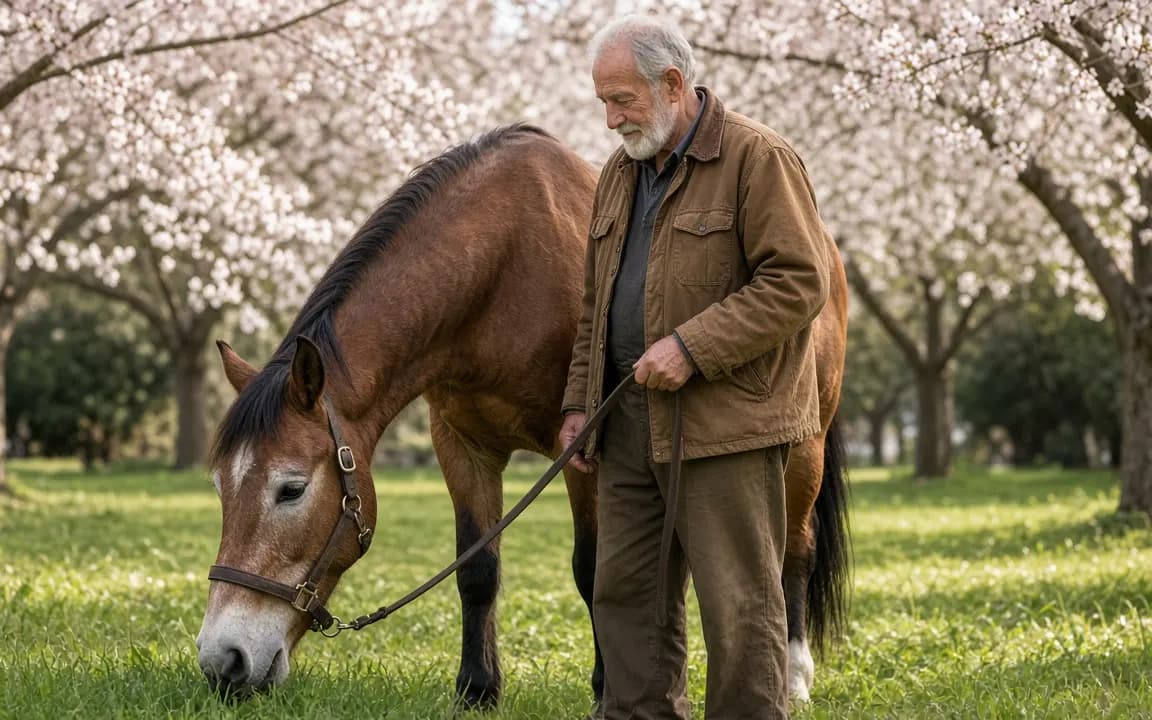
Pet age & senior years calculator
Choose your pet and their age to see a human-years comparison and which life stage they're in.
In human years
about 56
Based on the common vet age chart.
Life stage
Senior
Typical life expectancy: about 25–30 years; geriatric from about 15.
A good time to ask your vet about senior check-ups, comfort and what signs to watch for. Some families also like to know their aftercare options early, so nothing has to be decided in a rush.
Source: PetMD (vet-written: Dr. Kaela Schraer, DVM). Every animal is an individual; breed, size and care all make a difference
Next step: Know your options ahead of time →
Using the calculator
Enter your horse's age and see their life stage
The calculator opens with Horse or pony already chosen in the menu and an age of 18 entered. Change the Age to your horse's, in years (half years are fine), and it shows a rough "in human years" figure, a life-stage label and the typical life expectancy with its source. There's also a short, gentle line about planning, because the calculator's real job is to help you think ahead while your horse is well.
If you don't know your horse's exact age, your vet can estimate it from the teeth, and papers or a microchip record may give a foaling year. A rough guess is fine here; within a couple of years won't change the picture much.
The method
How the age conversion and life stages work
Horses mature fast in their first few years, then age more steadily. The calculator's human-equivalent figure follows that shape: a yearling counts as about 6.5 human years, a two-year-old about 13, a three-year-old about 18 and a four-year-old about 20.5. After that, each year adds 2.5, so a 10-year-old is about 36 and a 20-year-old about 61. It's a widely used rough conversion to help you picture things, not a veterinary measurement, and two horses of the same age can be in very different shape.
The life stages come from veterinary guidance that domesticated horses commonly live 25-30 years[1] and are considered geriatric after about 15. The calculator splits that later stretch in two: it marks a horse senior from 15 and geriatric from 25, the bottom of the typical lifespan. Plenty of horses stay sound and in work well past that, and ponies are famous for living longer still.
1.4%[2]
The overall annual mortality rate for U.S. equids on operations with 5+ equids was 1.4% in the NAHMS Equine 2015 study.
3.1%[3]
Equids aged 20 years or older had a 3.1% annual mortality rate in the 2015 NAHMS study, the highest of any age group.
10.2%[4]
In the NAHMS Equine 2005 study, 10.2% of resident equids aged 20 years or older died or were euthanized during the previous 12 months, versus 1.2% of equids aged 5 to under 20.
USDA data shows why age matters for planning. In the NAHMS Equine 2015 mortality study, across all ages, the yearly death rate on operations with five or more equids was 1.4%[2]. For horses aged 20 and over, it was 3.1%[3], the highest of any group. An earlier USDA study from 2005 found 10.2%[4] of resident equids aged 20 or older had died or been euthanized in the previous year. Applied to the national herd, the all-ages rate gives our estimate of about 92,400 horses per year[5] dying or euthanized in the US.
An example
Worked example: a 24-year-old schoolmaster mare
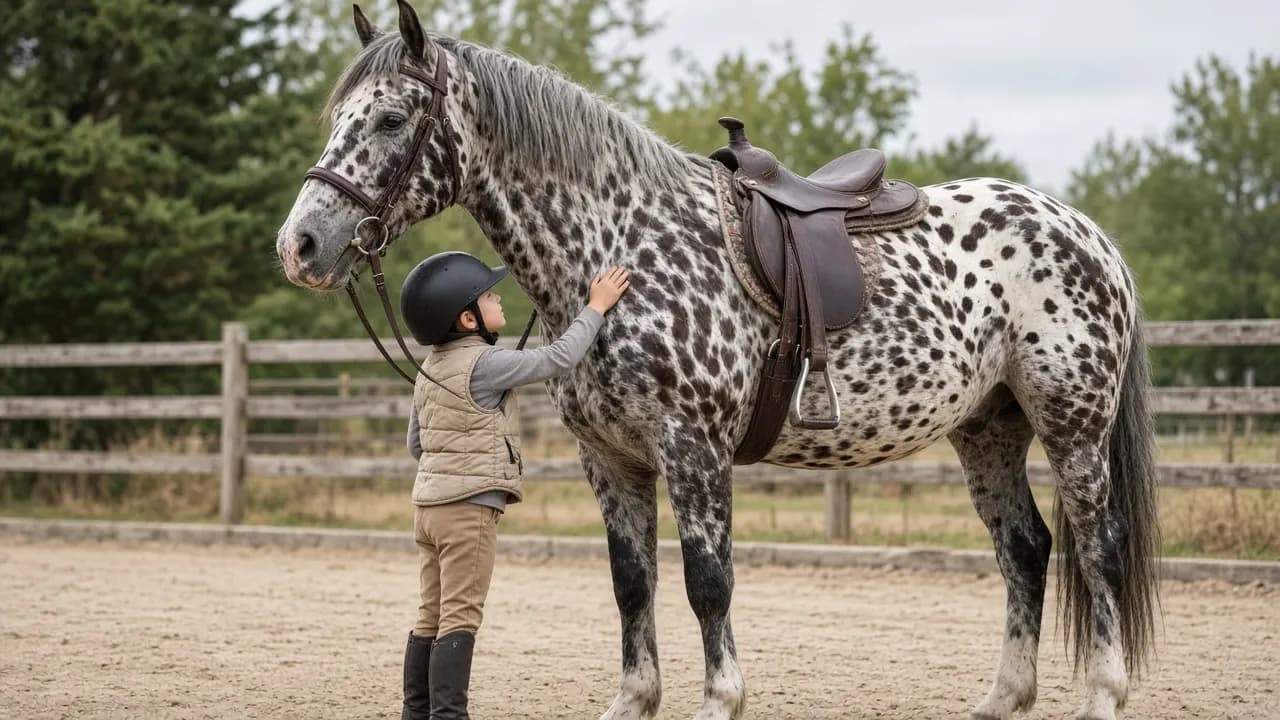
A 24-year-old Appaloosa mare is still teaching beginners two days a week. The calculator puts her at about 71 in human years and in the senior stage, one birthday short of the point where it switches to geriatric at 25. That doesn't mean anything is imminent. It means she's in the age group where USDA measured the highest yearly risk, and where a plan on paper is simply sensible.
For her owner, that plan might be three lines: which vet to call, which provider can collect from the barn, and whether she'd like cremation or burial. Our article on pre-planning horse aftercare explains how to write it without it feeling morbid.
Reading the result
What senior and geriatric really mean for your horse
A senior or geriatric label is a prompt to pay closer attention, not a countdown. Older horses often need softer feed, more dental work, joint support and extra care in winter. Your vet may suggest twice-yearly checks. None of that changes the relationship; it just changes the routine.
It's also the time to ask the questions that are hard to ask in an emergency. Where would euthanasia happen if it came to that? Can a truck reach that spot? Would you want cremation, burial or another option? Our services page explains each one, and the horse aftercare cost comparison prices them.
Senior horses also need thought about companions. Horses are herd animals, and an older horse's field-mate may be just as old. If you keep a pair, think about what happens to the one left behind, whether that's a new companion, a move to a busier barn, or extra time and attention for a while.

Free tool
Horse aftercare cost comparison
Compare equine cremation, burial, rendering and composting side by side.
Is your horse a senior, and have you made an aftercare plan?
Tap an answer to vote and see how others answered. Anonymous.
Being honest
What an age calculator can't know about your horse
It can't see your horse's teeth, hooves, weight or heart. A fit 25-year-old may outlive an arthritic 18-year-old. Breed, workload, feeding and luck all matter. Only your vet can tell you how your horse is actually doing.
Nor is age the only risk: USDA found 5.8%[6] of foals born alive died in their first 30 days. If you're planning for a young horse, the aftercare choices are the same, and our guide to choosing an equine-capable provider applies at any age.
What to do next
Small steps to take while your older horse is well
- Talk to your vet at the next routine visit about quality of life and what signs to watch for; the AAEP's equine euthanasia guidelines describe the criteria vets use. Our article on working with your vet on end-of-life care has questions to ask.
- Note one or two providers who can collect from your barn, and keep their numbers with your horse's records.
- Decide which keepsakes you'd want, such as a tail braid or a shoe, so they aren't forgotten.
- If your horse is boarded, ask the barn owner what they allow on their land.
If you'd like us to find providers that reach your barn, send us a short request and keep our reply on file with the rest of your horse aftercare plan.

Reader polls
What would you choose?
Vote anonymously and see how other readers answered. The results are live counts from people who visit this site, so they show real opinions, not a scientific sample.
Is your horse a senior, and have you made an aftercare plan?
Tap an answer to vote and see how others answered. Anonymous.
Where does your horse live?
Tap an answer to vote and see how others answered. Anonymous.
Would you pre-pay for aftercare while your pet is still healthy?
Tap an answer to vote and see how others answered. Anonymous.

Questions people ask
At what age is a horse considered old?
Many vets consider horses senior from their mid-teens and geriatric after about 15 to 20 (the calculator marks senior from 15 and geriatric from 25), though plenty stay active into their twenties. Horses commonly live 25 to 30 years, and ponies often longer. Condition and health matter more than the number alone.
How old is a 20-year-old horse in human years?
The calculator puts a 20-year-old horse at about 61 in human years, and marks them senior. Other rough conversions land somewhere in the late fifties or sixties too. The conversions differ between sources and aren't precise, so treat the figure as a way to picture your horse's stage of life, not as a medical fact.
How long do ponies live compared with horses?
Ponies are often longer-lived than full-size horses, and many reach their thirties. Smaller body size, hardier breeds and lighter workloads may all play a part. The same planning applies, and a pony's smaller size makes collection, burial and cremation somewhat simpler and cheaper.
When should I start planning my horse's aftercare?
Any time is fine, but many owners start when their horse turns senior or develops a long-term condition. USDA found the yearly death rate for horses aged 20 and over was 3.1%[3], more than double the overall rate, so twenty is a sensible point if you haven't started.
Does a horse's breed change how long it's likely to live?
Somewhat. Ponies and some hardy native breeds often live longer than large, heavy breeds, and drafts can age faster in their joints. Care matters as much as breed: good teeth, weight management and regular vet checks help many horses stay comfortable well into their twenties.


Sources and our estimates
- [1] Domesticated horses commonly live 25-30 years, and horses are considered geriatric after about 15 years. PetMD (vet-written: Dr. Kaela Schraer, DVM), 2024.
- [2] The overall annual mortality rate for U.S. equids on operations with 5+ equids was 1.4% in the NAHMS Equine 2015 study. USDA APHIS NAHMS - Equine Mortality in the United States, 2015 (published Feb 2017), 2015.
- [3] Equids aged 20 years or older had a 3.1% annual mortality rate in the 2015 NAHMS study, the highest of any age group. USDA APHIS NAHMS - Equine Mortality in the United States, 2015 (published Feb 2017), 2015.
- [4] In the NAHMS Equine 2005 study, 10.2% of resident equids aged 20 years or older died or were euthanized during the previous 12 months, versus 1.2% of equids aged 5 to under 20. USDA APHIS NAHMS - Trends in Equine Mortality, 1998-2005 (published Mar 2007), 2005.
- [5] About 92,400 U.S. horses would be expected to die or be euthanized each year (6.6 million horses x 1.4% annual mortality). Our estimate: 6,600,000 x 1.4%. How we calculate.
- [6] 5.8% of foals born alive died in their first 30 days of life, and about half of those deaths happened within the first 2 days (NAHMS 2015). USDA APHIS NAHMS - Equine Mortality in the United States, 2015 (published Feb 2017), 2015.
Plan ahead for your senior horse
Tell us what you need and where you are. We'll reply by email with clear options and prices so you can decide in your own time.