Arranging horse cremation near Indianapolis
Whether your horse is at home, at a boarding barn or at an equine hospital, you have more choices than you might think in Indianapolis. This page explains each one in plain English.
- Honest costs for Indianapolis horse owners
- Individual cremation, confirmed in writing
- Tail, mane and shoe keepsakes
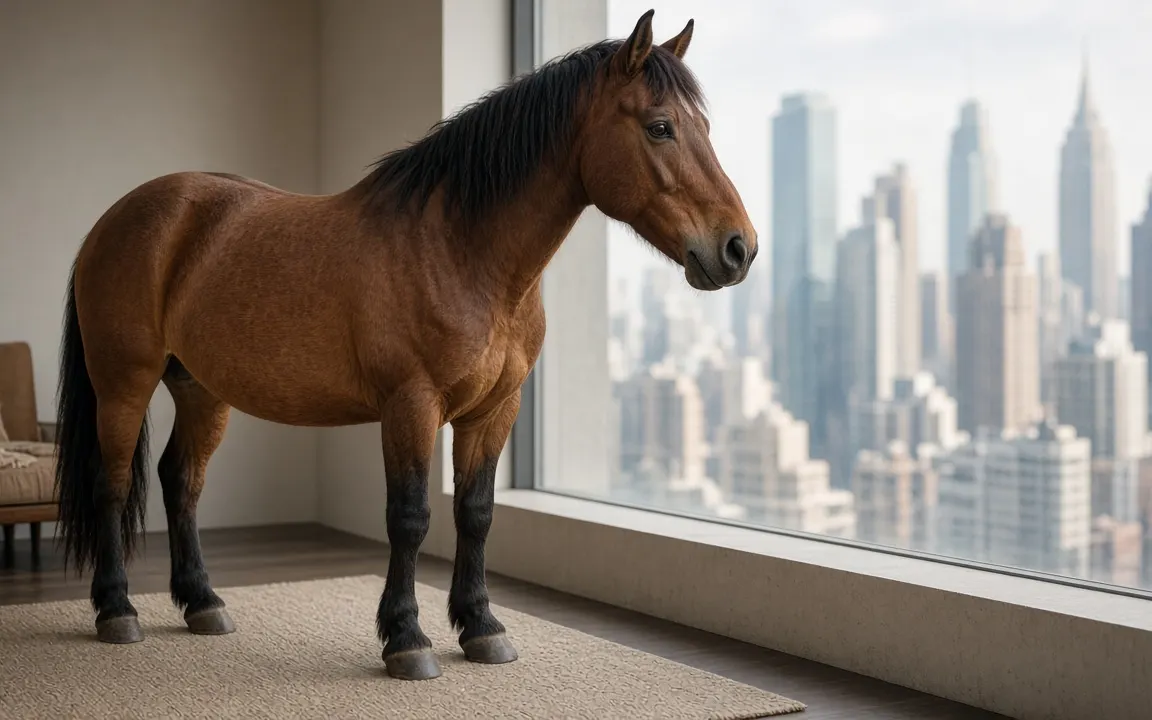
Indianapolis, Indiana
Barns, farms and distance around Indianapolis
Central Indiana is farm country, and horses, cattle, hogs, goats and sheep are common beyond the Indianapolis suburbs in Hamilton, Hendricks, Boone, Johnson and Shelby counties. Most owners deal with a regional removal or cremation service rather than anyone inside Marion County. Call early, describe the animal's size, and ask whether they offer individual cremation with ashes returned or only removal for rendering, since the difference in cost is large.
Farm and 4-H families around Indianapolis often want a lasting reminder even when a whole-animal cremation is too costly. A tail braid, a ribbon from the county or state fair, an ear tag, a show halter or a clip of fleece are the usual keepsakes, and hair can be set in resin or woven into a bracelet. Collect them before the truck arrives, and let children who showed the animal help choose what to keep.
Barns on the edge of a metro the size of Indianapolis often have houses, cul-de-sacs and a busy road on at least one side. Loading a horse is not something neighbors or passing children need to watch. Ask the provider to park behind the barn or indoor arena if there's room, keep a large tarp ready, and pick a quiet hour. Most drivers are used to being discreet and will welcome the request.
Indianapolis is home to about 887,000 people, the largest of the 50 Indiana communities we cover.
The closest communities we cover are Lawrence (11 miles), Greenwood (12 miles) and Avon (13 miles). Providers serving those towns often travel to Indianapolis too, so it can be worth asking them for a quote.
56.5%[1]
The NFDA projected Indiana's cremation rate at 56.5% for 2024.
6.6 million[2]
There were an estimated 6.6 million horses in the United States in 2023, down from 7.2 million in 2017.
$600-$1,000[3]
Cremating a 1,000-pound horse was reported to cost about $600-$1,000, depending on location and the price of propane.
3-5% of body weight[4]
Embrace notes cremated remains typically weigh about 3-5% of the pet's original body weight.
None of the figures on this this page are ours alone: they rest on American Horse Council and Extension Horses (eXtension national Cooperative Extension).
Cremation in Indiana, and where horses fit
In Indiana, about 56.5%[1] of people are cremated. Treat that as a sign of local habits, not as a guide to your horse: horse aftercare is driven far more by land, distance and cost. Owners who board are more likely to cremate; owners with acreage are more likely to bury or call a renderer. Both are common here, and both are loving choices.
For the Indiana figure we rely on NFDA 2024 Cremation & Burial Report state projections (via Occasional Sage) (2024). Read it as a picture of local custom around death and remembrance in Indianapolis rather than as pet data.
Weather, ground and truck access in Indianapolis
Winter means more horses spend nights in stalls around Indianapolis, and a death in a stall brings its own problem: a narrow door and an aisle a truck can't enter. Drivers use straps and a winch to draw the body out, which is slow and hard to watch. For a planned goodbye in January, February and December, choose a cleared spot outside the barn instead.
Indianapolis winters are cold, with average lows at or below freezing in January, February and December. Cold buys you time after a death, often enough to wait for a daytime collection, but it takes burial off the table for much of the season. Digging a trench about 9 ft deep[5], as extension guidance suggests for a horse, is slow and costly in frozen ground, so winter deaths here usually mean cremation or a collection service.

Where the money goes: haul, chamber and extras
Budget for three things: the vet's euthanasia visit, collection from the farm or barn, and the aftercare itself. Rendering pickup is typically $75-$200[6], while cremation runs several hundred dollars more. If the nearest crematory is a long drive away, the haul can move the total a long way, so ask whether they run scheduled routes through your area.
Prices for Indianapolis track the wider Indiana market, so use the Indiana price table as your baseline and the services page to see what is included.

Free tool
Horse aftercare cost comparison
Compare equine cremation, burial, rendering and composting side by side.
Paperwork and permission in Indiana
Distance from water is the detail regulators care about most, and the numbers differ more than people expect. England asks for at least 50 m between a buried horse and any well, borehole or spring (GOV.UK), which is about 164 ft[8] by our estimate, while US extension guidance talks of 100 yards from wells and streams[5]. Here's what applies in Indiana.
The official Indiana local government directory lists every county and city office, which is the quickest way to find who to ask in Indianapolis.
Home burial and scattering are governed at the Indiana level first; our Indiana rules summary has the detail. Then check whether Indianapolis or your HOA adds anything.
If it happened tomorrow: a checklist
- Stop somewhere safe the moment a horse collapses in the trailer, then phone the closest equine vet; at a showground there's usually one on duty.
- Ask the venue or show office who they use when a horse dies there. Most have an arrangement already.
- Decide whether to bring your horse home or arrange aftercare near where it happened. A local provider is usually quicker and cheaper than a long haul back.
- Check what moving a body over county or state boundaries requires, keeping the vet's documents in the truck for the journey.
- Tell your insurer before anything is disposed of, if your horse is covered.
- Have the ashes delivered to your home address, and get the expected date confirmed in writing.
- Let other riders help. Showground friends will step in to mind your other horses and get the trailer home; you only have to say yes.
Memorials at the barn and beyond
Indiana's flat farmland makes access easier than in hilly country, but winter ice and the soft ground of a wet spring can still stop a loaded truck at the edge of a field. Before collection, check whether the lane is clear, whether a vehicle can back up to the barn door, and whether gates are wide enough. In July heat, keep the animal shaded and covered, and call early so collection can happen the same day.
or compare your instinct with the poll results, For a plain comparison of the choices, open services, the planning tools turn your pet's details into figures, go deeper with the guides or catch up on recent articles. Close to Indianapolis we also cover Bloomington, Evansville, Carmel and South Bend; the full list for Indiana and for the United States is a click away.

Reader polls
What would you choose?
Vote anonymously and see how other readers answered. The results are live counts from people who visit this site, so they show real opinions, not a scientific sample.
If you had to decide today, what would you choose for your horse?
Tap an answer to vote and see how others answered. Anonymous.
Where does your horse live?
Tap an answer to vote and see how others answered. Anonymous.
If you had to decide today, which aftercare would you choose for your pet?
Tap an answer to vote and see how others answered. Anonymous.

Free tools to help you plan
Horse aftercare cost comparison
Compare equine cremation, burial, rendering and composting side by side.

Aftercare options compared
Compare private, communal and water cremation with burial on cost, timing and what comes home.

Ashes weight estimator
See roughly how much ash to expect back, by species and body weight.
Questions people ask
Which nearby towns can I compare with Indianapolis?
The closest communities we cover are Lawrence (about 11 miles), Greenwood (about 12 miles) and Avon (about 13 miles). Providers based in those places often serve Indianapolis too. Ask each one for a written total that includes collection, so the distance is priced in.
How does Indianapolis's weather affect horse aftercare?
July is the hottest month in Indianapolis, with average highs around 85°F, so prompt collection matters most then. Average lows drop below freezing in January, February and December, which can make digging a grave hard until spring.
Is cremation common in Indiana?
For people, yes: about 56.5%[1] of Indiana deaths end in cremation, according to NFDA 2024 Cremation & Burial Report state projections (via Occasional Sage) (2024). Nobody publishes the same figure for pets, but in our experience pet choices in Indianapolis follow the human pattern closely, so cremation is the default most families here start from.
Can I compost my horse instead of cremating?
In many places, yes, and it's inexpensive: Cornell and Penn State estimated $170-$380[9] for a 1,200 lb horse. You'll need about 10 cubic yards of wood chips or sawdust, a loader, a site away from water and neighbors, and patience, because an intact horse takes about 9-10 months[10] to break down. Some states restrict it, so check first.
What does a collection truck need to reach my horse?
A firm, reasonably level route, a gate wide enough for the vehicle and space to get within winch range of your horse. Soft pasture, steep slopes, low branches and tight turns cause most of the problems. Measure your narrowest gate and describe ground conditions on the day. Our farm access guide covers the details.
How many horses die each year in the US?
About 92,400 horses per year[7] by our estimate, based on USDA's measured death rate of 1.4%[11] applied to roughly 6.6 million[2] horses. You may see a figure of 900,000 quoted online; it comes from an older estimate and would imply a death rate about ten times what USDA measured. Either way, if you're facing this near Indianapolis, you're far from alone.


Sources and our estimates
- [1] The NFDA projected Indiana's cremation rate at 56.5% for 2024. NFDA 2024 Cremation & Burial Report state projections (via Occasional Sage), 2024.
- [2] There were an estimated 6.6 million horses in the United States in 2023, down from 7.2 million in 2017. American Horse Council - 2023 National Equine Economic Impact Study release, 2023.
- [3] Cremating a 1,000-pound horse was reported to cost about $600-$1,000, depending on location and the price of propane. Extension Horses (eXtension national Cooperative Extension) - Horse Disposal Options, 2019, 2019.
- [4] Embrace notes cremated remains typically weigh about 3-5% of the pet's original body weight. Embrace Pet Insurance - Bury or Cremate Your Dog? Costs, Pros & Cons, 2025.
- [5] Extension guidance recommends a horse burial trench about 7 feet wide and 9 feet deep, covered by 3-4 feet of soil, and no fewer than 100 yards from wells and streams. Extension Horses (eXtension national Cooperative Extension) - Horse Disposal Options, 2019, 2019.
- [6] Rendering companies typically charge a pickup fee of $75-$200 to remove a horse carcass, depending on location. Extension Horses (eXtension national Cooperative Extension) - Horse Disposal Options, 2019, 2019.
- [7] About 92,400 U.S. horses would be expected to die or be euthanized each year (6.6 million horses x 1.4% annual mortality). Our estimate: 6,600,000 x 1.4%. How we calculate.
- [8] England's 50 m well setback for burying a horse equals about 164 feet, 1.6 times Pennsylvania's 100-foot minimum setback from wells. Our estimate: 50 m x 3.2808 ft/m; 164 / 100. How we calculate.
- [9] Composting a 1,200-pound horse requires about 10 cubic yards of carbon material (wood chips, sawdust), and total material, equipment, fuel and labor costs were estimated at $170-$380 per horse. Cornell Waste Management Institute & Penn State - Horse Mortality: Carcass Disposal Alternatives (2012), 2012.
- [10] An intact horse carcass takes approximately 9-10 months to compost, and piles should reach at least 130 F. Extension Horses (eXtension national Cooperative Extension) - Horse Disposal Options, 2019, 2019.
- [11] The overall annual mortality rate for U.S. equids on operations with 5+ equids was 1.4% in the NAHMS Equine 2015 study. USDA APHIS NAHMS - Equine Mortality in the United States, 2015 (published Feb 2017), 2015.
Get Indianapolis horse aftercare prices by email
Tell us what you need and where you are. We'll reply by email with clear options and prices so you can decide in your own time.