Horse cremation and aftercare in Palm Coast
Cremation, burial, rendering or composting: for a horse in Palm Coast, the right choice depends on land, distance and budget. Here's how each works locally and what it usually costs.
- Plan ahead for a senior horse
- Weather and timing advice for Palm Coast
- Options when the nearest chamber is far
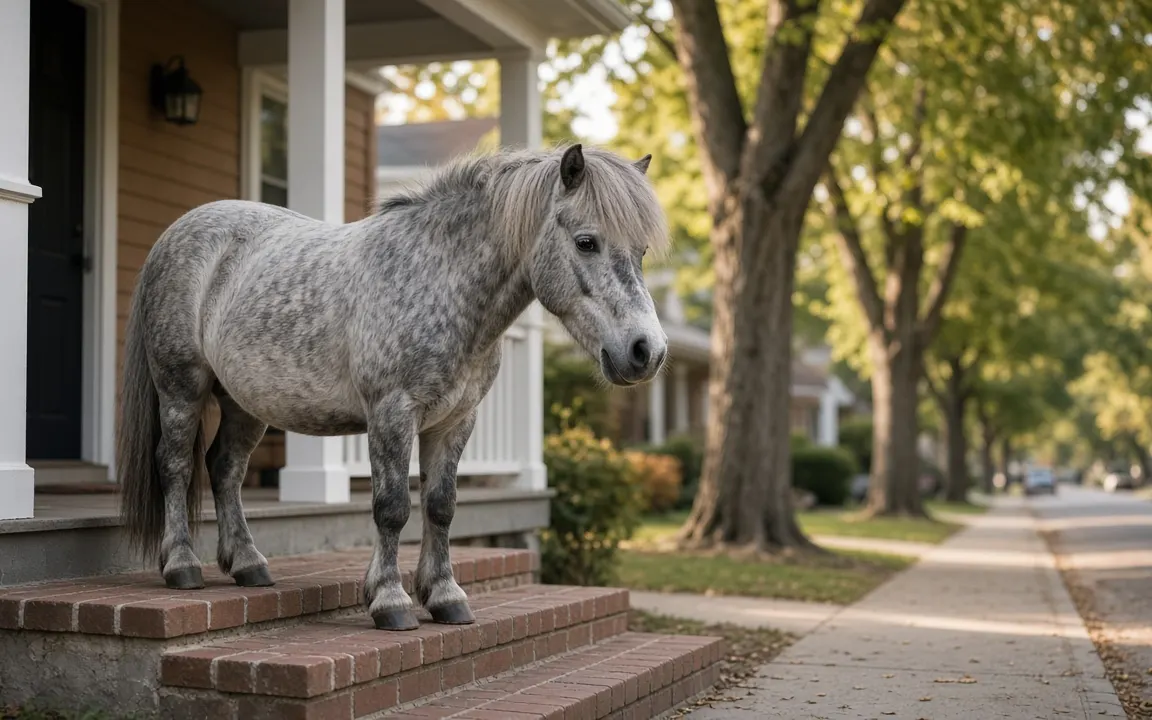
Palm Coast, Florida
Finding horse aftercare that reaches Palm Coast
Large-animal keepers around Palm Coast include retirees with a couple of horses on five acres, farming families running beef cattle, and young people raising pigs and goats for the Flagler County fair. Cremating a horse alone and returning its ashes carries a high price tied to weight, while rendering or a shared cremation costs far less. Request a quote that breaks out travel and each step.
In summer, a line of afternoon storms can drop several inches of rain on west Flagler pastures in an hour, leaving low fields waterlogged and dirt roads rutted. Heat adds urgency, since a large body should be collected within a day. Owners with older horses or cattle often find it easier to line up a provider in the calm months, before the peak of hurricane season.
It's worth widening the search beyond Palm Coast itself. Providers who serve Jacksonville often cover the surrounding farm roads too, and a hauler based in the next town may be closer to your barn than one inside the city limits. Give each one your exact address, the gate width and the ground conditions, and ask for a total that includes the haul in both directions.
Palm Coast is home to about 109,886 people, the 23rd-largest of the 235 Florida communities we cover. The nearest larger centre is Jacksonville, about 60 miles (97 km) away, which is where some providers serving Palm Coast are based.
The closest communities we cover are Crescent City (18 miles), Ormond Beach (19 miles) and Palatka (25 miles). Providers serving those towns often travel to Palm Coast too, so it can be worth asking them for a quote.
72.5%[1]
The NFDA projected Florida's cremation rate at 72.5% for 2024.
6.6 million[2]
There were an estimated 6.6 million horses in the United States in 2023, down from 7.2 million in 2017.
$600-$1,000[3]
Cremating a 1,000-pound horse was reported to cost about $600-$1,000, depending on location and the price of propane.
3-5% of body weight[4]
Embrace notes cremated remains typically weigh about 3-5% of the pet's original body weight.
To check the figures yourself, see American Horse Council and Embrace Pet Insurance.
Cremation in Florida, and where horses fit
Cremation is the usual choice for people in Florida, where about 72.5%[1] are cremated, and you'll hear it discussed openly at the barn. Even so, many horse owners here weigh it against burial, rendering and composting on cost alone, and that's a fair thing to do. US extension figures put cremating a 1,000 lb horse at about $600-$1,000[3], several times the cost of the other routes.
NFDA 2024 Cremation & Burial Report state projections (via Occasional Sage) (2024) is where the Florida figure comes from. It counts people; we use it because attitudes to cremating a pet in Palm Coast tend to follow attitudes to cremation generally.
Palm Coast weather and your horse's aftercare
If the ground is frozen, waterlogged or rock-hard, burial may have to wait or become impractical. Cremation, rendering and fallen-stock collection work in most weather as long as a vehicle can reach your horse, which is why access matters more than the calendar.

Where the money goes: haul, chamber and extras
The prices below are national extension figures, not quotes from local providers, and they haven't been adjusted for inflation, so treat them as a floor. Fuel, distance and weekend calls all push totals up. A written quote from your barn's address, listing collection, cremation and the container, is the only number worth relying on.
The Florida price table breaks costs down by size; our services page explains what sits behind each line.

Free tool
Horse aftercare cost comparison
Compare equine cremation, burial, rendering and composting side by side.
Burial and disposal rules in Florida
Before anyone digs, check the rules for Florida. Burying a large animal commonly comes with conditions on soil cover, clearance above groundwater and setbacks from wells, streams and property lines, and counties or councils can add their own. A horse grave is big, around 9 ft deep[6] under US extension guidance, so the site matters as much as the permission.
Not sure which office covers Palm Coast? The Florida local government directory is the official list.
Home burial and scattering are governed at the Florida level first; our Florida rules summary has the detail. Then check whether Palm Coast or your HOA adds anything.
Step by step, from the field to the urn
- Call the barn manager first when your horse lives at livery. Access, tractor use and parking for the truck are all their call.
- Check the barn's rules on where euthanasia can happen and how quickly a body must leave the property.
- Agree who pays for what: your vet's bill, the pickup, and any tractor or skid-steer time the barn puts in.
- Contact an equine-capable provider yourself, or ask us to find local options, and pass on the barn's full address.
- Pick a time when other boarders' horses can be brought in and the aisle cleared.
- Leave a note at the barn office saying who is collecting, when they're expected and how to reach you by phone.
Ashes, keepsakes and a place to visit
West of US 1, Flagler County opens into flat farmland toward Bunnell and beyond, with potato and cabbage fields, cattle pasture, pine plantations and a scattering of horse properties on larger rural lots. Families in Palm Coast who own horses, goats or cattle usually keep them out there. If an animal dies, providers will want the county road it sits on, the distance from gate to body, and whether recent rain has softened the sand.
or compare your instinct with the poll results, read our guides and latest articles, run the numbers with the free planning tools, See what each option includes on our services page. You can also browse every city in the United States. Nearby, we also cover Tampa, Port St. Lucie, Orlando and St. Petersburg, and every city in Florida.

Reader polls
What would you choose?
Vote anonymously and see how other readers answered. The results are live counts from people who visit this site, so they show real opinions, not a scientific sample.
If you had to decide today, what would you choose for your horse?
Tap an answer to vote and see how others answered. Anonymous.
Where does your horse live?
Tap an answer to vote and see how others answered. Anonymous.
If you had to decide today, which aftercare would you choose for your pet?
Tap an answer to vote and see how others answered. Anonymous.

Free tools to help you plan
Horse aftercare cost comparison
Compare equine cremation, burial, rendering and composting side by side.

Aftercare options compared
Compare private, communal and water cremation with burial on cost, timing and what comes home.

Ashes weight estimator
See roughly how much ash to expect back, by species and body weight.
Questions people ask
Can a provider from a neighbouring town collect from Palm Coast?
Usually yes. Crescent City is about 18 miles away, Ormond Beach is about 19 miles away and Palatka is about 25 miles away, all inside a normal collection radius. Get the mileage written into the quote so there is no surprise on the day.
Will I have to travel to Jacksonville to arrange things?
Not usually. Providers based in Jacksonville (roughly 60 miles from Palm Coast) collect from here as a matter of routine, and the paperwork is done by email or phone. If you want to be present for a witnessed cremation, that is when the drive matters.
Is cremation common in Florida?
For people, yes: about 72.5%[1] of Florida deaths end in cremation, according to NFDA 2024 Cremation & Burial Report state projections (via Occasional Sage) (2024). Nobody publishes the same figure for pets, but in our experience pet choices in Palm Coast follow the human pattern closely, so cremation is the default most families here start from.
How quickly does a dead horse have to be moved in Florida?
Sooner than most people expect. State rules commonly require burial or other disposal within 24-72 hours[7] of death, especially after euthanasia, and some are stricter. Check the rule for Florida with your vet or the state agriculture department. In practice, aim to have your horse collected or buried within a day, and sooner in hot weather.
How many horses die each year in the US?
About 92,400 horses per year[8] by our estimate, based on USDA's measured death rate of 1.4%[9] applied to roughly 6.6 million[2] horses. You may see a figure of 900,000 quoted online; it comes from an older estimate and would imply a death rate about ten times what USDA measured. Either way, if you're facing this near Palm Coast, you're far from alone.
Can I be present at my horse's cremation near Palm Coast?
Some large-animal crematories allow owners to attend the start of the cremation or to spend time with their horse before it, but not all can, and the drive may be long. Ask when you first call, and ask what attending involves, since loading into a large chamber uses machinery. Many owners prefer to say goodbye at home and simply be told when it's done.


Sources and our estimates
- [1] The NFDA projected Florida's cremation rate at 72.5% for 2024. NFDA 2024 Cremation & Burial Report state projections (via Occasional Sage), 2024.
- [2] There were an estimated 6.6 million horses in the United States in 2023, down from 7.2 million in 2017. American Horse Council - 2023 National Equine Economic Impact Study release, 2023.
- [3] Cremating a 1,000-pound horse was reported to cost about $600-$1,000, depending on location and the price of propane. Extension Horses (eXtension national Cooperative Extension) - Horse Disposal Options, 2019, 2019.
- [4] Embrace notes cremated remains typically weigh about 3-5% of the pet's original body weight. Embrace Pet Insurance - Bury or Cremate Your Dog? Costs, Pros & Cons, 2025.
- [5] Midpoint horse cremation cost works out to about $0.80 per pound of body weight, versus about $0.14 per pound for rendering pickup and $0.23 per pound for on-farm composting. Our estimate: cremation $800 / 1,000 lb; rendering $137.50 / 1,000 lb; composting $275 / 1,200 lb. How we calculate.
- [6] Extension guidance recommends a horse burial trench about 7 feet wide and 9 feet deep, covered by 3-4 feet of soil, and no fewer than 100 yards from wells and streams. Extension Horses (eXtension national Cooperative Extension) - Horse Disposal Options, 2019, 2019.
- [7] State rules commonly require dead animals to be buried within 24 to 72 hours of death, especially when euthanized. Cornell Waste Management Institute & Penn State - Horse Mortality: Carcass Disposal Alternatives (2012), 2012.
- [8] About 92,400 U.S. horses would be expected to die or be euthanized each year (6.6 million horses x 1.4% annual mortality). Our estimate: 6,600,000 x 1.4%. How we calculate.
- [9] The overall annual mortality rate for U.S. equids on operations with 5+ equids was 1.4% in the NAHMS Equine 2015 study. USDA APHIS NAHMS - Equine Mortality in the United States, 2015 (published Feb 2017), 2015.
Ask us to check providers near your barn
Tell us what you need and where you are. We'll reply by email with clear options and prices so you can decide in your own time.