Arranging horse cremation near Port St. Lucie
Few crematories can take a full-size horse, so distance shapes every quote in and around Port St. Lucie. Here's what cremation costs, how collection works and what to ask first.
- Honest costs for Port St. Lucie horse owners
- Individual cremation, confirmed in writing
- Tail, mane and shoe keepsakes
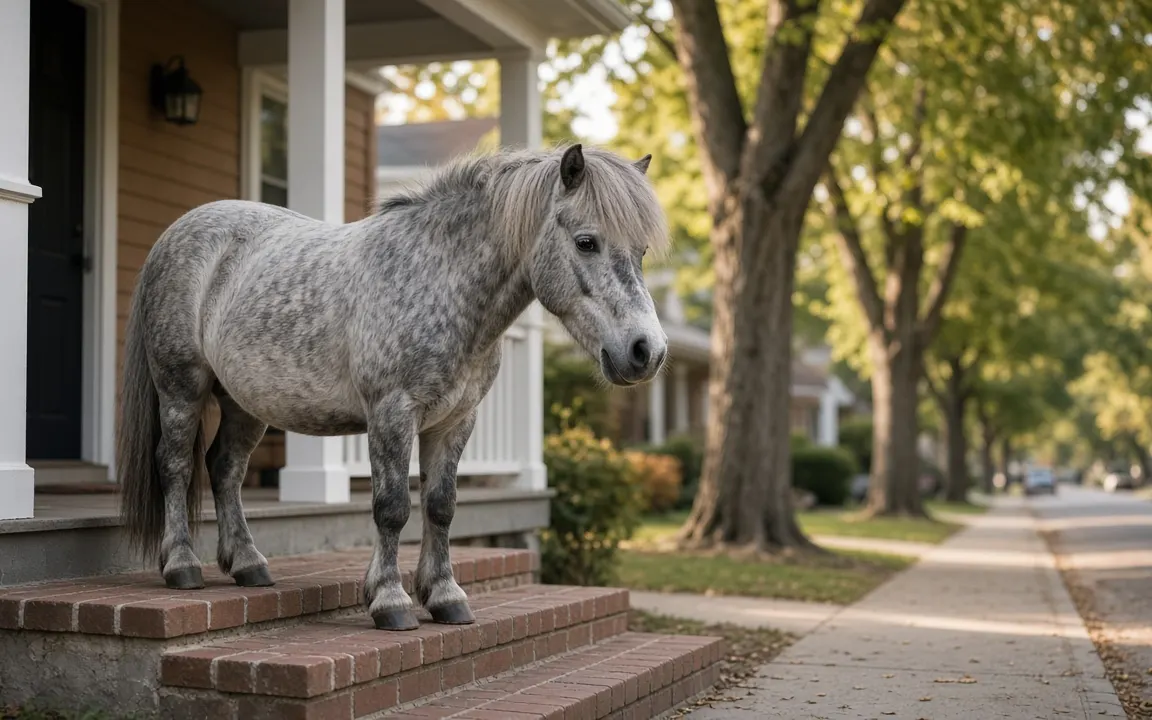
Port St. Lucie, Florida
How equine cremation works for Port St. Lucie owners
Florida heat makes every hour count when a large animal dies, and hurricane season can delay collection just when you need it. For a family horse, a miniature horse, a pet pig or a goat, providers who handle large bodies can often cremate individually and return the ashes. Commercial cattle generally go through rendering. Say which applies, and ask whether weekend or storm-related delays affect price.
Large-animal cremation for the Treasure Coast may involve a long haul, sometimes north toward Central Florida's horse country or south toward the Palm Beach area. If your horse is elderly, talk to providers in the calm months before storm season. Burial on your own land is sometimes possible where the ground is high enough and county rules allow, but the high water table rules it out on many properties.
Horses around Port St. Lucie tend to live on small acreages, boarding barns and hobby farms within a short drive of town. That means your vet can usually reach you quickly, but the aftercare provider may not be as close. Before anything else, find out who covers your area for large-animal collection: an equine crematory, a renderer, a fallen-stock hauler, or a local contractor with a backhoe.
Port St. Lucie is home to about 268,062 people, the 5th-largest of the 235 Florida communities we cover.
Families in Port St. Lucie often end up using a provider from Hutchinson Island (7 miles), Jensen Beach (8 miles) and Palm City (8 miles). That is normal: crematories serve a radius, not a single town, and the drive is priced into collection.
72.5%[1]
The NFDA projected Florida's cremation rate at 72.5% for 2024.
6.6 million[2]
There were an estimated 6.6 million horses in the United States in 2023, down from 7.2 million in 2017.
$600-$1,000[3]
Cremating a 1,000-pound horse was reported to cost about $600-$1,000, depending on location and the price of propane.
3-5% of body weight[4]
Embrace notes cremated remains typically weigh about 3-5% of the pet's original body weight.
None of the figures on this this page are ours alone: they rest on American Horse Council and Embrace Pet Insurance.
Cremation habits in Florida, and your horse
In Florida, the human cremation rate sits around 72.5%[1], and some owners start to wonder whether their horse's ashes might one day go with their own. Cemeteries and scattering gardens set their own policies on animal remains, and many say no. If it matters to you, set aside a small sealed portion of the ashes and ask the cemetery directly, so the wish can be carried out later.
The Florida percentage above is from NFDA 2024 Cremation & Burial Report state projections (via Occasional Sage) (2024) and refers to human funerals. Treat it as context for Port St. Lucie, not as a count of pets.
How the season changes your options in Port St. Lucie
Whatever the season, the rule for a horse is the same: plan for collection within a day. A body of 1,000 lb or more can't be moved indoors or kept cool, and nobody benefits from waiting. Cover the body with a tarp, keep other animals away and make the calls early.

How much to budget, including the haul
The headline price is rarely the whole bill. Watch for the vet's farm call and euthanasia, weekend or after-hours collection, a tractor or skid-steer fee at a boarding barn, a larger urn or chest, and at renderers, possible surcharges for horses that were put to sleep[5]. In Minnesota, the University of Minnesota reported rendering at $150+[6] per pickup (UMN Extension), above the national low end.
The Florida price table breaks costs down by size; our services page explains what sits behind each line.

Free tool
Horse aftercare cost comparison
Compare equine cremation, burial, rendering and composting side by side.
Setbacks, depth and timing in Florida
Moving a horse's body along a public road can fall under animal by-product or transport rules, which is one reason licensed collectors do most of this work. If you plan to trailer your horse to a provider yourself, ask the provider and the agriculture office in Florida whether you need anything in writing first. Cremation itself asks nothing of you.
Florida keeps an official directory of local governments; use it to reach the county or city office that covers Port St. Lucie.
Home burial and scattering are governed at the Florida level first; our Florida rules summary has the detail. Then check whether Port St. Lucie or your HOA adds anything.
The first day, step by step
- Call the barn manager first if your horse is boarded. They control the gates, the machinery and where a truck can park.
- Check the barn's rules on where euthanasia can happen and how quickly a body must leave the property.
- Agree who pays for what: your vet's bill, the pickup, and any tractor or skid-steer time the barn puts in.
- Contact an equine-capable provider yourself, or ask us to find local options, and pass on the barn's full address.
- Pick a time when other boarders' horses can be brought in and the aisle cleared.
- Leave a note at the barn office saying who is collecting, when they're expected and how to reach you by phone.
Ashes, keepsakes and a place to visit
Port St. Lucie itself is suburban, but western St. Lucie County and neighboring Okeechobee County are ranch and horse country, with cow-calf operations, hobby farms and equestrian properties on sandy pasture. When a horse or steer dies out there, the provider will want to know the road, the gate width and how wet the ground is, since summer rains can leave pastures too soft for a heavy truck.
browse in-depth guides or recent articles, the planning tools turn your pet's details into figures, For a plain comparison of the choices, open services, or see how other readers answered in our polls. You can also browse every city in the United States. Nearby, we also cover Orlando, Cape Coral, St. Petersburg and Jacksonville, and every city in Florida.

Reader polls
What would you choose?
Vote anonymously and see how other readers answered. The results are live counts from people who visit this site, so they show real opinions, not a scientific sample.
Where does your horse live?
Tap an answer to vote and see how others answered. Anonymous.
What would you most want to keep from your horse?
Tap an answer to vote and see how others answered. Anonymous.
If you had to decide today, which aftercare would you choose for your pet?
Tap an answer to vote and see how others answered. Anonymous.

Free tools to help you plan
Horse aftercare cost comparison
Compare equine cremation, burial, rendering and composting side by side.

Aftercare options compared
Compare private, communal and water cremation with burial on cost, timing and what comes home.

Ashes weight estimator
See roughly how much ash to expect back, by species and body weight.
Questions people ask
Can a provider from a neighbouring town collect from Port St. Lucie?
Usually yes. Hutchinson Island is about 7 miles away, Jensen Beach is about 8 miles away and Palm City is about 8 miles away, all inside a normal collection radius. Get the mileage written into the quote so there is no surprise on the day.
How do Florida attitudes to cremation compare?
NFDA 2024 Cremation & Burial Report state projections (via Occasional Sage) (2024) puts the Florida human cremation rate at about 72.5%[1]. We show it on the Port St. Lucie page because pet aftercare choices tend to track it: where cremation is normal for people, communal and private pet cremation are both easy to find.
Who collects a dead horse near Port St. Lucie?
It depends on what operates locally: an equine crematory, a renderer or fallen-stock hauler, a contractor with a backhoe for burial, or sometimes a landfill that accepts horses. Your large-animal vet will know which of these actually come out to farms around Port St. Lucie. Ask them now, while there's no hurry, and keep the numbers in the barn office.
How quickly does a dead horse have to be moved in Florida?
Sooner than most people expect. State rules commonly require burial or other disposal within 24-72 hours[8] of death, especially after euthanasia, and some are stricter. Check the rule for Florida with your vet or the state agriculture department. In practice, aim to have your horse collected or buried within a day, and sooner in hot weather.
Does equine insurance pay for horse cremation?
Usually not directly. Mortality insurance pays out on the insured value of the horse, and most policies don't cover aftercare, though some include a small disposal allowance. What matters most is timing: many insurers want to be told before the body is moved and may want an approved vet to examine your horse. Call the claims line first, then book cremation once they've agreed.
Can I keep my horse's tail or a shoe?
Yes, and it's worth doing before collection. Tie a length of tail tightly at the top, then cut above the tie from underneath, where it won't show, so the hair stays together. Save a lock of mane too if you'd like, and pull a shoe or ask your farrier to. Our mane and tail guide explains how to clean and store hair.


Sources and our estimates
- [1] The NFDA projected Florida's cremation rate at 72.5% for 2024. NFDA 2024 Cremation & Burial Report state projections (via Occasional Sage), 2024.
- [2] There were an estimated 6.6 million horses in the United States in 2023, down from 7.2 million in 2017. American Horse Council - 2023 National Equine Economic Impact Study release, 2023.
- [3] Cremating a 1,000-pound horse was reported to cost about $600-$1,000, depending on location and the price of propane. Extension Horses (eXtension national Cooperative Extension) - Horse Disposal Options, 2019, 2019.
- [4] Embrace notes cremated remains typically weigh about 3-5% of the pet's original body weight. Embrace Pet Insurance - Bury or Cremate Your Dog? Costs, Pros & Cons, 2025.
- [5] Renderers have served horse owners for over 100 years, but regulatory changes have reduced the number of rendering plants willing to accept horses, and fees and drug-residue rules may apply. Cornell Waste Management Institute & Penn State - Horse Mortality: Carcass Disposal Alternatives (2012), 2012.
- [6] University of Minnesota Extension reports rendering services cost $150 or more per pickup for a horse. University of Minnesota Extension - Horse carcass disposal (Martinson & Wilson, reviewed 2022), 2022.
- [7] At an average rate of 250 lb per hour, the burn phase for a 1,100 lb horse would take at least about 4.4 hours, not counting preheating and cool-down. Our estimate: 1,100 lb / 250 lb per hour. How we calculate.
- [8] State rules commonly require dead animals to be buried within 24 to 72 hours of death, especially when euthanized. Cornell Waste Management Institute & Penn State - Horse Mortality: Carcass Disposal Alternatives (2012), 2012.
Tell us about your horse
Tell us what you need and where you are. We'll reply by email with clear options and prices so you can decide in your own time.