Horse cremation in Manchester
Losing a horse is a practical emergency as well as a heartbreak. This guide for Manchester covers the first hours, the truck, the costs and the keepsakes you'll want to save.
- Plan ahead for a senior horse
- Weather and timing advice for Manchester
- Options when the nearest chamber is far
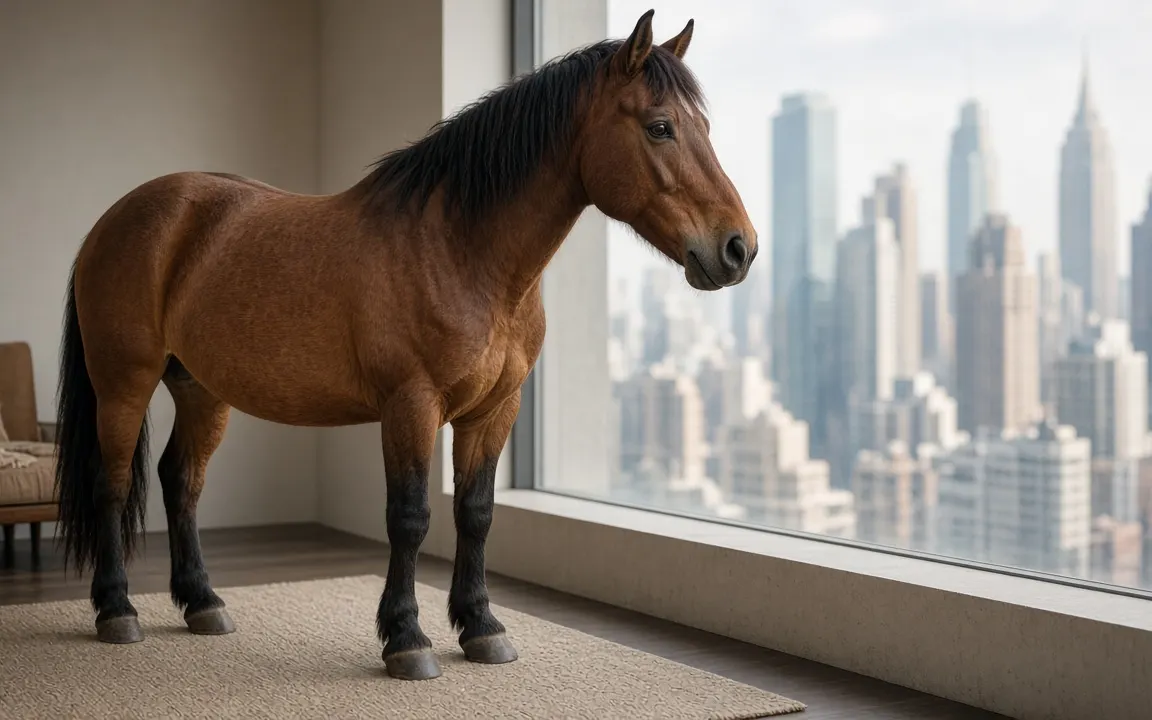
Manchester, England
What arranging horse cremation near Manchester is like
Weather on the hills around Manchester can turn quickly, and winter fields on the Pennine edge are often waterlogged or frozen. A heavy vehicle may not be able to reach a paddock after days of rain, so it helps to think ahead about where an elderly horse or older livestock could be moved to a hard-standing area. Asking early about access, lifting and timings makes a difficult day far less chaotic for everyone at the yard.
Council services in the Manchester area deal with animals found on public highways and have separate arrangements for large animals that need lifting equipment. That is a roadside service, not help for animals that die on your own land. On a farm, smallholding or livery yard you will need to arrange a knacker service, a collection by an approved fallen-stock operator, or an individual cremation with ashes returned, which a smaller number of pet crematoria offer for big animals.
Living in a city the size of Manchester doesn't make horse aftercare quicker, but it does give you more people to ask. Equine vets who serve the suburban barns often work with a large-animal crematory or a fallen-stock hauler, and most boarding stables have been through this before. Ask your barn manager who they called last time and what it cost; that single conversation can save you an evening of searching.
Manchester's population is around 553,000, the 5th-largest of the 33 England communities we cover.
If you want to compare providers, look at Liverpool (31 miles), Sheffield (33 miles) and Leeds (36 miles). Distance matters because pickup fees and the time until the ashes come back both grow with the drive.
83.0%[1]
In 2024, 83.0% of deaths in England & Wales ended in cremation.
6.6 million[2]
There were an estimated 6.6 million horses in the United States in 2023, down from 7.2 million in 2017.
$600-$1,000[3]
Cremating a 1,000-pound horse was reported to cost about $600-$1,000, depending on location and the price of propane.
3-5% of body weight[4]
Embrace notes cremated remains typically weigh about 3-5% of the pet's original body weight.
We built the this numbers from American Horse Council and Extension Horses (eXtension national Cooperative Extension), and both are worth a look if you want the detail.
Farm burial, cremation and local habits
About 83.0%[1] of people in England are cremated, so cremation is an ordinary, familiar choice here. That familiarity carries over to animals, but horses are a special case. A dog's cremation is a quick errand; a horse's involves a large-animal chamber, a winch truck and often a long haul. Plenty of local owners still choose it, especially boarders with no land for burial who want something to bring home.
For the England figure we rely on Federation of Burial and Cremation Authorities (FBCA) death & cremation statistics (2024). Read it as a picture of local custom around death and remembrance in Manchester rather than as pet data.
Manchester weather and your horse's aftercare
If the ground is frozen, waterlogged or rock-hard, burial may have to wait or become impractical. Cremation, rendering and fallen-stock collection work in most weather as long as a vehicle can reach your horse, which is why access matters more than the calendar.

How much to budget, including the haul
Before you compare a cremation quote near Manchester, it helps to know the cheaper routes the law allows. In England you can bury a pet horse at home if the site meets the groundwater rules (GOV.UK), so the cost is digger hire and your time. A fallen-stock collector costs less again, but returns nothing.
Rather than repeat the price table on every city page, we keep one for England: England costs. What each service includes is on the services page.

Free tool
Horse aftercare cost comparison
Compare equine cremation, burial, rendering and composting side by side.
Before anyone digs: the rules in England
Some places write very exact rules. Minnesota, for instance, wants a buried horse kept 5 feet above the high water level, under 3 feet of soil[6] (University of Minnesota Extension). Others rely on general guidance. Find out which kind England has before anyone digs, because a precise rule is easy to break by accident.
Manchester's own guidance is published by Manchester City Council; it covers public collection, which is separate from arranging a private cremation.
In England, pet and non-pet horses may be buried at home, unlike fallen farm stock[7], as long as the grave is at least 50 m from any well, borehole or spring[8]. If you'd rather not bury, the approved fallen-stock routes include knackers, hunt kennels and renderers, and the National Fallen Stock Company arranges collections for horse owners[9]. Scotland, Wales and Northern Ireland have their own rules, so check locally before deciding.
Start with the England rules, which cover burial, scattering and oversight for the whole state, and treat Manchester's local ordinances as a possible extra layer.
If it happened tomorrow: a checklist
- Book the vet and the collection together, ideally early on the same day, so your horse isn't left waiting for hours afterwards.
- Choose the spot with the truck in mind: level, firm ground near a gate, the lane or the barn, never the far corner of a wet field.
- Measure the narrowest gate the truck must pass, and note overhanging trees, sharp bends and boggy ground.
- Give your horse a good last morning: time on grass, something tasty, an unhurried brush. If you want photos, take them now.
- Save tail, mane and a shoe before the vet arrives, because it's far easier to do now than with shaking hands afterwards.
- Decide who stays for loading. Many owners say goodbye and step away; a friend or the barn manager can stay with the driver.
- Confirm when and how the ashes come back, plus whether the full amount is returned to you.
Keeping your horse's memory close to home
Few large animals live in Manchester itself, but the edges of the conurbation are a different story. Livery yards, smallholdings and farms sit on the Pennine fringe towards Saddleworth and Rossendale, and the Cheshire plain to the south has a strong horse and dairy tradition. If you keep a horse, goats, sheep or pigs around here, the practical questions are vehicle access to the field or yard, and whether the body can be lifted without specialist equipment.
The services page is the place to compare what is included, try the free planning tools, or see how other readers answered in our polls, look through our guides and the blog. If you live between Manchester and Birmingham, Leeds, Bristol and Sheffield, either page applies. Every other community in England, and all of the United Kingdom, is listed too.

Reader polls
What would you choose?
Vote anonymously and see how other readers answered. The results are live counts from people who visit this site, so they show real opinions, not a scientific sample.
Is your horse a senior, and have you made an aftercare plan?
Tap an answer to vote and see how others answered. Anonymous.
Where does your horse live?
Tap an answer to vote and see how others answered. Anonymous.
If you had to decide today, which aftercare would you choose for your pet?
Tap an answer to vote and see how others answered. Anonymous.

Free tools to help you plan
Horse aftercare cost comparison
Compare equine cremation, burial, rendering and composting side by side.

Aftercare options compared
Compare private, communal and water cremation with burial on cost, timing and what comes home.

Ashes weight estimator
See roughly how much ash to expect back, by species and body weight.
Questions people ask
Which nearby towns can I compare with Manchester?
The closest communities we cover are Liverpool (about 31 miles), Sheffield (about 33 miles) and Leeds (about 36 miles). Providers based in those places often serve Manchester too. Ask each one for a written total that includes collection, so the distance is priced in.
Is cremation common in England?
For people, yes: about 83.0%[1] of England deaths end in cremation, according to Federation of Burial and Cremation Authorities (FBCA) death & cremation statistics (2024). Nobody publishes the same figure for pets, but in our experience pet choices in Manchester follow the human pattern closely, so cremation is the default most families here start from.
How is a horse that died in a stall moved out?
Usually with straps and the truck's winch, drawing the body along the aisle and out of the door onto the truck bed. It takes time, and doorways and tight turns can make it harder. Tell the provider the width of the stall door and the aisle when you call. If you're planning a goodbye, choose a spot outside where the truck can reach easily.
Can a pet crematory in Manchester cremate my horse?
Almost certainly not. City pet crematories are built for dogs, cats and animals up to a few hundred pounds. A full-size horse needs a large-animal chamber, which agricultural units size at up to a 1,500 lb load[10], plus a truck with a winch to load it. Ask any provider directly for the heaviest horse they can take and whether yours would be cremated alone.
Can I be present at my horse's cremation near Manchester?
Some large-animal crematories allow owners to attend the start of the cremation or to spend time with their horse before it, but not all can, and the drive may be long. Ask when you first call, and ask what attending involves, since loading into a large chamber uses machinery. Many owners prefer to say goodbye at home and simply be told when it's done.
Do I need to return my horse's passport after it dies?
Yes. In the UK and across the EU, a horse's passport must go back to its issuing body once the horse has died, and it's worth doing promptly. The collector or crematorium may want to check it when they arrive, so keep it with your plan. Some issuing bodies will stamp and return the passport as a keepsake if you ask.


Sources and our estimates
- [1] In 2024, 83.0% of deaths in England & Wales ended in cremation. Federation of Burial and Cremation Authorities (FBCA) death & cremation statistics, 2024.
- [2] There were an estimated 6.6 million horses in the United States in 2023, down from 7.2 million in 2017. American Horse Council - 2023 National Equine Economic Impact Study release, 2023.
- [3] Cremating a 1,000-pound horse was reported to cost about $600-$1,000, depending on location and the price of propane. Extension Horses (eXtension national Cooperative Extension) - Horse Disposal Options, 2019, 2019.
- [4] Embrace notes cremated remains typically weigh about 3-5% of the pet's original body weight. Embrace Pet Insurance - Bury or Cremate Your Dog? Costs, Pros & Cons, 2025.
- [5] Roughly 22,000 pet horses and ponies may die in the UK each year. Our estimate: UK horses & ponies (600k) / typical horse lifespan midpoint (27.5 yrs). How we calculate.
- [6] Minnesota Board of Animal Health rules require buried horses to be 5 feet above the high water level, covered with 3 feet of soil, and in soils more than 10 feet from bedrock. University of Minnesota Extension - Horse carcass disposal (Martinson & Wilson, reviewed 2022), 2022.
- [7] England bans the burial or open burning of fallen farm stock, but pet animals may be buried, and England (unlike Scotland and Wales) allows burial of both pet and non-pet horses. GOV.UK (Defra/APHA) - Fallen stock guidance, 2024.
- [8] In England, a buried horse or other large pet must be at least 50 m from any well, borehole or spring; most other animal burials need 250 m from drinking-water sources, 30 m from watercourses and 10 m from field drains. GOV.UK (Environment Agency) - Animal burials: prevent groundwater pollution, 2024.
- [9] England's approved routes for fallen stock are knackers, hunt kennels, maggot farms, incinerators and renderers; the not-for-profit National Fallen Stock Company runs collections for farmers and horse owners. GOV.UK (Defra/APHA) - Fallen stock guidance, 2024.
- [10] An animal incinerator sized for agricultural and animal-control use holds up to 1,500 lb per load with a maximum burn rate of 250 lb per hour (manufacturer specification). B&L Cremation Systems (manufacturer) - BLI-1500 Animal Incinerator specifications.
Ask us to check providers near your barn
Tell us what you need and where you are. We'll reply by email with clear options and prices so you can decide in your own time.