Saying goodbye to your horse in Kawasaki
Losing a horse is a practical emergency as well as a heartbreak. This guide for Kawasaki covers the first hours, the truck, the costs and the keepsakes you'll want to save.
- Help for boarders and barn managers
- Local rules on burial and setbacks
- Options for every budget
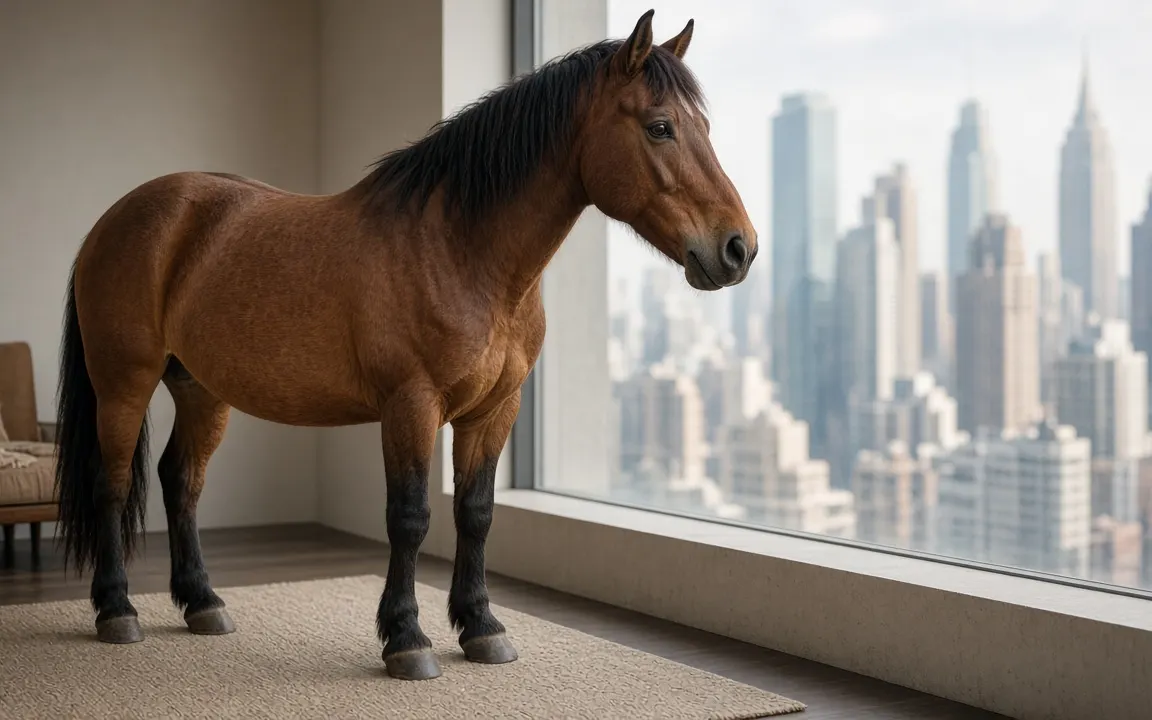
Kawasaki, Kanagawa
What arranging horse cremation near Kawasaki is like
Around Tokyo, a horse, a pony or a pig that lived as a companion is sometimes accepted by the handful of providers with large equipment, even though farm livestock goes through separate official channels. Distances across the metropolitan area mean collection can take time to arrange. Ask how many kilograms the provider can accept, whether you may attend, and whether a small share of the ashes can be kept for a memorial at home.
Large animals are rare in Kawasaki, a dense commuter city with industrial land along the bay. The city does have its own racecourse, and riding clubs, farm parks and small farms exist in western Kanagawa and the Tama hills. If you care for a horse, goat, pig or other large animal in the region, check first whether a provider handles animals over a few hundred kilograms, since most pet funeral services around Tokyo are set up for small and medium pets.
Sport and show horses kept near Kawasaki are more likely than most to carry mortality insurance. If yours is insured, the insurer usually wants to hear about a death before the body goes anywhere, and may ask for a post-mortem by a vet they approve. Put the policy number and the claims line in your phone next to your vet's number, because cremation can't be undone once it starts.
About 1,475,000 people live in Kawasaki, which makes it the 2nd-largest of the 2 Kanagawa communities we cover.
Nearby, we also have local pages for Yokohama (7 miles, a larger centre), Setagaya (8 miles) and Minato (9 miles), which can help if your vet or the provider you prefer is based there.
99.97%[1]
In 2023, 99.97% of deaths in Japan were cremated (1364 crematoria).
6.6 million[2]
There were an estimated 6.6 million horses in the United States in 2023, down from 7.2 million in 2017.
$600-$1,000[3]
Cremating a 1,000-pound horse was reported to cost about $600-$1,000, depending on location and the price of propane.
3-5% of body weight[4]
Embrace notes cremated remains typically weigh about 3-5% of the pet's original body weight.
To check the figures yourself, see Extension Horses (eXtension national Cooperative Extension) and American Horse Council.
How Japan thinks about cremation
In Japan, the human cremation rate sits around 99.97%[1], and some owners start to wonder whether their horse's ashes might one day go with their own. Cemeteries and scattering gardens set their own policies on animal remains, and many say no. If it matters to you, set aside a small sealed portion of the ashes and ask the cemetery directly, so the wish can be carried out later.
For the Japan figure we rely on Cremation Society of Great Britain, International Cremation Statistics 2023 (2023). Read it as a picture of local custom around death and remembrance in Kawasaki rather than as pet data.
Weather, ground and truck access in Kawasaki
If the ground is frozen, waterlogged or rock-hard, burial may have to wait or become impractical. Cremation, rendering and fallen-stock collection work in most weather as long as a vehicle can reach your horse, which is why access matters more than the calendar.

Where the money goes: haul, chamber and extras
Around Kawasaki, there may be no large-animal chamber at all, and the nearest one could be in another district or across a border. Ask how far your horse would travel, whether you can attend, and how the ashes would come back to you. The US figures in the table only show how the options usually compare.
Rather than repeat the price table on every city page, we keep one for Kanagawa: Kanagawa costs. What each service includes is on the services page.

Free tool
Horse aftercare cost comparison
Compare equine cremation, burial, rendering and composting side by side.
Before anyone digs: the rules in Kanagawa
Many owners assume that because it's their land, they can do what they like for their horse. Usually they can, within limits. In Kanagawa those limits typically cover burial depth, distance from water and wells, and timing. Renting or boarding changes things again, because the landowner's permission comes first.
In Japan, horses are mostly kept at riding clubs, racing stables and farms, and those usually have established arrangements for a horse that dies. If you own a horse privately, ask your equine vet or the stable which large-animal providers operate locally and whether individual cremation with the ashes returned is possible. Many pet crematories are sized for much smaller animals.
If it happened tomorrow: a checklist
- In the first hour: get the vet to confirm the death, keep everyone at a safe distance, and allow the other horses a short look.
- Before anything leaves the farm: braid and cut a length of tail, save a lock of mane, pull a shoe and keep the halter.
- Within a few hours: choose cremation, burial, rendering or composting. A body this size can't wait long in any weather.
- Book the truck or the backhoe, telling them how to find you, the gate width and whether the ground is firm.
- Keep the body covered so dogs and wildlife can't get to it before the truck comes.
- In the days after: ask when the ashes will return, and tell the people who loved your horse: riders, the farrier, the barn.
Memorials at the barn and beyond
Typhoons and heavy summer rain can close roads in the Tama hills and western Kanagawa, and the humid heat of July and August means a large animal that dies in a stable or pen cannot wait long. Riding clubs and farm parks usually have a routine for this: a tarpaulin, a call to their vet and a known contact for removal. Ask how it was handled last time before you need to.
See what each option includes on our services page, or look at how readers voted in our polls, use the free tools before you ring anyone, the guides answer the longer questions and the blog the newer ones. You can also browse every city in Japan. Nearby, we also cover Yokohama, and every city in Kanagawa.

Reader polls
What would you choose?
Vote anonymously and see how other readers answered. The results are live counts from people who visit this site, so they show real opinions, not a scientific sample.
Where does your horse live?
Tap an answer to vote and see how others answered. Anonymous.
What worries you most about horse aftercare?
Tap an answer to vote and see how others answered. Anonymous.
If you had to decide today, which aftercare would you choose for your pet?
Tap an answer to vote and see how others answered. Anonymous.

Free tools to help you plan
Horse aftercare cost comparison
Compare equine cremation, burial, rendering and composting side by side.

Aftercare options compared
Compare private, communal and water cremation with burial on cost, timing and what comes home.

Ashes weight estimator
See roughly how much ash to expect back, by species and body weight.
Questions people ask
How do Japan attitudes to cremation compare?
Cremation Society of Great Britain, International Cremation Statistics 2023 (2023) puts the Japan human cremation rate at about 99.97%[1]. We show it on the Kawasaki page because pet aftercare choices tend to track it: where cremation is normal for people, communal and private pet cremation are both easy to find.
Which nearby towns can I compare with Kawasaki?
The closest communities we cover are Yokohama (about 7 miles), Setagaya (about 8 miles) and Minato (about 9 miles). Providers based in those places often serve Kawasaki too. Ask each one for a written total that includes collection, so the distance is priced in.
Does it matter where the euthanasia happens?
It matters a great deal for what comes next. Choose a level, firm spot near a gate, the barn or the lane, where a truck can get close. If you plan to bury, choose a place a backhoe can reach from the grave site. Talk it through with your vet; they'll help you pick somewhere gentle for your horse and practical afterwards.
How is a horse that died in a stall moved out?
Usually with straps and the truck's winch, drawing the body along the aisle and out of the door onto the truck bed. It takes time, and doorways and tight turns can make it harder. Tell the provider the width of the stall door and the aisle when you call. If you're planning a goodbye, choose a spot outside where the truck can reach easily.
Will I get all of my horse's ashes back?
Ask, because practices differ. A horse's cremated remains weigh roughly 3-5% of body weight[4], so an 1,100 lb horse leaves around 33 to 55 lb. Some providers return everything; others return a set portion and scatter the rest. Get the answer in writing, along with how your horse is identified from collection to return.
How much does horse cremation cost in Kawasaki?
We haven't found published horse cremation prices for Japan, so the honest answer is to ask for a written quote. As a reference, US extension figures put cremation of a 1,000 lb horse at about $600-$1,000[3] before transport. Collection distance, your horse's weight and out-of-hours calls drive the total, so ask for those lines separately and check that the cremation is individual.


Sources and our estimates
- [1] In 2023, 99.97% of deaths in Japan were cremated (1364 crematoria). Cremation Society of Great Britain, International Cremation Statistics 2023, 2023.
- [2] There were an estimated 6.6 million horses in the United States in 2023, down from 7.2 million in 2017. American Horse Council - 2023 National Equine Economic Impact Study release, 2023.
- [3] Cremating a 1,000-pound horse was reported to cost about $600-$1,000, depending on location and the price of propane. Extension Horses (eXtension national Cooperative Extension) - Horse Disposal Options, 2019, 2019.
- [4] Embrace notes cremated remains typically weigh about 3-5% of the pet's original body weight. Embrace Pet Insurance - Bury or Cremate Your Dog? Costs, Pros & Cons, 2025.
- [5] A 1,100 lb horse would be expected to return roughly 38.5 lb of cremated remains (plausible range 33-55 lb). Our estimate: 1,100 lb x 3.5% (range 3%-5%). How we calculate.
Ask us to check providers near your barn
Tell us what you need and where you are. We'll reply by email with clear options and prices so you can decide in your own time.