Saying goodbye to your horse in Dayton
Cremating a 1,000 lb horse has been reported at about $600-$1,000[1] before transport. We explain the haul, farm access and the alternatives for owners in Dayton, and can email you local options.
- Providers that can take a full-size horse
- Collection priced from your barn's address
- Burial, rendering and compost explained too
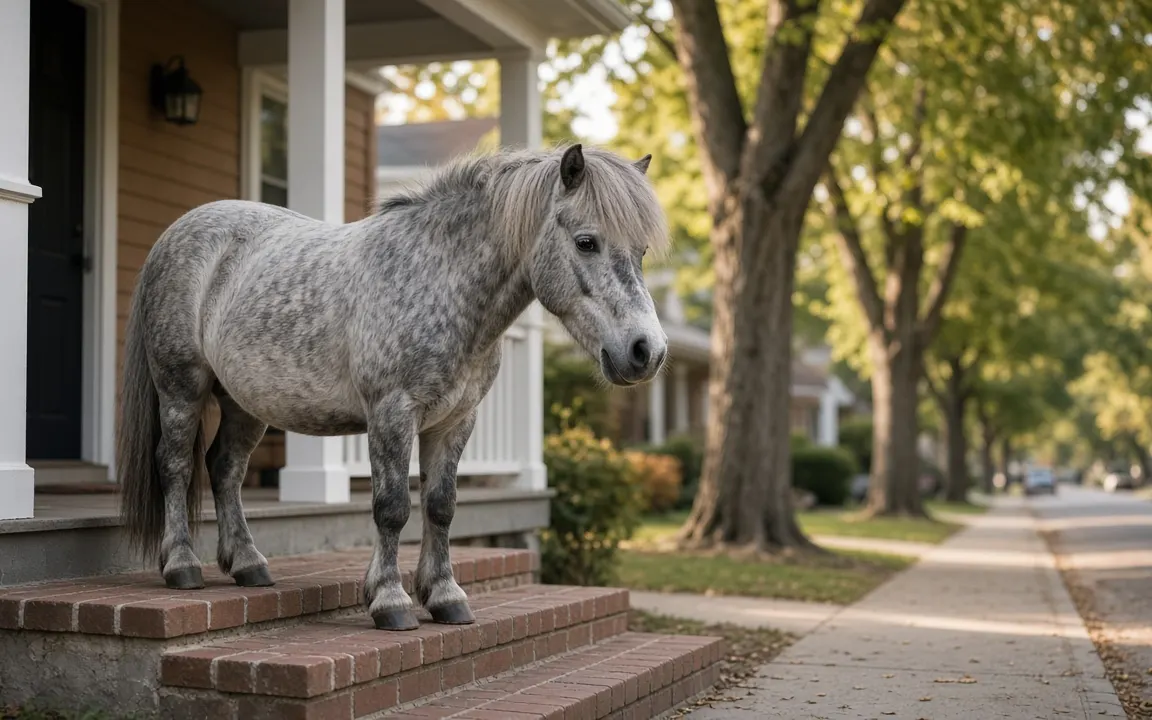
Dayton, Ohio
Barns, farms and distance around Dayton
Season shapes large animal aftercare in southwest Ohio. Winter ice and frozen ground rule out burial and make lanes difficult, spring rain turns pastures to mud, and summer heat means arrangements need to be made quickly. When you ask for help, describe where the animal is, the approximate weight and how close a truck with a winch can get. Those details lead to honest options.
Dayton sits between Cincinnati and Columbus, which widens the choice of providers, but few cremate horses and large farm animals individually. If you keep an older horse, a donkey, alpacas or a small herd in the Miami Valley, ask ahead about euthanasia planning, collection, cremation and burial on your own land. Having a plan in place makes a hard day easier to manage.
Collection is the part that decides the plan around Dayton. A truck with a winch needs to back within reach of your horse on firm ground, and that shapes where a planned euthanasia should happen. A level spot near the barn or a wide gate is kindest to everyone. If your horse lives in a far paddock or a sloping field, say so on the first call, not when the truck arrives.
Dayton's population is around 136,688, the 6th-largest of the 106 Ohio communities we cover. The nearest larger centre is Cincinnati, about 48 miles (78 km) away, which is where some providers serving Dayton are based.
Our pages for Riverside (4 miles), Kettering (5 miles) and Beavercreek (7 miles) describe the same choices from those towns' point of view, and the providers overlap, so a quote from one often covers Dayton as well.
59.1%[2]
The NFDA projected Ohio's cremation rate at 59.1% for 2024.
6.6 million[3]
There were an estimated 6.6 million horses in the United States in 2023, down from 7.2 million in 2017.
$600-$1,000[1]
Cremating a 1,000-pound horse was reported to cost about $600-$1,000, depending on location and the price of propane.
3-5% of body weight[4]
Embrace notes cremated remains typically weigh about 3-5% of the pet's original body weight.
Sources for the statistics above: American Horse Council and Extension Horses (eXtension national Cooperative Extension).
Cremation habits in Ohio, and your horse
Roughly 59.1%[2] of funerals in Ohio now end in cremation, and farm habits here have been shifting in parallel. The old answer for a dead horse, calling the renderer, is fading in many areas because fewer plants now accept horses[5]. That has nudged owners who once used the knacker's truck toward cremation, composting or burial, often without anyone quite deciding to change.
We take the Ohio rate from NFDA 2024 Cremation & Burial Report state projections (via Occasional Sage) (2024). It is a human statistic; there is no equivalent pet figure for Dayton, and we would rather show a real number than invent one.
Heat, frost and mud: timing in Dayton
Snow and ice change the access question. A truck that reaches your barn easily in June may not make it down an icy lane in January, when lows average about 20°F. Plow or sand the route if you can, clear a turning space by the barn, and tell the provider honestly what the ground is like on the day.
Dayton winters are cold, with average lows at or below freezing in January, February, March and December. Cold buys you time after a death, often enough to wait for a daytime collection, but it takes burial off the table for much of the season. Digging a trench about 9 ft deep[6], as extension guidance suggests for a horse, is slow and costly in frozen ground, so winter deaths here usually mean cremation or a collection service.

Cremation, burial or rendering: the costs
The prices below are national extension figures, not quotes from local providers, and they haven't been adjusted for inflation, so treat them as a floor. Fuel, distance and weekend calls all push totals up. A written quote from your barn's address, listing collection, cremation and the container, is the only number worth relying on.
For a line-by-line price table, see the Ohio overview; for what's included in each option, see our services.

Free tool
Horse aftercare cost comparison
Compare equine cremation, burial, rendering and composting side by side.
What Ohio allows for a horse
Paperwork matters too. In the UK and much of Europe, a horse's passport has to be returned to the organization that issued it after death, and collectors may ask to see it. In the US, a vet's note of the date and cause of death helps if an insurer, a renderer or a landfill asks. Keep those papers with your plan. Here are the local notes for Ohio.
Ohio keeps an official directory of local governments; use it to reach the county or city office that covers Dayton.
The rules that apply across Ohio (home burial, scattering and who oversees pet cremation) are summarized on our Ohio page. Dayton may add its own conditions, so check with the city or county before digging.
A plan you can leave at the barn
- Let the other horses see the body briefly; owners often say survivors calm down more quickly when they have.
- Don't leave a lone survivor for long. Left alone without warning, a horse can fret, whinny for hours or go through a fence, so bring in a companion on loan where possible.
- Keep the remaining horses well away from the truck and winch during loading, ideally shut in the barn.
- If two elderly horses are near the end together, find out if one run can take both, since that can cut the transport cost.
- Confirm each horse is cremated separately with its name on its own tag, so the two sets of ashes can't be confused.
- Watch the survivor's eating, drinking and droppings closely for several days, and ring the vet at the first sign of something different.
Memorials at the barn and beyond
The Miami Valley around Dayton is farm country, with corn and soybean fields, cattle, hogs, sheep and goats, and horse barns and hobby farms in Greene, Miami, Warren and Preble counties. Commercial livestock is normally handled under Ohio rules through rendering or on-farm options. For a horse, pony, pet goat or family cow, individual cremation may be possible, so explain whether the animal was a companion or production stock.
look through our guides and the blog, run the numbers with the free planning tools, or compare your instinct with the poll results, Our services overview lays out every option side by side. You can also browse every city in the United States. Nearby, we also cover Parma, Cincinnati, Columbus and Toledo, and every city in Ohio.

Reader polls
What would you choose?
Vote anonymously and see how other readers answered. The results are live counts from people who visit this site, so they show real opinions, not a scientific sample.
Where would you want your horse's last moments to be?
Tap an answer to vote and see how others answered. Anonymous.
Where does your horse live?
Tap an answer to vote and see how others answered. Anonymous.
If you had to decide today, which aftercare would you choose for your pet?
Tap an answer to vote and see how others answered. Anonymous.

Free tools to help you plan
Horse aftercare cost comparison
Compare equine cremation, burial, rendering and composting side by side.

Aftercare options compared
Compare private, communal and water cremation with burial on cost, timing and what comes home.

Ashes weight estimator
See roughly how much ash to expect back, by species and body weight.
Questions people ask
Will I have to travel to Cincinnati to arrange things?
Not usually. Providers based in Cincinnati (roughly 48 miles from Dayton) collect from here as a matter of routine, and the paperwork is done by email or phone. If you want to be present for a witnessed cremation, that is when the drive matters.
Can a provider from a neighbouring town collect from Dayton?
Usually yes. Riverside is about 4 miles away, Kettering is about 5 miles away and Beavercreek is about 7 miles away, all inside a normal collection radius. Get the mileage written into the quote so there is no surprise on the day.
How does Dayton's weather affect horse aftercare?
July is the hottest month in Dayton, with average highs around 87°F, so prompt collection matters most then. Average lows drop below freezing in January, February, March and December, which can make digging a grave hard until spring.
How do Ohio attitudes to cremation compare?
NFDA 2024 Cremation & Burial Report state projections (via Occasional Sage) (2024) puts the Ohio human cremation rate at about 59.1%[2]. We show it on the Dayton page because pet aftercare choices tend to track it: where cremation is normal for people, communal and private pet cremation are both easy to find.
Does the euthanasia method affect what I can do afterwards?
It can. After a barbiturate euthanasia, a horse carries drug residue, so the body has to go somewhere scavengers can't reach it: deep underground, into a cremation chamber or to an approved processor; drug labels have required that warning since 2003[8]. Some renderers charge more for, or refuse, euthanized horses. If you're set on rendering, ask the renderer before the vet visit.
Is there a horse crematory near Dayton?
There may not be one close by. Large-animal chambers are expensive to build and run, so they cluster where there are enough horses to keep them busy, and owners near Dayton often deal with a provider an hour or more away. Some run collection routes on set days. Tell us your address and we'll look for equine-capable providers that reach you, including any across a county or state line.


Sources and our estimates
- [1] Cremating a 1,000-pound horse was reported to cost about $600-$1,000, depending on location and the price of propane. Extension Horses (eXtension national Cooperative Extension) - Horse Disposal Options, 2019, 2019.
- [2] The NFDA projected Ohio's cremation rate at 59.1% for 2024. NFDA 2024 Cremation & Burial Report state projections (via Occasional Sage), 2024.
- [3] There were an estimated 6.6 million horses in the United States in 2023, down from 7.2 million in 2017. American Horse Council - 2023 National Equine Economic Impact Study release, 2023.
- [4] Embrace notes cremated remains typically weigh about 3-5% of the pet's original body weight. Embrace Pet Insurance - Bury or Cremate Your Dog? Costs, Pros & Cons, 2025.
- [5] Renderers have served horse owners for over 100 years, but regulatory changes have reduced the number of rendering plants willing to accept horses, and fees and drug-residue rules may apply. Cornell Waste Management Institute & Penn State - Horse Mortality: Carcass Disposal Alternatives (2012), 2012.
- [6] Extension guidance recommends a horse burial trench about 7 feet wide and 9 feet deep, covered by 3-4 feet of soil, and no fewer than 100 yards from wells and streams. Extension Horses (eXtension national Cooperative Extension) - Horse Disposal Options, 2019, 2019.
- [7] Choosing on-farm composting instead of cremation saves a horse owner roughly $525 at midpoint prices (2012-2019 extension figures, not inflation-adjusted). Our estimate: $800 cremation midpoint - $275 composting midpoint. How we calculate.
- [8] Since 2003 the FDA has required euthanasia drug labels to warn that euthanized animals must be disposed of by deep burial, incineration or another approved method to keep scavenging wildlife from eating the carcass. Cornell Waste Management Institute & Penn State - Horse Mortality: Carcass Disposal Alternatives (2012), 2003.
Get Dayton horse aftercare prices by email
Tell us what you need and where you are. We'll reply by email with clear options and prices so you can decide in your own time.