Equine cremation in Saint Paul, Minnesota
Whether your horse is at home, at a boarding barn or at an equine hospital, you have more choices than you might think in Saint Paul. This page explains each one in plain English.
- Honest costs for Saint Paul horse owners
- Individual cremation, confirmed in writing
- Tail, mane and shoe keepsakes
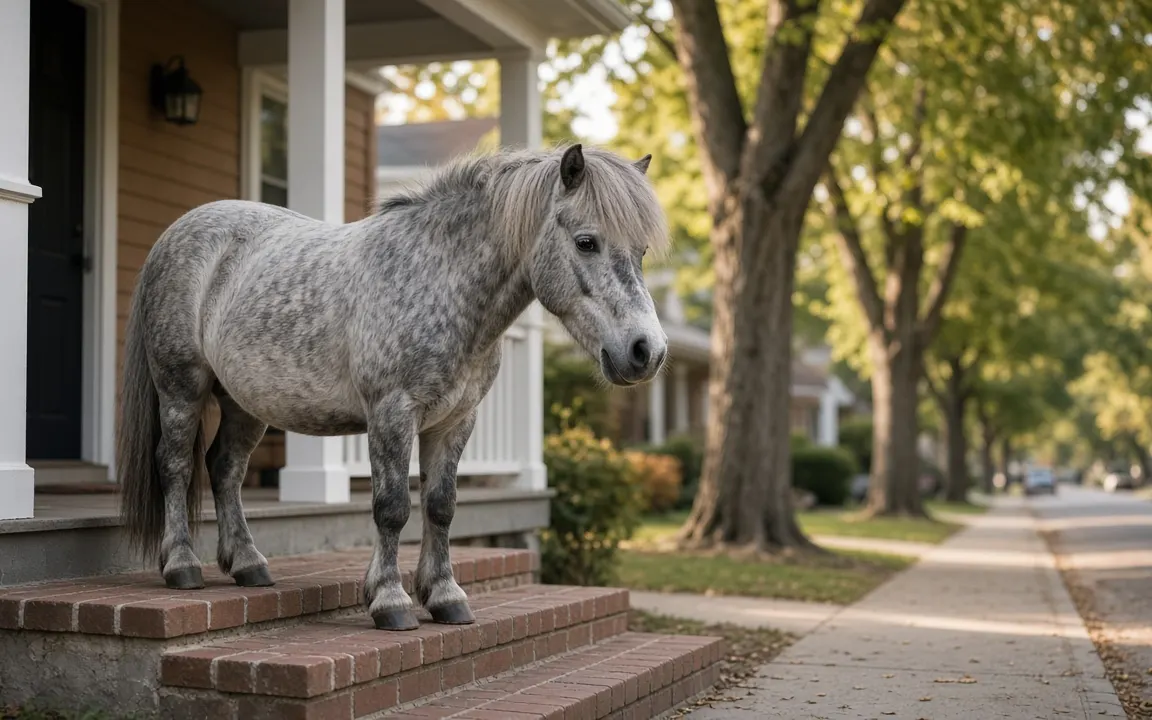
Saint Paul, Minnesota
Barns, farms and distance around Saint Paul
Minnesota winters change the practical picture for a horse, cow, llama or goat. Burying a large animal needs a machine and ground you can dig, and for months of the year the soil is frozen solid. Snow-packed farm lanes can also make it hard for a truck with a winch to reach a barn. When you ask for options, describe the driveway, the gate and where the animal is lying, so a provider knows what to bring.
Saint Paul itself has few large animals, though the Minnesota State Fairgrounds sit just beside the city in Falcon Heights and fill with cattle, sheep, goats, pigs and horses every August. Year round, hobby farms and horse boarding barns are found out in Washington and Dakota counties and across the St. Croix in western Wisconsin. If your animal lives out there, tell us the county and road access, since distance and equipment decide how collection works.
Many horse owners around Saint Paul rely on a mix of help: the vet for the goodbye, a neighbor with a tractor or skid steer to move the body a short way to where a truck can reach, and a provider for the rest. If you're lucky enough to have that neighbor, ask them now, and ask the provider whether they'd rather load from the ground or from a trailer.
Saint Paul is home to about 311,000 people, the 2nd-largest of the 67 Minnesota communities we cover. Some of the providers who serve Saint Paul are based about 9 miles away in Minneapolis, the nearest larger centre, so collection times reflect that drive.
Families in Saint Paul often end up using a provider from West St. Paul (4 miles), South St. Paul (5 miles) and Roseville (5 miles). That is normal: crematories serve a radius, not a single town, and the drive is priced into collection.
68.5%[1]
The NFDA projected Minnesota's cremation rate at 68.5% for 2024.
6.6 million[2]
There were an estimated 6.6 million horses in the United States in 2023, down from 7.2 million in 2017.
$600-$1,000[3]
Cremating a 1,000-pound horse was reported to cost about $600-$1,000, depending on location and the price of propane.
3-5% of body weight[4]
Embrace notes cremated remains typically weigh about 3-5% of the pet's original body weight.
None of the figures on this this page are ours alone: they rest on American Horse Council and Extension Horses (eXtension national Cooperative Extension).
How Minnesota thinks about cremation
With cremation at about 68.5%[1] for people in Minnesota and burial still common, many families here have sat through both kinds of service. That familiarity makes a small ceremony for a horse feel natural: a few words at the paddock gate, a ride past by friends, a favorite song. It can happen before collection or months later with the ashes.
For the Minnesota figure we rely on NFDA 2024 Cremation & Burial Report state projections (via Occasional Sage) (2024). Read it as a picture of local custom around death and remembrance in Saint Paul rather than as pet data.
How the season changes your options in Saint Paul
Some owners around Saint Paul cremate in winter and bury or scatter the ashes in spring. It's a gentle compromise: nothing has to happen at a grave while the ground is frozen, and when the weather turns you can choose a spot you'll want to visit. A horse returns a lot of ash, roughly 38.5 lb[5] for an 1,100 lb horse on our estimate, so there's plenty to share.
Saint Paul winters are cold, with average lows at or below freezing in January, February, March, November and December. Cold buys you time after a death, often enough to wait for a daytime collection, but it takes burial off the table for much of the season. Digging a trench about 9 ft deep[6], as extension guidance suggests for a horse, is slow and costly in frozen ground, so winter deaths here usually mean cremation or a collection service.

Budgeting for your horse's aftercare near Saint Paul
Cost is often what tips the decision, so it helps to see the gap plainly. By our estimate, choosing on-farm composting over cremation saves roughly $525[7] at midpoint extension prices (Cornell Waste Management Institute). That saving comes with months of waiting and the need for land. Cremation costs more but brings your horse home in a form you can keep.
For a line-by-line price table, see the Minnesota overview; for what's included in each option, see our services.

Free tool
Horse aftercare cost comparison
Compare equine cremation, burial, rendering and composting side by side.
Before anyone digs: the rules in Minnesota
Moving a horse's body along a public road can fall under animal by-product or transport rules, which is one reason licensed collectors do most of this work. If you plan to trailer your horse to a provider yourself, ask the provider and the agriculture office in Minnesota whether you need anything in writing first. Cremation itself asks nothing of you.
To find your county or city office in Minnesota, start with the official Minnesota local government directory.
The Minnesota page sets out who oversees pet cremation and what the state says about burial and scattering. Saint Paul's own bylaws can sit on top of that, so ask before you dig.
If it happened tomorrow: a checklist
- Tell the clinic right away what you want: individual cremation with ashes, a collection service, or bringing your horse home.
- Ask how long they can hold your horse, plus whether each day in storage is charged.
- Ask staff to save keepsakes for you: some tail, a little mane, the shoes and the halter your horse wore in.
- Get the provider's name in writing, whether it's the clinic's usual one or a provider you chose.
- Settle who bills you: some clinics add aftercare to their invoice, others leave it between you and the provider.
- Arrange where the ashes should go: the clinic for you to collect, the barn, or straight to your house.
- Collect your tack, rugs and paperwork yourself, or have the clinic keep them safe until you can come back.
Ways to keep your horse close
Around the Twin Cities, large animals are often part of a family's life for years: a 4-H steer or lamb shown at the county fair, a retired lesson horse, a pair of goats on a few acres. Individual cremation with ashes returned is possible for many of them, though it costs more than for a pet and fewer providers offer it. If you have an older animal, it's worth asking about options before winter sets in.
look through our guides and the blog, For a plain comparison of the choices, open services, or compare your instinct with the poll results, try the free planning tools. You can also browse every city in the United States. Nearby, we also cover Bloomington, Rochester, Woodbury and Minneapolis, and every city in Minnesota.

Reader polls
What would you choose?
Vote anonymously and see how other readers answered. The results are live counts from people who visit this site, so they show real opinions, not a scientific sample.
Where would you want your horse's last moments to be?
Tap an answer to vote and see how others answered. Anonymous.
Where does your horse live?
Tap an answer to vote and see how others answered. Anonymous.
If you had to decide today, which aftercare would you choose for your pet?
Tap an answer to vote and see how others answered. Anonymous.

Free tools to help you plan
Horse aftercare cost comparison
Compare equine cremation, burial, rendering and composting side by side.

Aftercare options compared
Compare private, communal and water cremation with burial on cost, timing and what comes home.

Ashes weight estimator
See roughly how much ash to expect back, by species and body weight.
Questions people ask
How does Saint Paul's weather affect horse aftercare?
July is the hottest month in Saint Paul, with average highs around 81°F, so prompt collection matters most then. Average lows drop below freezing in January, February, March, November and December, which can make digging a grave hard until spring.
Which nearby towns can I compare with Saint Paul?
The closest communities we cover are West St. Paul (about 4 miles), South St. Paul (about 5 miles) and Roseville (about 5 miles). Providers based in those places often serve Saint Paul too. Ask each one for a written total that includes collection, so the distance is priced in.
Where are the providers that serve Saint Paul actually based?
Some are local, and some run from Minneapolis, about 9 miles away. That is normal for a city this size. What matters is the collection time they quote for Saint Paul and whether the drive is priced into the total, so ask both up front.
How do Minnesota attitudes to cremation compare?
NFDA 2024 Cremation & Burial Report state projections (via Occasional Sage) (2024) puts the Minnesota human cremation rate at about 68.5%[1]. We show it on the Saint Paul page because pet aftercare choices tend to track it: where cremation is normal for people, communal and private pet cremation are both easy to find.
My horse is at a boarding barn near Saint Paul. Who decides what happens?
You do, as the owner, but the barn owner controls the property. They'll have a say on where euthanasia happens, whether their tractor or skid steer can help, and how quickly the body must leave. Many suburban barns won't allow burial on site. Talk to the barn manager early and leave written instructions with the office.
Who collects a dead horse near Saint Paul?
It depends on what operates locally: an equine crematory, a renderer or fallen-stock hauler, a contractor with a backhoe for burial, or sometimes a landfill that accepts horses. Your large-animal vet will know which of these actually come out to farms around Saint Paul. Ask them now, while there's no hurry, and keep the numbers in the barn office.


Sources and our estimates
- [1] The NFDA projected Minnesota's cremation rate at 68.5% for 2024. NFDA 2024 Cremation & Burial Report state projections (via Occasional Sage), 2024.
- [2] There were an estimated 6.6 million horses in the United States in 2023, down from 7.2 million in 2017. American Horse Council - 2023 National Equine Economic Impact Study release, 2023.
- [3] Cremating a 1,000-pound horse was reported to cost about $600-$1,000, depending on location and the price of propane. Extension Horses (eXtension national Cooperative Extension) - Horse Disposal Options, 2019, 2019.
- [4] Embrace notes cremated remains typically weigh about 3-5% of the pet's original body weight. Embrace Pet Insurance - Bury or Cremate Your Dog? Costs, Pros & Cons, 2025.
- [5] A 1,100 lb horse would be expected to return roughly 38.5 lb of cremated remains (plausible range 33-55 lb). Our estimate: 1,100 lb x 3.5% (range 3%-5%). How we calculate.
- [6] Extension guidance recommends a horse burial trench about 7 feet wide and 9 feet deep, covered by 3-4 feet of soil, and no fewer than 100 yards from wells and streams. Extension Horses (eXtension national Cooperative Extension) - Horse Disposal Options, 2019, 2019.
- [7] Choosing on-farm composting instead of cremation saves a horse owner roughly $525 at midpoint prices (2012-2019 extension figures, not inflation-adjusted). Our estimate: $800 cremation midpoint - $275 composting midpoint. How we calculate.
- [8] A 1,100 lb horse uses about 73% of a 1,500 lb animal incinerator load, so large-animal units generally cremate one horse at a time. Our estimate: 1,100 / 1,500 x 100. How we calculate.
Get horse cremation options in Saint Paul
Tell us what you need and where you are. We'll reply by email with clear options and prices so you can decide in your own time.