Saying goodbye to your horse in Elgin
Cremating a 1,000 lb horse has been reported at about $600-$1,000[1] before transport. We explain the haul, farm access and the alternatives for owners in Elgin, and can email you local options.
- Plan ahead for a senior horse
- Weather and timing advice for Elgin
- Options when the nearest chamber is far
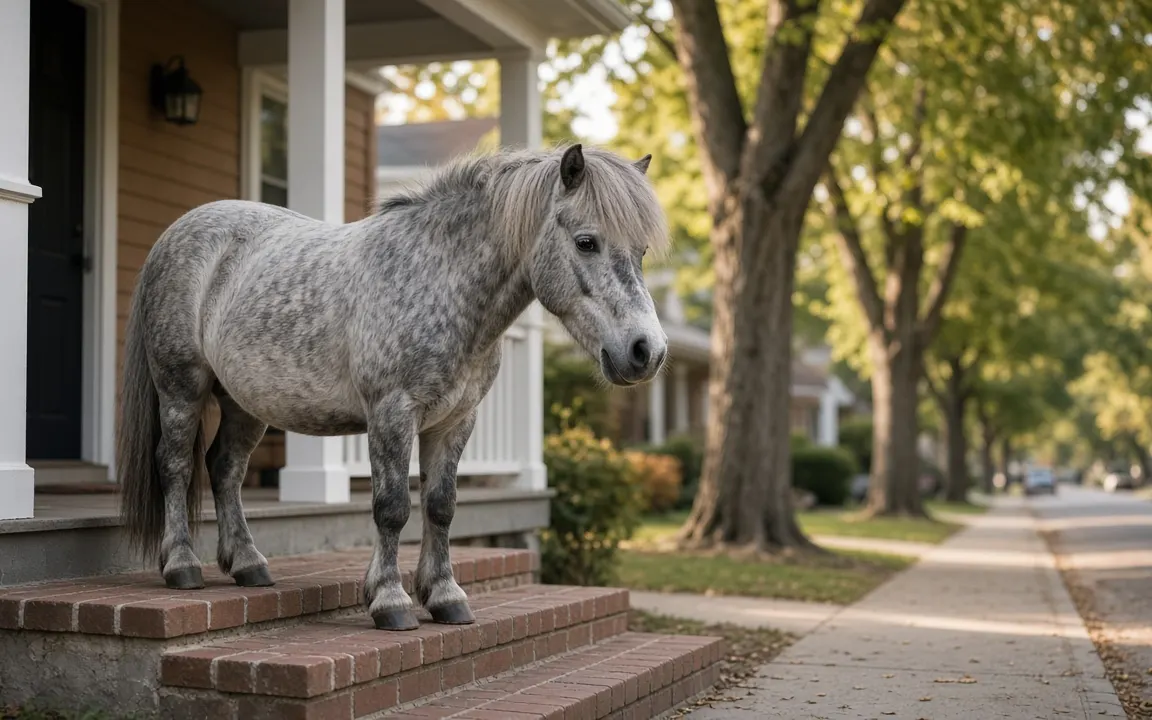
Elgin, Illinois
Barns, farms and distance around Elgin
Northern Illinois winters freeze paddocks hard and pile snow against gates, and March thaws turn the same ground to deep mud. Humid July weather is the opposite problem: a large animal cannot wait long before collection. Throw a pale tarp over the body for shade, keep herd mates in another paddock, and ask whoever you call whether they come out from the Fox Valley, the western suburbs or somewhere farther.
Elgin itself is urban, but western Kane County is still horse and farm country, with boarding stables, hobby farms and a few working livestock operations. If a horse, goat or pig dies at a stable near Elgin, the barn manager may already have a removal arrangement. For animals kept at home on acreage, check access for a heavy vehicle and describe the location clearly when you call.
Horses around Elgin tend to live on small acreages, boarding barns and hobby farms within a short drive of town. That means your vet can usually reach you quickly, but the aftercare provider may not be as close. Before anything else, find out who covers your area for large-animal collection: an equine crematory, a renderer, a fallen-stock hauler, or a local contractor with a backhoe.
About 115,476 people live in Elgin, which makes it the 6th-largest of the 151 Illinois communities we cover. The nearest larger centre is Chicago, about 35 miles (57 km) away, which is where some providers serving Elgin are based.
Nearby, we also have local pages for South Elgin (4 miles), Streamwood (5 miles) and Carpentersville (6 miles), which can help if your vet or the provider you prefer is based there.
60.2%[2]
The NFDA projected Illinois's cremation rate at 60.2% for 2024.
6.6 million[3]
There were an estimated 6.6 million horses in the United States in 2023, down from 7.2 million in 2017.
$600-$1,000[1]
Cremating a 1,000-pound horse was reported to cost about $600-$1,000, depending on location and the price of propane.
3-5% of body weight[4]
Embrace notes cremated remains typically weigh about 3-5% of the pet's original body weight.
To check the figures yourself, see American Horse Council and Extension Horses (eXtension national Cooperative Extension).
Local attitudes to cremation and burial
In Illinois, about 60.2%[2] of people are cremated. Treat that as a sign of local habits, not as a guide to your horse: horse aftercare is driven far more by land, distance and cost. Owners who board are more likely to cremate; owners with acreage are more likely to bury or call a renderer. Both are common here, and both are loving choices.
Source for the Illinois number: NFDA 2024 Cremation & Burial Report state projections (via Occasional Sage) (2024). Nobody publishes a pet cremation rate for Elgin, so the human figure is the best local signal available.
Weather, ground and truck access in Elgin
Snow and ice change the access question. A truck that reaches your barn easily in June may not make it down an icy lane in January, when lows average about 16°F. Plow or sand the route if you can, clear a turning space by the barn, and tell the provider honestly what the ground is like on the day.
Some owners around Elgin cremate in winter and bury or scatter the ashes in spring. It's a gentle compromise: nothing has to happen at a grave while the ground is frozen, and when the weather turns you can choose a spot you'll want to visit. A horse returns a lot of ash, roughly 38.5 lb[5] for an 1,100 lb horse on our estimate, so there's plenty to share.

Horse aftercare prices for Elgin owners
Why are equine crematories so scarce around Elgin? Partly because the market is small. By our estimate, if every US horse that died in a year were cremated at the $800 midpoint, total spending would be only about $74 million[6], too little to put a large chamber in every county. That's why the haul so often decides the price.
We keep the detailed Illinois price table on one page so it stays current: see Illinois prices.

Free tool
Horse aftercare cost comparison
Compare equine cremation, burial, rendering and composting side by side.
Rules worth knowing in Illinois
Composting is where local rules differ most. Some places encourage on-farm composting of large animals; California, for example, prohibits composting unprocessed mammal carcasses (UC ANR). Check with the agriculture department or council covering Illinois before a pile goes in, even if a neighbor tells you it's fine.
Not sure which office covers Elgin? The Illinois local government directory is the official list.
The Illinois page sets out who oversees pet cremation and what the state says about burial and scattering. Elgin's own bylaws can sit on top of that, so ask before you dig.
Step by step, from the field to the urn
- In the first hour: get the vet to confirm the death, keep everyone at a safe distance, and allow the other horses a short look.
- Before anything leaves the farm: braid and cut a length of tail, save a lock of mane, pull a shoe and keep the halter.
- Within a few hours: settle on cremation, burial, rendering or composting. Whatever the season, a horse's body needs to be dealt with quickly.
- Book the truck or the backhoe with clear directions, the gate width and a note on ground conditions.
- Keep the body covered so dogs and wildlife can't get to it before the truck comes.
- In the days after: ask when the ashes will return, and tell the people who loved your horse: riders, the farrier, the barn.
Ways to keep your horse close
Families who keep horses and livestock around Elgin range from 4-H members to lifelong riders. Choices after a death usually come down to three: an individual cremation with the ashes returned, a shared cremation, or rendering. Horses sit at the costly end, so request an itemized quote. Anything you want to keep, such as a forelock trimmed and tied with thread, is easiest to take while the animal is still on the farm.
See what each option includes on our services page, the planning tools turn your pet's details into figures, there are guides for the big decisions and articles for the details, or see how other readers answered in our polls. You can also browse every city in the United States. Nearby, we also cover Joliet, Naperville, Chicago and Rockford, and every city in Illinois.

Reader polls
What would you choose?
Vote anonymously and see how other readers answered. The results are live counts from people who visit this site, so they show real opinions, not a scientific sample.
What worries you most about horse aftercare?
Tap an answer to vote and see how others answered. Anonymous.
Is your horse a senior, and have you made an aftercare plan?
Tap an answer to vote and see how others answered. Anonymous.
If you had to decide today, which aftercare would you choose for your pet?
Tap an answer to vote and see how others answered. Anonymous.

Free tools to help you plan
Horse aftercare cost comparison
Compare equine cremation, burial, rendering and composting side by side.

Aftercare options compared
Compare private, communal and water cremation with burial on cost, timing and what comes home.

Ashes weight estimator
See roughly how much ash to expect back, by species and body weight.
Questions people ask
Can a provider from a neighbouring town collect from Elgin?
Usually yes. South Elgin is about 4 miles away, Streamwood is about 5 miles away and Carpentersville is about 6 miles away, all inside a normal collection radius. Get the mileage written into the quote so there is no surprise on the day.
Where are the providers that serve Elgin actually based?
Some are local, and some run from Chicago, about 35 miles away. That is normal for a city this size. What matters is the collection time they quote for Elgin and whether the drive is priced into the total, so ask both up front.
How does Elgin's weather affect horse aftercare?
July is the hottest month in Elgin, with average highs around 84°F, so prompt collection matters most then. Average lows drop below freezing in January, February, March, November and December, which can make digging a grave hard until spring.
Is cremation common in Illinois?
For people, yes: about 60.2%[2] of Illinois deaths end in cremation, according to NFDA 2024 Cremation & Burial Report state projections (via Occasional Sage) (2024). Nobody publishes the same figure for pets, but in our experience pet choices in Elgin follow the human pattern closely, so cremation is the default most families here start from.
How quickly does a dead horse have to be moved in Illinois?
Sooner than most people expect. State rules commonly require burial or other disposal within 24-72 hours[8] of death, especially after euthanasia, and some are stricter. Check the rule for Illinois with your vet or the state agriculture department. In practice, aim to have your horse collected or buried within a day, and sooner in hot weather.
Can I bury my horse on my own land in Illinois?
Often yes, with conditions. Rules usually cover depth, soil cover, distance from wells, streams and property lines, and how quickly burial must happen. National extension guidance suggests a trench about 9 ft deep[9]. Check with your county or the Illinois agriculture department before digging, and remember that you can't take a grave with you if you ever sell the land.


Sources and our estimates
- [1] Cremating a 1,000-pound horse was reported to cost about $600-$1,000, depending on location and the price of propane. Extension Horses (eXtension national Cooperative Extension) - Horse Disposal Options, 2019, 2019.
- [2] The NFDA projected Illinois's cremation rate at 60.2% for 2024. NFDA 2024 Cremation & Burial Report state projections (via Occasional Sage), 2024.
- [3] There were an estimated 6.6 million horses in the United States in 2023, down from 7.2 million in 2017. American Horse Council - 2023 National Equine Economic Impact Study release, 2023.
- [4] Embrace notes cremated remains typically weigh about 3-5% of the pet's original body weight. Embrace Pet Insurance - Bury or Cremate Your Dog? Costs, Pros & Cons, 2025.
- [5] A 1,100 lb horse would be expected to return roughly 38.5 lb of cremated remains (plausible range 33-55 lb). Our estimate: 1,100 lb x 3.5% (range 3%-5%). How we calculate.
- [6] If every U.S. horse that dies in a year were cremated at the $800 midpoint, total spending would be about $74 million; rendering them all would cost about $12.7 million. Our estimate: 92,400 horses x $800; 92,400 x $137.50. How we calculate.
- [7] Midpoint horse cremation cost works out to about $0.80 per pound of body weight, versus about $0.14 per pound for rendering pickup and $0.23 per pound for on-farm composting. Our estimate: cremation $800 / 1,000 lb; rendering $137.50 / 1,000 lb; composting $275 / 1,200 lb. How we calculate.
- [8] State rules commonly require dead animals to be buried within 24 to 72 hours of death, especially when euthanized. Cornell Waste Management Institute & Penn State - Horse Mortality: Carcass Disposal Alternatives (2012), 2012.
- [9] Extension guidance recommends a horse burial trench about 7 feet wide and 9 feet deep, covered by 3-4 feet of soil, and no fewer than 100 yards from wells and streams. Extension Horses (eXtension national Cooperative Extension) - Horse Disposal Options, 2019, 2019.
Find an equine provider that reaches you
Tell us what you need and where you are. We'll reply by email with clear options and prices so you can decide in your own time.