Horse Cremation in Delaware
Cremating a 1,000 lb horse has been reported at about $600-$1,000[1] before transport. We explain the haul, farm access and the alternatives for owners in Delaware, and can email you local options.
- Honest costs for Delaware horse owners
- Individual cremation, confirmed in writing
- Tail, mane and shoe keepsakes
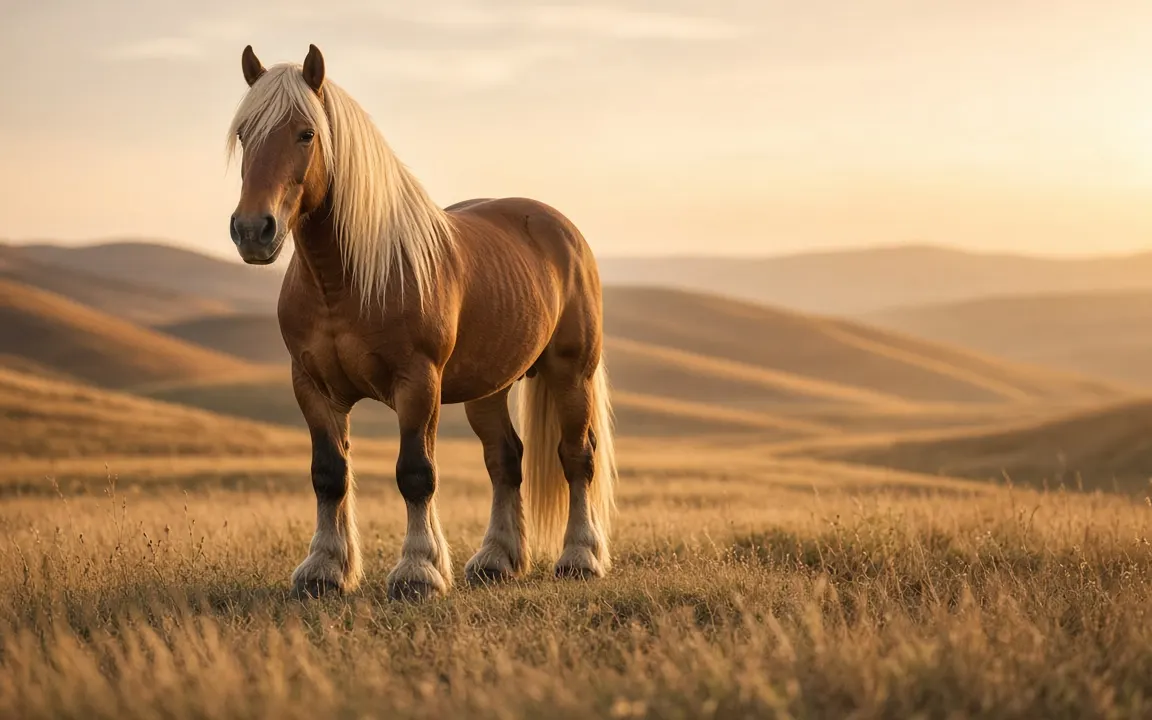
Delaware, the United States
Horse Cremation in Delaware: what to know
Across the 11 communities we cover in Delaware, 64% have three or more months whose average lows drop below freezing. The higher that share, the more your aftercare plan needs a winter version: who plows the drive, where a truck can swing round and what you'd do if burial isn't possible until spring.
Horse owners in Delaware have more aftercare routes than most pet owners: individual cremation with the ashes returned, burial on your own land, rendering or a fallen-stock collector, and on-farm composting where it's allowed. They differ hugely in cost and in what comes back. Local rules and what exists near your farm decide which ones are realistic.
We cover 11 communities in Delaware, from Wilmington, Dover and Newark to smaller towns. Conditions vary a lot across Delaware: summer highs reach about 88°F in Seaford, while winter lows average 26°F in Wilmington. In 64% of the Delaware communities we cover, average lows drop below freezing for three months or more, which matters for home burial.

Every Delaware community we cover
Choose your city or town for local prices, weather and timing, and rules. 11 communities in Delaware, largest first below.
Cremation in Delaware, and where horses fit
In Delaware, about 59.7%[2] of people are cremated. Treat that as a sign of local habits, not as a guide to your horse: horse aftercare is driven far more by land, distance and cost. Owners who board are more likely to cremate; owners with acreage are more likely to bury or call a renderer. Both are common here, and both are loving choices.
That Delaware rate is a human statistic published by NFDA 2024 Cremation & Burial Report state projections (via Occasional Sage) (2024); there is no pet equivalent, so we use it as a signal of how families here already think.
Budgeting for your horse's aftercare near Delaware
Cost is often what tips the decision, so it helps to see the gap plainly. By our estimate, choosing on-farm composting over cremation saves roughly $525[3] at midpoint extension prices (Cornell Waste Management Institute). That saving comes with months of waiting and the need for land. Cremation costs more but brings your horse home in a form you can keep.
Why are equine crematories so scarce around Delaware? Partly because the market is small. By our estimate, if every US horse that died in a year were cremated at the $800 midpoint, total spending would be only about $74 million[4], too little to put a large chamber in every county. That's why the haul so often decides the price.
| Option | Typical cost | What comes back |
|---|---|---|
| Private cremation | $600-$1,000[1], plus the haul | Your horse's ashes |
| Rendering pickup | $75-$200[5] | Nothing returned |
| Burial with a rented backhoe | $250-$500[6] | A grave on your land |
| On-farm composting (1,200 lb horse) | $170-$380[7] | Compost, after many months |
| Landfill, where accepted | $80 to $150[6] | Nothing returned |
| Source | Extension Horses: horse disposal options | Euthanasia and transport are extra |
The numbers above come from Extension Horses (eXtension national Cooperative Extension) and Cornell Waste Management Institute & Penn State, if you'd like to read the original sources.

Free tool
Horse aftercare cost comparison
Compare equine cremation, burial, rendering and composting side by side.
Before anyone digs: the rules in Delaware
Paperwork matters too. In the UK and much of Europe, a horse's passport has to be returned to the organization that issued it after death, and collectors may ask to see it. In the US, a vet's note of the date and cause of death helps if an insurer, a renderer or a landfill asks. Keep those papers with your plan. Here are the local notes for Delaware.
- Burial at home: Confirm the rule for the actual parcel and proposed burial with the local authority and property owner.
- Scattering ashes: Ask the exact land manager about scattering before making arrangements; a general gathering permission is a separate matter.
- Who oversees it: the authority responsible for the specific activity and location; this guide does not identify a universal permit or licensing rule
- Worth knowing: Record the service method, release authority, identification and return instructions in writing.
A city's population does not establish which aftercare activities are allowed at an address. Check the actual site and activity before proceeding.
County and city offices set many of the local rules. To find yours, start with the official Delaware local government directory.
Who to call, and in what order
- Book the vet and the collection together, aiming for a morning slot on one day, so there's no long gap between the euthanasia and the pickup.
- Choose the spot with the truck in mind: level, firm ground near a gate, the lane or the barn, never the far corner of a wet field.
- Measure the narrowest gate the truck must pass, and note overhanging trees, sharp bends and boggy ground.
- Give your horse a good last morning: grass, a favorite treat, a long groom. Take photos if you'd like them.
- Save tail, mane and a shoe before the vet arrives, while you're calm and your hands are steady.
- Decide who stays for loading. Plenty of owners choose to leave once they've said goodbye, and hand over to a friend or the yard manager while the driver works.
- Confirm when and how the ashes come back, and whether you'll receive all of them.
Memorials at the barn and beyond
A horse is part of a community: riders, grooms, the farrier, even the barn cat. A small gathering at the barn, a ride out in your horse's honor or a photo board in the tack room gives everyone a chance to say goodbye. Our guide to grief after losing a horse has ideas for the first weeks.
From here: services and prices, the free tools, what readers voted in the polls, or the map of every location.

Reader polls
What would you choose?
Vote anonymously and see how other readers answered. The results are live counts from people who visit this site, so they show real opinions, not a scientific sample.
Is your horse a senior, and have you made an aftercare plan?
Tap an answer to vote and see how others answered. Anonymous.
What would you most want to keep from your horse?
Tap an answer to vote and see how others answered. Anonymous.
If you had to decide today, which aftercare would you choose for your pet?
Tap an answer to vote and see how others answered. Anonymous.

Free tools to help you plan
Horse aftercare cost comparison
Compare equine cremation, burial, rendering and composting side by side.

Aftercare options compared
Compare private, communal and water cremation with burial on cost, timing and what comes home.

Ashes weight estimator
See roughly how much ash to expect back, by species and body weight.
Questions people ask
How many horses die each year in the US?
About 92,400 horses per year[9] by our estimate, from USDA's measured death rate of 1.4%[10] and about 6.6 million[11] horses nationally. The 900,000 figure sometimes quoted online would imply a death rate roughly ten times higher than USDA measured. Wherever you are in Delaware, that adds up to a steady need for large-animal services, even where providers are few.
Can I compost a horse in Delaware?
Possibly. On-farm composting of a horse is legal in many US states and costs far less than cremation, but some states restrict it; California bans composting of unprocessed mammal tissue. Expect the process to take about 9-10 months[12] for a whole horse. Ask the Delaware agriculture department or your extension office before you start a pile.
Can I bury a horse on my land in Delaware?
Often yes, with conditions on depth, soil cover, distance from wells, streams and property lines, and timing. Counties can add their own rules. National extension guidance suggests a trench about 9 ft deep[13] for a horse. Check with the state agriculture department or your county before digging, and think about whether you'll keep the land.
Can a boarding barn refuse to allow burial?
Yes. The landowner decides what happens on their property, and many boarding barns don't allow burial because of space, wells and neighbors. Most will help with access for a collection truck. If your horse is boarded anywhere in Delaware, ask the barn manager what their usual arrangement is before you need it.
Is scattering horse ashes on public land allowed in Delaware?
Rules differ between parks, forests, beaches and council land, and many want you to ask first. Scatter thinly, away from water sources and busy areas. Land you own, or a friend's with their say-so, is easiest, and many owners scatter at a barn, a trail they rode or a friend's farm instead.
Should I plan ahead for an older horse?
It helps a great deal. Choose a provider now, check that a truck can reach your barn in every season, note your budget and whether you want the tail and a shoe saved, and leave the plan with whoever cares for your horse day to day. Horses aged 20 and over have the highest yearly death rate in USDA data, 3.1%[14].

Sources and our estimates
- [1] Cremating a 1,000-pound horse was reported to cost about $600-$1,000, depending on location and the price of propane. Extension Horses (eXtension national Cooperative Extension) - Horse Disposal Options, 2019, 2019.
- [2] The NFDA projected Delaware's cremation rate at 59.7% for 2024. NFDA 2024 Cremation & Burial Report state projections (via Occasional Sage), 2024.
- [3] Choosing on-farm composting instead of cremation saves a horse owner roughly $525 at midpoint prices (2012-2019 extension figures, not inflation-adjusted). Our estimate: $800 cremation midpoint - $275 composting midpoint. How we calculate.
- [4] If every U.S. horse that dies in a year were cremated at the $800 midpoint, total spending would be about $74 million; rendering them all would cost about $12.7 million. Our estimate: 92,400 horses x $800; 92,400 x $137.50. How we calculate.
- [5] Rendering companies typically charge a pickup fee of $75-$200 to remove a horse carcass, depending on location. Extension Horses (eXtension national Cooperative Extension) - Horse Disposal Options, 2019, 2019.
- [6] Renting a backhoe to bury a horse costs roughly $250-$500, and horse disposal in a landfill (where accepted) costs about $80-$150. Extension Horses (eXtension national Cooperative Extension) - Horse Disposal Options, 2019, 2019.
- [7] Composting a 1,200-pound horse requires about 10 cubic yards of carbon material (wood chips, sawdust), and total material, equipment, fuel and labor costs were estimated at $170-$380 per horse. Cornell Waste Management Institute & Penn State - Horse Mortality: Carcass Disposal Alternatives (2012), 2012.
- [8] Midpoint horse cremation cost works out to about $0.80 per pound of body weight, versus about $0.14 per pound for rendering pickup and $0.23 per pound for on-farm composting. Our estimate: cremation $800 / 1,000 lb; rendering $137.50 / 1,000 lb; composting $275 / 1,200 lb. How we calculate.
- [9] About 92,400 U.S. horses would be expected to die or be euthanized each year (6.6 million horses x 1.4% annual mortality). Our estimate: 6,600,000 x 1.4%. How we calculate.
- [10] The overall annual mortality rate for U.S. equids on operations with 5+ equids was 1.4% in the NAHMS Equine 2015 study. USDA APHIS NAHMS - Equine Mortality in the United States, 2015 (published Feb 2017), 2015.
- [11] There were an estimated 6.6 million horses in the United States in 2023, down from 7.2 million in 2017. American Horse Council - 2023 National Equine Economic Impact Study release, 2023.
- [12] An intact horse carcass takes approximately 9-10 months to compost, and piles should reach at least 130 F. Extension Horses (eXtension national Cooperative Extension) - Horse Disposal Options, 2019, 2019.
- [13] Extension guidance recommends a horse burial trench about 7 feet wide and 9 feet deep, covered by 3-4 feet of soil, and no fewer than 100 yards from wells and streams. Extension Horses (eXtension national Cooperative Extension) - Horse Disposal Options, 2019, 2019.
- [14] Equids aged 20 years or older had a 3.1% annual mortality rate in the 2015 NAHMS study, the highest of any age group. USDA APHIS NAHMS - Equine Mortality in the United States, 2015 (published Feb 2017), 2015.
Get Delaware horse aftercare prices by email
Tell us what you need and where you are. We'll reply by email with clear options and prices so you can decide in your own time.