Horse cremation and aftercare in San Francisco
Losing a horse is a practical emergency as well as a heartbreak. This guide for San Francisco covers the first hours, the truck, the costs and the keepsakes you'll want to save.
- Honest costs for San Francisco horse owners
- Individual cremation, confirmed in writing
- Tail, mane and shoe keepsakes
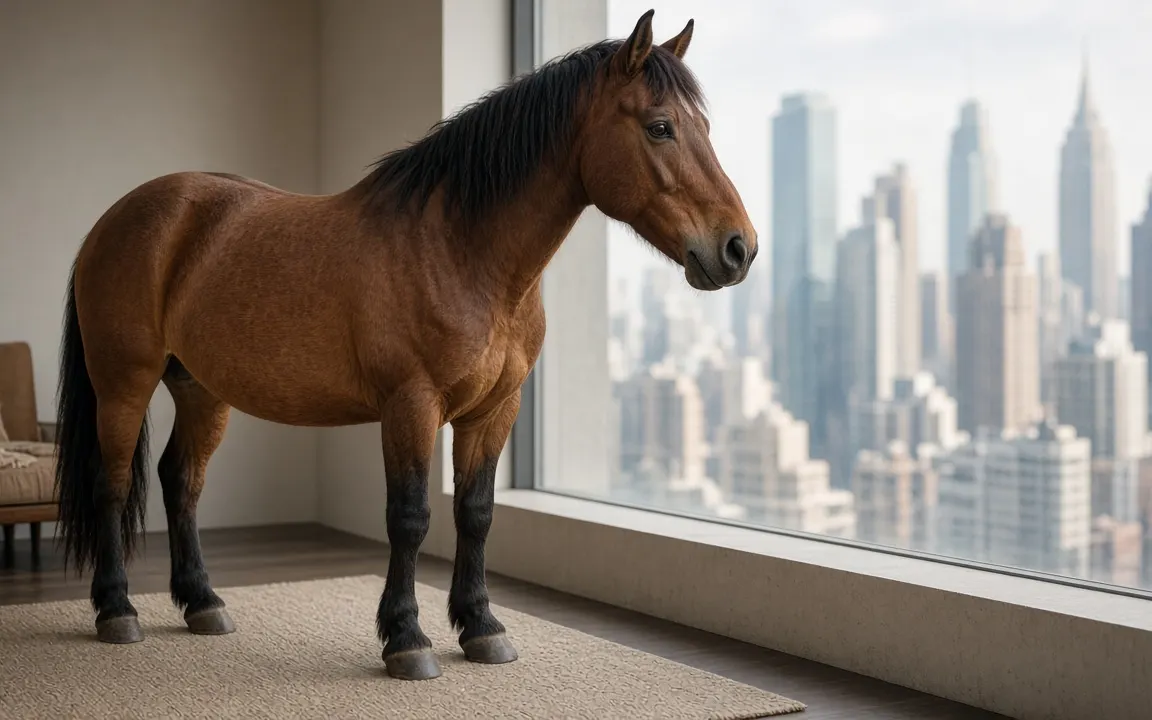
San Francisco, California
Horse aftercare in San Francisco: the local picture
Bay Area families who keep horses, goats, sheep, llamas or rescued farm animals often want a keepsake even when a whole-animal cremation is not possible. A lock of mane, a clip of fleece, a bell, an ear tag, a halter or a photograph from the pasture can become the centre of a memorial, and hair or wool can be set in resin. Take anything you want before collection, and ask the driver for a few minutes.
Coastal and hillside properties around the Bay Area can be steep, with narrow roads and tight gates, and winter rain can leave pastures slick and soft. Before collection, check whether a truck can reach the barn or paddock and whether there is firm, level ground for loading. In the dry season, fire risk and access restrictions in the hills can also affect timing, so describe the route clearly.
Few horses live inside San Francisco itself. Most are kept at boarding stables, riding schools and small acreages on the edge of the metro, and that's where aftercare starts. The pet crematories you'll find in town are built for dogs and cats, so they can't take a full-size horse. The providers who can are usually out in farm country, sometimes an hour or more beyond the city limits, and they'll quote collection from the barn's address, not from your home.
About 874,000 people live in San Francisco, which makes it the 4th-largest of the 307 California communities we cover.
San Francisco sits within easy reach of Brisbane (7 miles), Daly City (7 miles) and Sausalito (7 miles). A provider based in any of them will usually collect from San Francisco; ask what the mileage adds to the bill.
70.5%[1]
The NFDA projected California's cremation rate at 70.5% for 2024.
6.6 million[2]
There were an estimated 6.6 million horses in the United States in 2023, down from 7.2 million in 2017.
$600-$1,000[3]
Cremating a 1,000-pound horse was reported to cost about $600-$1,000, depending on location and the price of propane.
3-5% of body weight[4]
Embrace notes cremated remains typically weigh about 3-5% of the pet's original body weight.
We built the this numbers from Extension Horses (eXtension national Cooperative Extension) and American Horse Council, and both are worth a look if you want the detail.
Cremation habits in California, and your horse
Cremation is the usual choice for people in California, where about 70.5%[1] are cremated, and you'll hear it discussed openly at the barn. Even so, many horse owners here weigh it against burial, rendering and composting on cost alone, and that's a fair thing to do. US extension figures put cremating a 1,000 lb horse at about $600-$1,000[3], several times the cost of the other routes.
We take the California rate from NFDA 2024 Cremation & Burial Report state projections (via Occasional Sage) (2024). It is a human statistic; there is no equivalent pet figure for San Francisco, and we would rather show a real number than invent one.
Weather, ground and truck access in San Francisco
Weather affects two things for horse owners in San Francisco: how quickly the body must be moved, and whether a truck or backhoe can reach it. Heat shortens the time; rain and snow soften or block the route. Your provider will know local conditions well, so ask what they'd suggest at this time of year.

Budgeting for your horse's aftercare near San Francisco
The prices below are national extension figures, not quotes from local providers, and they haven't been adjusted for inflation, so treat them as a floor. Fuel, distance and weekend calls all push totals up. A written quote from your barn's address, listing collection, cremation and the container, is the only number worth relying on.
The California price table breaks costs down by size; our services page explains what sits behind each line.

Free tool
Horse aftercare cost comparison
Compare equine cremation, burial, rendering and composting side by side.
Paperwork and permission in California
Many owners assume that because it's their land, they can do what they like for their horse. Usually they can, within limits. In California those limits typically cover burial depth, distance from water and wells, and timing. Renting or boarding changes things again, because the landowner's permission comes first.
For what San Francisco itself says, see San Francisco Public Works. Its pages cover municipal collection; a private cremation is arranged separately. To find your county or city office in California, start with the official California local government directory.
For California's rules on burying a pet at home or scattering ashes, see the California guide. Local rules in San Francisco can be stricter than the state's, especially in homeowners' associations and rentals.
What to do when your horse dies in San Francisco
- Stop somewhere safe if a horse goes down in the trailer, and call the nearest equine vet; show grounds keep one on call.
- Ask the venue or show office who they use when a horse dies there. Most have an arrangement already.
- Decide whether to bring your horse home or arrange aftercare near where it happened. A local provider is usually quicker and cheaper than a long haul back.
- Check what moving a body over county or state boundaries requires, keeping the vet's documents in the truck for the journey.
- Tell your insurer ahead of any disposal, if you hold a policy on your horse.
- Have the ashes delivered to your home address, and get the expected date confirmed in writing.
- Let other riders help. Showground friends will step in to mind your other horses and get the trailer home; you only have to say yes.
Memorials at the barn and beyond
Large animals are almost absent from San Francisco itself, but farms, ranches and animal sanctuaries are within reach: horses and small farms on the Peninsula around Woodside and Half Moon Bay, dairy and beef cattle in west Marin and Sonoma, and goats, sheep and rescued farm animals on sanctuaries across the Bay Area. When a large animal dies, owners usually work with a regional service with a trailer and winch. Ask whether individual cremation is possible.
Compare every option on our services page, go deeper with the guides or catch up on recent articles, or see how other readers answered in our polls, use the free tools before you ring anyone. More local pages: Fresno, Sacramento, San Jose and San Diego, the California overview and every city in the United States.

Reader polls
What would you choose?
Vote anonymously and see how other readers answered. The results are live counts from people who visit this site, so they show real opinions, not a scientific sample.
Where would you want your horse's last moments to be?
Tap an answer to vote and see how others answered. Anonymous.
Where does your horse live?
Tap an answer to vote and see how others answered. Anonymous.
If you had to decide today, which aftercare would you choose for your pet?
Tap an answer to vote and see how others answered. Anonymous.

Free tools to help you plan
Horse aftercare cost comparison
Compare equine cremation, burial, rendering and composting side by side.

Aftercare options compared
Compare private, communal and water cremation with burial on cost, timing and what comes home.

Ashes weight estimator
See roughly how much ash to expect back, by species and body weight.
Questions people ask
Can a provider from a neighbouring town collect from San Francisco?
Usually yes. Brisbane is about 7 miles away, Daly City is about 7 miles away and Sausalito is about 7 miles away, all inside a normal collection radius. Get the mileage written into the quote so there is no surprise on the day.
How do California attitudes to cremation compare?
NFDA 2024 Cremation & Burial Report state projections (via Occasional Sage) (2024) puts the California human cremation rate at about 70.5%[1]. We show it on the San Francisco page because pet aftercare choices tend to track it: where cremation is normal for people, communal and private pet cremation are both easy to find.
What happens to my horse if I choose rendering?
A renderer collects the body and processes it at high heat into materials such as meal and fats. Renderers have served horse owners for 100+ years[6], but fewer plants now accept horses. Nothing is returned, so save keepsakes first. It's usually the lowest-cost option, which matters when the nearest crematory is far from San Francisco.
How is a horse that died in a stall moved out?
Usually with straps and the truck's winch, drawing the body along the aisle and out of the door onto the truck bed. It takes time, and doorways and tight turns can make it harder. Tell the provider the width of the stall door and the aisle when you call. If you're planning a goodbye, choose a spot outside where the truck can reach easily.
Is horse cremation common in California?
For people, about 70.5%[1] of deaths in California end in cremation, so the idea is familiar. For horses it's less common than for dogs and cats, because of cost and distance, and many owners choose burial, rendering or composting. Cremation is most common among boarders and owners who want to keep something of their horse.
What if I can't afford horse cremation?
You have lower-cost options that are still respectful. Rendering pickup typically runs $75-$200[7], and by our estimate composting saves about $525[8] over cremation at midpoint prices. Ask your vet whether they know of a payment plan, and whether a rescue or a vet school program operates nearby. Whatever you choose, save some tail hair and a shoe before collection.


Sources and our estimates
- [1] The NFDA projected California's cremation rate at 70.5% for 2024. NFDA 2024 Cremation & Burial Report state projections (via Occasional Sage), 2024.
- [2] There were an estimated 6.6 million horses in the United States in 2023, down from 7.2 million in 2017. American Horse Council - 2023 National Equine Economic Impact Study release, 2023.
- [3] Cremating a 1,000-pound horse was reported to cost about $600-$1,000, depending on location and the price of propane. Extension Horses (eXtension national Cooperative Extension) - Horse Disposal Options, 2019, 2019.
- [4] Embrace notes cremated remains typically weigh about 3-5% of the pet's original body weight. Embrace Pet Insurance - Bury or Cremate Your Dog? Costs, Pros & Cons, 2025.
- [5] A 1,100 lb horse would be expected to return roughly 38.5 lb of cremated remains (plausible range 33-55 lb). Our estimate: 1,100 lb x 3.5% (range 3%-5%). How we calculate.
- [6] Renderers have served horse owners for over 100 years, but regulatory changes have reduced the number of rendering plants willing to accept horses, and fees and drug-residue rules may apply. Cornell Waste Management Institute & Penn State - Horse Mortality: Carcass Disposal Alternatives (2012), 2012.
- [7] Rendering companies typically charge a pickup fee of $75-$200 to remove a horse carcass, depending on location. Extension Horses (eXtension national Cooperative Extension) - Horse Disposal Options, 2019, 2019.
- [8] Choosing on-farm composting instead of cremation saves a horse owner roughly $525 at midpoint prices (2012-2019 extension figures, not inflation-adjusted). Our estimate: $800 cremation midpoint - $275 composting midpoint. How we calculate.
Get San Francisco horse aftercare prices by email
Tell us what you need and where you are. We'll reply by email with clear options and prices so you can decide in your own time.